SPEZI, Pio. – Roman legal historian and, in particular, a scholar of the history and study of the churches of Rome. Born in Rome on 1 October 1861, died there on 2 January 1940.
Having taught history successively in the lyceums of Ceccano, Teramo, Potenza, and Rome, for more than forty years he devoted all his energy to collecting, with rigorous scientific method, material to serve for the compilation of a complete bibliography of the churches of Rome. This was to be used not only for the history of individual extant and vanished churches but also for resolving problems of topography and toponomastics. The essential character of his work lay in the comparative study of the various catalogues of Roman churches that have come down to us from the 5th to the 17th century, taking as his basis the four fundamental catalogues: that of Cencio Camerario, the French Anonymous, the Anonymous of Turin, and the catalogue of Signorili. Spezi was thus able to establish, with synoptic tables, the definitive form of the onomastics and topography of each church and to compile alphabetical indices corresponding to the cards he had prepared, drawing on every written source that had, for any reason, dealt with the churches of Rome. The result of this investigation forms the first part of Spezi’s bibliography. The second part consists of a special bibliography; in it, for each church, the various sources and related studies and information are listed. The method of work employed by Spezi was already evident in his first publication: *Bibliografia metodico-analitica delle chiese di Roma. Saggio della lettera A* (Rome 1928; reprinted from the *Bollettino di bibliografia romana*, edited by C. Galassi-Paluzzi). After Spezi’s death, the first volume of *Le Chiese di Roma nei XX secoli del cristianesimo. Bibliografia, topografia toponomastica* (Rome 1940) was published; it includes the introduction, the sources, and the general bibliography of printed works (pp. 43–233) and manuscripts (pp. 235–43). Recently, Signora Gaioni-vanelli-Recchi has deposited with the Pontifical Institute of Sacred Archaeology the 34,000 cards assembled by Spezi. He was also an eminent scholar of the work of G. G. Belli, having discovered 121 unpublished sonnets Tizzani (v.) preserved in the Library of the Augustinian Canons at S. Pietro in Vincoli. Among his historical essays may be recalled *Gli angeli di S. Agnese*, in *La vita italiana*, 2 (1894), and *Pio V e i suoi tempi* (Rome 1904).
---
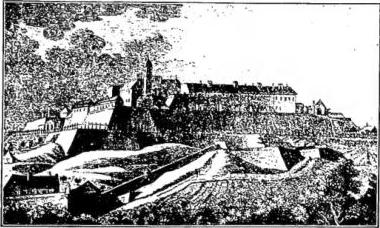
SPIELBERG. – A castle in the city of Bruna (Brünn, Brno) in Moravia (Czechoslovakia), famous in the history of the Risorgimento for having served as a prison for political prisoners from the Lombard–Venetian provinces, among whom were chiefly Silvio Pellico, Pietro Maroncelli, Federico Confalonieri, Pietro Borsieri, Giorgio Pallavicino, Gabriele Rosa, and the Frenchman Alessandro Andryane. Its fame is particularly associated— as is well known—with Pellico’s *Le mie prigioni*.
It must be recalled that Emperor Francis I was firmly convinced that the Italian patriots, in conspiring against him, had violated the laws of Christian morality and was sincerely concerned for their eternal salvation. Imprisonment was therefore, in his view, not only the just punishment for those who had attacked the established order but also, and above all, an effective means of spiritual redemption, an incentive to “conversion.” That this conversion should then manifest itself in practical terms through new revelations about the conspiracies in which the prisoners had participated only confirms the dangerous and arbitrary, indeed one-sided, blending of the sacred and the profane that was a deleterious characteristic common to all the so-called “divine-right” dynasties and thus also of the Habsburg regime. It remains a fact, however, that the Emperor took constant care that the prisoners might satisfy their religious duties (the Holy Mass was regularly celebrated in the prison chapel by Capuchin fathers), provided them with devotional books, and appointed priests to attend to their souls. At first, it was the Augustinian Fr. Battista Vorthey (1823), then Fr. Stefano Paulowich-Ludwig (1823–27), Fr. Giorgio Wrba (1827–28), and finally Fr. Vincenzo Zinck. With the exception of Paulowich—who proved unequal to the delicate task, being more devoted to the throne than to the altar—all were excellent spiritual directors of the prisoners, as is unanimously attested by those among them who left autobiographical accounts of their imprisonment.
Of the Italian political prisoners who died in Spielberg, five expired in the fullness of religious faith, including Silvio Moretti, who in his youth had left the priestly state, and Giovanni Vincenti, who in the course of his wandering life had adhered to Calvinism. Alessandro Andryane received conditional baptism, having been born in France at the height of the Revolution.
Paulowich frequently reported to the Emperor that most of the prisoners had not sufficiently converted. And while one may agree with him in another and more substantial sense—inasmuch as not all, upon regaining their freedom, persevered in the observance of those religious practices to which they had returned in prison—it remains equally true that Pellico, Confalonieri, Pallavicino, Solera, Villa, Orboni, and many others left Spielberg, or died there, reconciled with the faith of their childhood.
spicile adita per fratrem
Bartolomaeus de finia pifiam ordinis predicatorum de obferuntia lecto,
rem sacrae teologie quicunque
minc continetur, decifunt.
propugnaculus arifto, de imortalita
reanimae contra Zeno, Laurentum, et
litera eiusdem Laurenti eccementario,
ne fia fuperlibros arifto, de alia quam
rum popofito deferunt affumpta.
utela veritatis de imortalitate animae
contra perri poponacium Laurenti
conglomeratum pertertum eiusdem
libro de imortalitate animae fideliter to,
conferto.
sagellus in tres libros apologice eiusde
pertertus eadem materia.
tantis eufrico de odine sacro.
(1st. Esc. Catt.)
Spina, Bartolomeo – Title page of *Opuscula*, Venice, printed by G. de Gregorii, 1519 – Rome, copy in the National Library.
### In der neuen Welt
In the New World (2 vols.), where geography, discoveries, and the evangelization of various nations are vividly narrated, and in addition 20 volumes of missionary tales from the collection Aus fernen Landen; to these must be added other, more substantial novels, the principal ones being: Die Wunderblume von Woxindon (2 vols., 1833; 13th–14th ed., 1923); Lucius Flavus (2 vols., 1898; 16th ed., 1926); Kreuz und Chrysanthemum (2 vols., 1902; 8th ed., 1920); Taffer und Treu (2 vols., 1897; 16th ed., 1930); Um das Leben einer Königin (2 vols., 1900; 14th ed., 1923); particularly noteworthy is the historical tale on the secret of Confession, translated into 10 languages, Ein Opfer des Beichtgeheimnisses (1896; 40th ed., 1937). Novels and tales are collected in a popular edition (14 vols., Freiburg im Br., 1920–28).
---
### Spina, Alfonso Lopez de
Franciscan friar, formerly Jewish, a learned theologian, renowned for his piety and learning, an effective preacher, rector of the Franciscan Studium in Salamanca, and bishop of Thermopolis (1491); d. c. 1491 in the Palentine convent of the province of the Immaculate Conception.
A notable success was his work, directed against heretics and the faithful, entitled Fortalitium fidei (Strasbourg, n.d. [c. 1471]; Basel, n.d. [c. 1475]; Nuremberg 1485, 1594, 1525; Lyon 1487 and 1511), judged to be “an erudite work, splendid in title, barbarous in language, and outstanding in its knowledge of divine matters.” He also left manuscripts: Sermones de excellentia nostrae fidei; Tractatus de fortuna dicatum Joanni Castellae Regi; Sermones 22 de nomine Jem.
---
### Spina, Bartolomeo
Dominican theologian, b. in Pisa in 1475, d. in Rome in 1546.
---
### Spiera, Francesco
Italian Protestant who returned to Catholicism, b. in Cittadella in 1502, d. there in 1548. A lawyer in his native city, he was denounced to the Venetian Inquisition as the possessor of heretical books and suspected of heresy. He confessed his repentance before the tribunal and made a solemn abjuration in the church of St. Mark in Venice and in the parish church of Cittadella.
According to Protestant accounts, upon returning home he allegedly experienced intense remorse over the abjuration he had made, falling into deep despair for having committed, as he believed, the unforgivable sin against the Holy Spirit. Despite the exhortations of friends regarding the universality of Grace and the care of physicians in Padua, he is said to have died in despair, or even, according to some, by suicide.
The report drawn up by the archpriest of Cittadella states that S. died a natural death and was no longer conscious in his final moments. It was Vergerio (q.v.) who made S.’s case an episode of heretical propaganda; indeed, he claimed that it was precisely this case that drove him to abandon the Church. Matteo Gribaldi and Enrico Sesto later wrote of it, claiming to be eyewitnesses to the events. Calvin took the occasion to condemn Italian “Nicodemism,” French laxity, and German weakness in faith.
---
### Spillmann, Joseph

He entered the Society on 22 September 1862 and was ordained priest in 1874. From 1875 he was a contributor, and from 1880 until his death the editor, of the periodical Stimmen aus Maria Laach, where he particularly treated topics of ecclesiastical history. Among the fruits of this collaboration, in addition to the articles, is the work: Geschichte der Katholikenverfolgung in England 1535–1681 (5 vols., Freiburg im Br., 1901–10), rich in archival and even unpublished documentation. He also effectively contributed to the periodical Die Katholischen Missionen, founded by Fr. R. Cornely in 1873, of which he was director for 20 years. To this activity are owed the 6 volumes of travel accounts: Rund um Afrika, Durch Asien (2 vols.), Über die Südsee (Australia and Oceania