
TAXIL, LÉO. — Writer and impostor, whose name was Gabriel Antoine Jogand-Pagès, born in Marseille on 20 March 1854, died at Sceaux on 30 March 1907.
He initially devoted himself to an unrestrained anticlerical propaganda, publishing books offensive even in their titles against the Pope, the clergy, and the finest Catholic thinkers (La soutane grotesque [Paris 1879], La chasse aux corbeaux [there 1887], Les bêtises sacrées [there 1881], L'empoisonneur Léon XIII [there 1883], Vie de Jésus [there 1884], etc.), despite the numerous trials and convictions. In 1881 he enrolled in Freemasonry, but did not remain there long. Suddenly, in 1885, he professed himself converted, repudiated his past, and began an anti-Masonic campaign under the pseudonym L. T. and others, aimed at revealing the sect’s Satanism and the worship of the demon that it professed (Révélations complètes sur la francmayonnerie [3 vols., Paris 1885], Confessions d'un ex-libre penseur [there 1887], La France maçonnique [there 1888], La corruption fin-de-siècle [there 1891], etc.). He invented the existence of Diana Vaughan, priestess of the sect, wife of the demon Asmodeus and daughter of the demon Bitru and Sofia Walter, ancestress of the Antichrist. The exaggeration, exacerbated by the immorality, of all these revelations put some Catholics on their guard; the Anti-Masonic Congress of Trento (1896), in which L. T. took part, did not conclude for the evi-
TAXIL. LEO - TAYLORISM
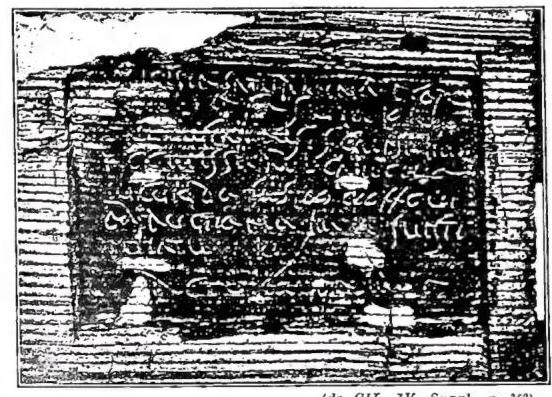
WAX TABLETS – Fifth panel of a Pompeian waxed triptych, written on 24 June 56 A.D., discovered during the excavations of 1873 in the house of the banker L. Cecilio Giocondo – Naples, Museo nazionale.
evidence of the imposture; this was instead established the following year in Paris at a public meeting, in which L. T. himself cynically revealed his deception and the fable of Diana Vaughan. Many, taken by surprise, did not believe him, but time gradually demonstrated that L. T.’s alleged anti-Masonic revelations were nothing more than fabrications. In any event, the author himself returned without hesitation and sensationally to the anticlericalism and libel-writing of his earlier period.