
VELEHRAD, Sanctuary of. - In the diocese of Olomouc (v.) in Czechoslovakia, a place of pilgrimages and the seat of the international unionistic Congresses.
In the 9th century, in the vicinity of the present-day village of V., according to ancient tradition confirmed by recent excavations, there arose the capital of Great Moravia and the seat of the archbishop St. Methodius (v. CIRILLO E METODIO), destroyed (ca. 900) by pagan Hungarians. In 1205 the margrave of Moravia Vladislav Jindřich Přemyslide founded near V. a monastery of the Cistercians, which soon became an important religious and cultural center. In 1421 a band of Hussites set fire to the monastery, burning the abbot and some monks alive. In the 15th-16th centuries V. slowly recovered, and in the 17th century it flourished again, reviving the traditions of the Cyrillo-Methodian cult. But in 1789 the Austrian emperor Joseph II suppressed the monastery, whose goods were confiscated, while the rich archive and the library were lost. The Cyrillo-Methodian jubilees in 1863 and 1885 revived interest in V., which, especially through the work of the priest (later archbishop of Olomouc) A. Stojan (v.), once again became the destination of numerous pilgrimages.
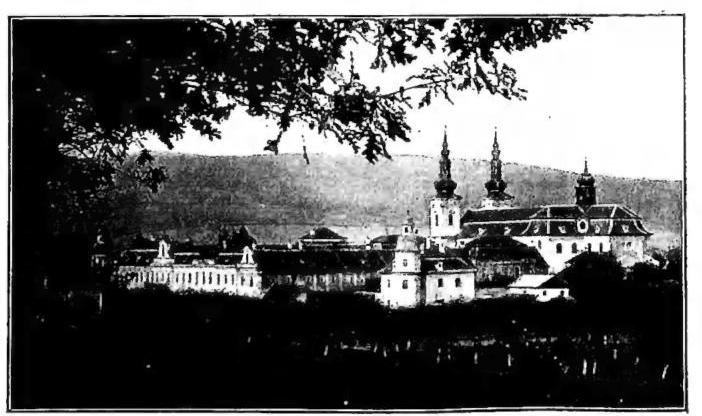
In 1890 the care of the sanctuary of V. was entrusted to the Jesuits, who in 1916 opened the Apostolic School (from 1919 Pontifical) for the education of missionaries among the Eastern dissidents. From 1907 to 1936 seven international unionistic Congresses were held at V., organized by the Academia Velehradensis, which also has its seat there. The magnificent sanctuary of V. (a basilica since 1928) was restored (1935-36) with the contribution of the whole nation.
By order of the communist government the Jesuits were deported in 1950, with the consequent paralysis of all the activities of V.
Bibliography2 works
Giuseppe Olšr