CLEMENT OF OHRID, St. — Called “the Slav” or “the Bulgarian,” bishop, d. 916. He accompanied SS. Cyril and Methodius on their mission to Moravia. After the death of St. Methodius (885), Clement, together with Naum, Angelarius, Constantine and other disciples, was expelled from Moravia and welcomed in Bulgaria by King Boris (852–89). There they established two literary centers: one directed by Naum near Preslav, the other at Devol (now Albania), directed by Clement. In 893 Tsar Simeon (893–927) appointed Clement bishop of Velitsa. Clement had about 3,500 disciples in his school. He was buried in the monastery he founded on Lake Ohrid, hence the name Clement of Ohrid.
Clement began his writings in Moravia. Attributed to him are the Life of St. Constantine-Cyril, the Life of St. Methodius, the panegyric of St. Cyril, and the Office in his honor. In Bulgaria he wrote numerous sermons and probably also the Treatise on the True Faith. He translated many works from Greek.
Clement was venerated as a saint immediately after his death (feast: 27 July). In modern Bulgaria he was chosen as the patron of Sofia University.
CLEMENT I, POPE, St. — Pope from 92 to 101, according to Eusebius; author of an epistle to the Corinthians.
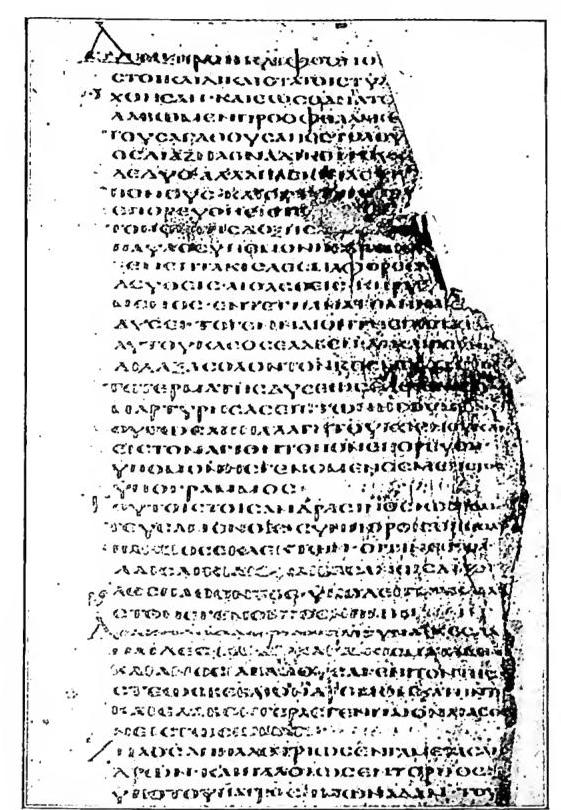
CLEMENT I — Epistle to the Corinthians, V. 2 – VI. 3, contained in the well-known Codex Alexandrinus of the Bible (5th cent.). The passage refers to the martyrdom of Peter and Paul in Rome and to the Roman martyrs – London, British Museum, ms. Codex Alexandrinus, Royal I D VIII, f. 134.