FAREL, GUILLAUME

FAREL, GUILLAUME. - B. at Gap in 1489, d. at Neuchâtel on 13 Sept. 1565. He studied in Paris, where, attracted by the reformer Lefèvre (1509), he came into contact with the Lutheran community that had arisen at Meaux.

Article illustration
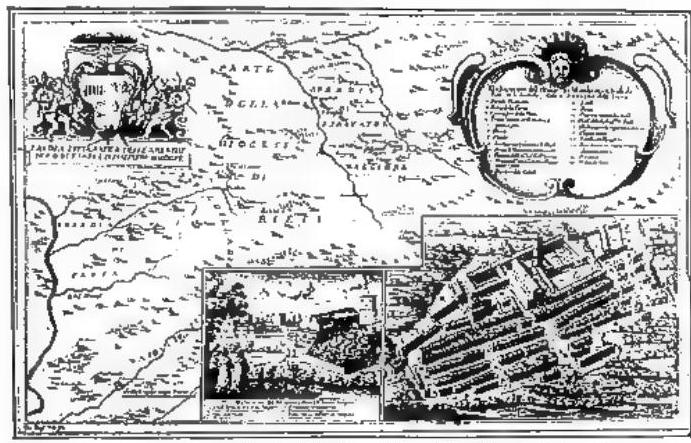
FARFA, ABBEY OF. - The abbey of Farfa and of St. Savior. Finances and possessions in the 16th century. Inclusion in the branch of Francesco Dusi of Urbano.

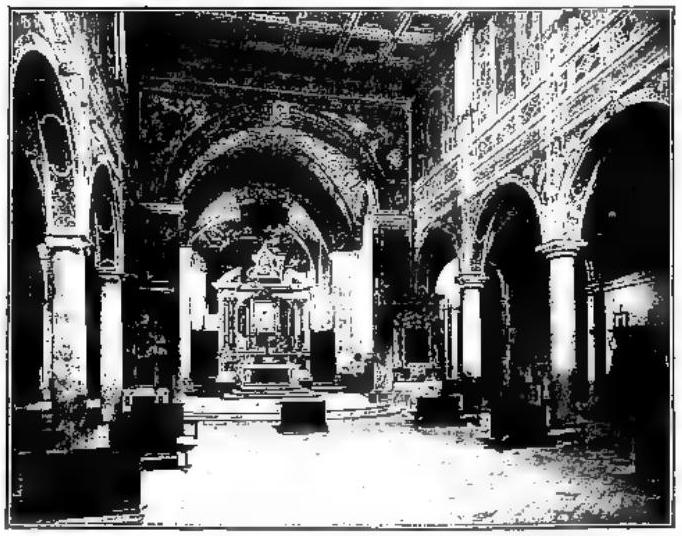
The abbey of Farfa, situated in the Sabine mountains, was founded in the 6th century by St. Laurence, a Syrian monk. It soon became a center of religious and cultural life, thanks to its vast possessions and its strategic position. In the 9th century, due to the political instability of the time and the weakness of the imperial power, the abbey was attacked and occupied by the Saracens (898) and fell into ruin. The monks took refuge in their possessions in the Marches, where they founded the monastery of St. Vittoria on the Matenano. Once the Saracen threat had passed, the monks returned to Farfa and began its reconstruction; but throughout the 10th century they found themselves in very dire material and spiritual conditions. A true revival occurred under the government of Abbot Hugh (997-1038), a vigorous administrator who introduced the Cluniac observance into the monastery. The German emperors were no less protective of Farfa than the Frankish rulers had been; and the abbey ended up as an imperial ecclesiastical fief, with all the advantages and burdens of such a political situation. On 6 July 1060 Nicholas II consecrated the new basilica. But with the outbreak of the Investiture Controversy, Farfa sided with the Emperor, incurring the wrath of Gregory VII and Paschal II. Instead, Abbot Adinolf, later a cardinal (1125-1141), a friend of St. Bernard and the Cistercians, suffered greatly for his loyalty to Innocent II. Pope Eugene III, exiled from Rome, took refuge at Farfa and was consecrated there. In the 12th-14th centuries there was a growing decline, both spiritual and economic. The transformation of the economy that took place in those times, the incessant wars and guerrilla warfare, the interminable lawsuits, the usurpations by powerful neighbors, the excessive fiscalism of the Avignon Curia, and the incompetence or unworthiness of abbots were fatal even to monastic life. In 1400 Boniface IX granted the administration of the abbey as a commendam to his nephew, Cardinal F. l'Ormarcelli, already a Cistercian. He drove out the few monks and replaced them with a colony of German monks from Subiaco. The subsequent commendatory abbots were mostly cardinals from the great papal families, such as the Orsini, Farnese, Barberini, etc. The church, first restored, was completely rebuilt in a different style and consecrated in 1456. In 1567 Farfa was united to the Cassinese Congregation; the territory of the abbey had as its Ordinary the commendatory abbot, while the monastic community was governed by a triennial abbot elected by the General Chapter of the congregation. The monks were entirely removed from the affairs of the prelature, attending to their observance in a calm life, but rather lackluster. This state of affairs continued until the French invasion (1798),

At Basel in February 1524, supported by Œcolampadius, he held a public disputation; when invited to leave for having attacked Erasmus, he went on to Montbéliard, Strasbourg and Bern. In 1532 he preached in Savoy; from there he moved to Nyon, where he met Calvin. In 1538 he was expelled together with Calvin from Geneva and settled as minister of the new cult at Neuchâtel. As Calvin rose to prominence in religious and political affairs, F.’s influence waned. In 1558 he married a widow, Maria Torel, who had taken refuge at Neuchâtel for religious reasons.

He led a most stormy and agitated life. Of an impulsive and violent temperament, as even his friends admitted, he was the leader of the “Reformation” in Switzerland before Calvin. He was no theologian, nor do his dogmatic theses, which merely echo commonplaces of Protestant controversy, carry any weight.

BIBL.: A. L. Herminjard, Correspondance des réformateurs dans les pays de langue française, 2 vol., Geneva 1878-97; varii auctores, G. F. (1489-1565), Neuchâtel 1930; R. N. Carew Hunt, Calvino, Eng. tr., Bari 1939, q.V. index; L. Febvre, Le problème de l’incroyance au XVIe siècle. La religion de Rabelais, Paris 1947, q.V. index.

Gennaro Auletta