
HÄNDEL, GEORG FRIEDRICH. - Musician, b. at Halle on Feb. 23, 1685, d. in London on Apr. 14, 1759.
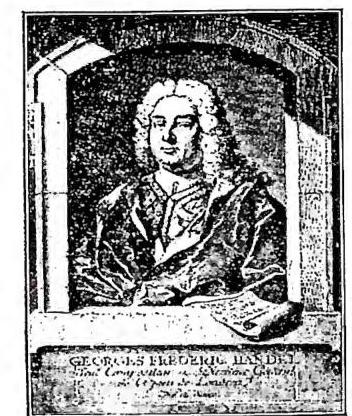
The vicissitudes of his theatrical career are well known in relation to the financial difficulties of the Royal Academy of Music founded by him and to the economic-artistic rivalries of Bononcini first and Porpora later. The copious theatrical production was followed by the creation of a new dramatic form in which the genius of H. left its perennial mark. Saul and Israel in Egypt (1738-39) were the first essays of this personal conception of the oratorio; Messiah followed, performed in Dublin in 1742 with great success, which was not repeated in England. Equally unfortunate were the secular oratorio Hercules and Belshazzar (1744), but Judas Maccabaeus (1747), written to celebrate the Duke of Cumberland's victory over the supporters of the Stuarts, was triumphantly received. The fruits of an inexhaustible creative vein were the oratorios composed from 1747 to '51: Joshua, Solomon, Susanna, Theodora, Jephtha. In his final years the musician was struck by blindness, but was comforted by an admiration that was by then undisputed and universal; he was buried, as a sign of great honor, in Westminster Abbey. The work of H., valuable also in the field of instrumental music, excels in the oratorio, in which the imagination found a way to unfold with a marvelous grandeur of architecture and fullness of expression: the epic dramatic quality of the choirs and the intense melodic lyricism of the solo parts merge into the harmonious and firm artistic unity of the composition, always imbued with characters of noble and solemn stylistic vigor.