
HARMEL, LÉON-PIERRE-LOUIS. — Catholic industrialist, implementer and advocate of social reforms, born at Neuville-les-Wesigny (Ardenne) on 17 February 1829, died at Nice on 25 November 1915. From 1854, when he assumed the management of the spinning mill that his father had founded in 1841 at Val-de-Bois, near Reims, he sought to implement in his own industry practical measures that would give the organization of the enterprise an associative and Christian character. Ahead of his time, he was convinced of the need, in the organization and welfare provision of the factory, to appeal to the workers’ spirit of initiative and cooperation rather than to authority and paternalism.
In his Val-de-Bois industry he experimented with a “Family Allowance Fund,” a “Mutual Welfare Fund,” and a “Centre for Social Studies”; he established the “Works Council” with broad consultative powers; he built a workers’ village in which a democratic, cooperative-type organization provided the workers with religious, intellectual, and material assistance, fostering their integration into the working environment and awakening their sense of responsibility.
Profoundly religious, he became a Franciscan tertiary in 1860 and founded a confraternity of voluntary victims for the conversion of the working world. He publicly expounded his ideas at numerous congresses of the Workers’ Union and, true to his fundamental principle—that the good of the worker should be achieved through the worker—he worked in every way to prepare French workers for their responsibilities and duties.
He collaborated with the “Association of Catholic Workers’ Circles,” founded by A. de Mun (v.), with whom, however, he later engaged in controversy, disapproving of its pronounced paternalism and seeking to guide the organization toward more democratic ideas. He established the important “Catholic Association of Industrialists of the North,” from which all the present-day organizations of Catholic entrepreneurs derive. He organized pilgrimages of French workers to Rome in 1887, 1889, and 1891, and helped disseminate in France the social principles of the encyclical Rerum novarum (1891). In the industrial milieu of his time, some accepted his ideas as a bulwark against the spread of extremist movements, while many criticized his organizational system and his confidence in workers’ initiative and cooperation. The vitality of his principles was recognized only later: after the Second World War, they became the basis of Catholic social policy for enterprises.
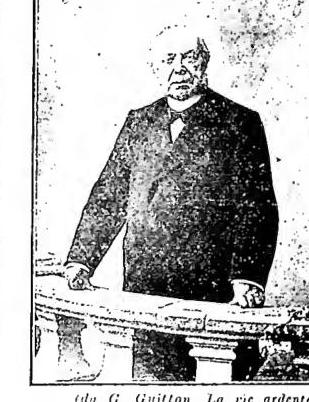
(from G. Guitton, La vie ardente et féconde de L. H., Paris 1939)
HARMEL, LÉON-PIERRE-LOUIS – Portrait.