Machine translation of the 1948–1954 Italian original. The original text is authoritative.
MARCHIAFAVA, ETTORE. – Scientist, anatomopathologist, clinician, and humanist, born in Rome on 3 January 1847, died there on 25 October 1935. In 1871 he began his hospital career at the Pio Istituto di S. Spirito, where in 1872 he obtained the grand gold medal through public competition; appointed that same year as assistant to the chair of pathological anatomy in Rome, he became a full professor in 1883, retaining the position until 1922, and serving as a master to Italians and foreigners through the originality of his research and studies.
Among his numerous works and discoveries, those on tuberculous atheritis and syphilitic atheritis in the newborn; on productive epithelial glomerulonephritis; on the outcome of pneumonia in induration; on the degeneration of the corpus callosum and the commissural pathways of the brain in chronic alcoholism, etc., should be recalled. His name remains particularly famous for his studies on malaria and for the major treatise on the subject, compiled by him in collaboration with his pupil Bignami; the government of the U.S.A. undertook to have it translated and printed at its own expense, as a state work.
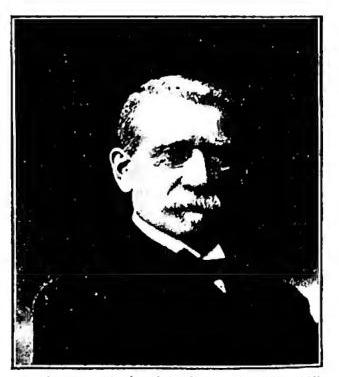
(courtesy of Drs. R. Moretti) MARCHIAFAVA, ETTORE — Portrait.For his scientific merits he was counted among the members of the world’s most distinguished academies; in 1933 the London Society of Tropical Medicine and Hygiene solemnly awarded him the Patrick Manson Medal. He was a senator of the Kingdom, president of the Superior Council of Public Health, and vice-president of the Accademia dei Lincei. He openly and faithfully professed his Catholic faith; he enjoyed the full favor and august friendship of the pontiffs Pius X and Benedict XV, who wished him to be their personal medical adviser and to whom he was always bound by devoted and faithful affection. In every activity, inseparable from his scientific and practical work as a physician, his beneficent kindness was always evident, so that his industrious and very long life was continually illumined by the most beneficial charity.
BIBL.: M. Camis, E. M., in Nuova antologia, 382 (1935), pp. 29-30; A. Cesaris Demel, Commemorazione del socio nazionale E. M., in Atti Acc. Lincei, Rendiconti scienze fisiche, 23 (1936); G. Alberti, Ragguagli obsoleti, I, Sansepolcro 1941.
Giuseppe de Nismo
Cite this article
“MARCHIAFAVA, ETTORE.” Enciclopedia Cattolica, vol. VIII (1952), p. 46. Azione Romana digital edition, https://azioneromana.com/article/marchiafava-ettore.