
PARUTA, PAOLO. — Politician and writer, born in Venice on 14 May 1540, died on 9 December 1598. He studied at Padua. His political career passed through various stages, from his appointment as provveditore of the Camera dei Prestiti (1580), through other offices, including the embassy to Rome from 1592 to 1595, to the very high office of procurator of S. Marco (1596).
His fame as a thinker is linked to Della perfezione della vita politica (Venice 1579) and to Discorsi politici (there, 1599), in which the weight of the theories of raison d’état and the ethical-religious tradition coexist, despite implicit contrasts, in a thoughtful and sincere symbiosis. P. was aware of the harshness and difficulties of political life, but he also aspired to an ideal and abstract world of justice and fraternity. He experienced inwardly the conflict between the active and contemplative lives. Straddling the Renaissance and the « Counter-Reformation », he perceived, though with balance and wisdom, the drama of two worlds in conflict. His historiographical works Istoria veneziana (Venice 1605), Storia della guerra di Cipro (there, 1605), as well as other writings (Lettere inedite, edited by G. Biadego, Verona 1885, and La legazione di Roma, 3 vols., there, 1886–87), reveal and complete his personality as an acute politician, consciously and perceptively intent on illustrating the forces that drive the life of States, even though his filial affection for the Venetian « fatherland » was unable to rise above a certain panegyrical tone toward the Serenissima, whose government appeared to P. to be the apex of technical-political perfection.
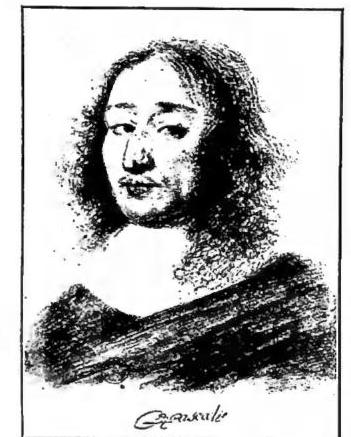
Sensitive, nervous, melancholic, and a facile improviser, he was a poet by nature. His inner drama, assuaged by a sincere love of God and of his neighbour, found expression in deliberately simple song, intended not only to educate the people but also to comfort the poor. This «village poet» (De Sanctis) loved Virgilio and translated Hugo, Lamartine, Shakespeare, Moore, Byron, Goethe, Klopstock, Bürger, and Körner, while Uhland was his favourite. Cultivated and a friend of cultivated men, an admired preacher and panegyrist (though verbose), his horizon was not confined to the village; yet only when he identified himself with the suffering and faith of humble people did he sketch real types (Il vecchio sergente, Il curato, La cieca) and give a wholly personal naivety to his lyric poetry, which deserves consideration among the popular and religious poetry of the nineteenth century.
Works: Armonie italiane (Naples 1841); Canzoni popolari (there 1841); Canti del Viggianese (there 1846); Canti del povero (there 1852); Poesie edite ed inedite (there 1856–57); Opere complete (quaresimali, panegirici, memorie: Ariano di Puglia 1889–98); Giulietta e Romeo, tragedy edited by C. De Vivo (Ariano 1910); Ituriele, poemetto edited by C. Villani (Naples 1910); Sordello, tragedy ed. by C. De Vivo (Avellino 1911); Poesie e prose, anthology edited by C. De Vivo (Naples 1913); All'abbazia di S. Spirito e altri inediti in the volume by F. Lo Parco: Attraverso gli Abruzzi (there 1913); Canti educativi inediti e dispersi, edited by F. Lo Parco (there 1921).