
SHILLONG, DIOCESIS di. — Situated in north-eastern India, suffragan of Calcutta.
In 1889 the apostolic prefecture of Assam was erected, its territory being detached from the archdiocese of Calcutta and the diocese of Krisnagar, and entrusted to the Society of the Divine Saviour. When the First World War broke out, the Salvatorian fathers, all of German nationality, were expelled, and the S. Congr. of Propaganda then appointed the archbishop of Calcutta as its apostolic administrator. After the war, the prefecture of Assam was given to the Salesians of d. Bosco (1921), and on 9 July 1934 was raised to a diocese under the name of S. Its territory includes the principality of Bhutan (46,600 sq. km., population 300,000). It has an area of 185,500 sq. km. and 7,300,000 inhabitants, of whom 4,000,000 are Hindus, 2,200,000 animists, 750,000 Muslims, 224,500 Protestants, and 84,564 Catholics. There are 52 priests, all foreign Salesians except 2 Indians, and 14 brothers. There are also 10 “Irish Christian Brothers,” who run a flourishing college. The missionaries’ work is assisted by 111 nuns, mostly foreigners, belonging to 6 different institutes. There is 1 major seminary with 14 students or seminarians, and 1 minor seminary with 19 boys.
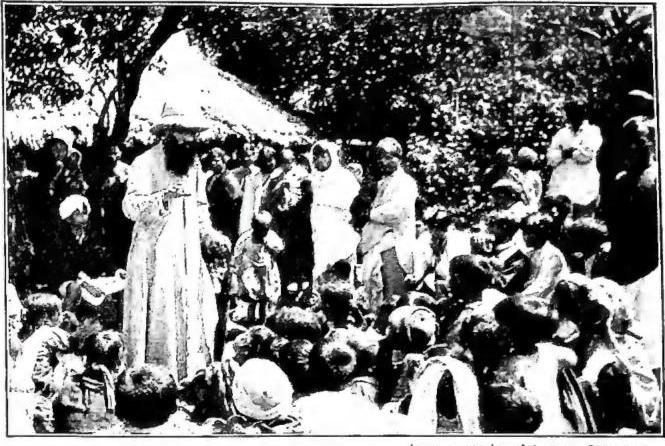
(courtesy of the Salesian fathers)
BISL.: AAS, 27 (1931), pp. 321-23; 44 (1932), pp. 167-69; MC, 1950, pp. 245-46. Pompeo Borgna