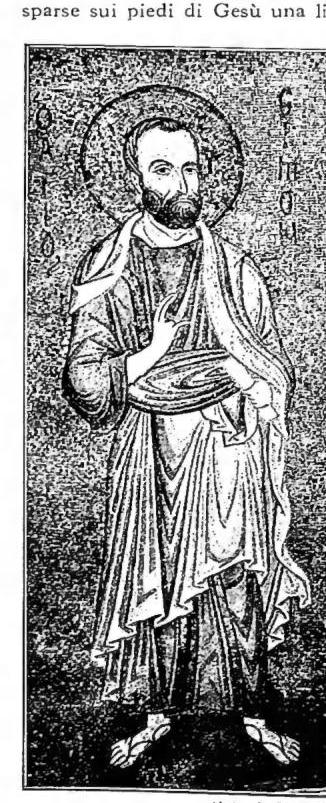
SIMONE II

Image from page 390
Image from page 390

SIMON II

Simon II. High priest contemporary with Jesus, described by the author of Ecclesiasticus (Eccli. 50:1–24). He is called the son of Onias (Flavius Josephus, *Antiquitates Iudaicae*, XII, 225), though the name Onias may be merely a shortened or diminutive form of Jóhânân, as the Hebrew text has II.
To Simon are attributed the restoration and fortification of the Temple, the excavation of a capacious cistern, and the rebuilding and repair of the walls of Jerusalem. The author of Ecclesiasticus describes with vivid colors and enthusiasm his conduct during the solemn liturgical functions.

---

Simon II — Simon of Cyrene

---

Bede, *Super Acta Apostolorum*, 1: PL 92, 943). This identification, also upheld by several modern scholars such as J. Freundorfer, may be supported by the fact that in Mt 10:3, instead of Thaddaeus, certain ancient Latin manuscripts (abghq) read Judas the Zealot, and by the proximity of this Judas (Thaddeus) to Simon in Mt 13:55 and Mk 6:3 in the list of Jesus’ brothers» (v.). If this hypothesis is accepted, one might apply to the apostle Simon the Cananaean or Zealot what Hegesippus and other ancient writers apply to Simon, the brother of Jesus, successor of James (also a brother of Jesus, and probably an apostle; V. Giacomo il suo) in the leadership of the Church of Jerusalem. The name Simon is the Semitic form of the latter. He is said to have governed the community from 62 to 107, first in Jerusalem and then in Pella, whither the Christians had moved because of the Jewish War. He is said to have suffered martyrdom at the age of 120, under the Emperor Trajan and the governor Atticus (cf. St. Jerome, *Chronicon*, ed. R. Helm, Berlin 1913, pp. 192–94). According to an Ethiopian tradition, Simon the Zealot, after exercising his apostolate in Samaria and his episcopate in Jerusalem, was crucified. Various ancient depictions show him on the cross. According to other, more or less legendary, traditions, he evangelized other regions and suffered martyrdom by the saw. In the Latin liturgy, the apostle Simon is celebrated together with Judas on 28 October; in some Western martyrologies on 10 July, and among the Greeks and Copts on 10 May. Simon, bishop of Jerusalem, is celebrated by the Latins on 18 February, by the Greeks and Syrians on 27 April and 18 September.

Bibl.: Acta SS. Octobris, XII, Paris 1867, pp. 421–27; BHL, 1150, 1122 (28); Suppl., p. 284; sqq.: BHG, 231; BHO, 234 sq.; M.-J. Lagrange, *Evangile selon st Marc*, 4th ed., Paris 1939, p. 67; J. Freundorfer, *Simon Zelotes*, in LTHK, IX, col. 570 sq.; *Martyrologium Romanum*, pp. 481–82.

---

SIMON OF BISIGNano

Simon of Bisignano. Jurist, native of Bisignano (Cosenza), who lived in the 12th century.

He was a follower of Gratian; he completed his *Summa* between March 1177 and March 1179, a work that may be considered a gloss and continuation of Gratian’s *Decretum*, inasmuch as it incorporates subsequent papal legislation. His entire work (*Summa* and *Gloss*) remains unpublished and is scattered in manuscripts in Bamberg, Augsburg, London, Paris, Rome, and Rouen. It is notable for the independence of its criteria, the rationality and systematic character of its criticism, and its influence on later decretists and glossators.

Bibl.: J. F. Schulte, *Geschichte der Quellen und Literatur des Canonischen Rechts*, I, Stuttgart 1875, pp. 140–42, 225; Hurter, II, col. 209; J. Junker, *Die Summa des S. von B. und seine Glossen*, in *Zeitschrift der Savigny-Stiftung für Rechtsgeschichte*, Kan. Abt., 15 (1966), pp. 326–50; S. Kuttner, *Kanonistische Schullehre von Gratian bis auf die Dekretalen Gregors IX.*, Vatican City 1935, passim; id., *Repertorium der Kanonistik (1940–1943)*, 1937, passim; A. van Hove, *Prolegomena*, Malines-Rome 1945, pp. 428–35.

---

SIMON OF CYRENE II

Simon of Cyrene II. A Jew from Cyrene (v.), a city of the Pentapolis in Libya, where a flourishing Jewish colony maintained continuous relations with Jerusalem (Flavius Josephus, *Antiquitates Iudaicae*, XIV, 7, 2; XVI, 6, 1).

He relieved Jesus of the burden of the Cross on the way to Calvary: returning from his farm, he was stopped by the centurion (requisitioning and personal service) and compelled to carry the Cross in place of Jesus, who was exhausted (Mk 15:21; Mt 27:32; Lk 23:26).

The episode is enshrined in the piety of the faithful in the station of the Way of the Cross, assigned since the 13th century to the intersection of the road of Josaphat with that of the Tyropoeon Valley, later to the exit of the Judgment Gate. From Mk 15:21 it is known that Simon was “the father of Alexander and Rufus”: the former is probably the one mentioned in Acts 19:33, and Rufus (v.) may have been that notable person in the Christian community of Rome whose mother—presumably Simon’s wife—is called by St. Paul his “mother” (Rom 16:13).

Bibl.: L. Fonck, *La patria del Cireneo*, in *Civiltà Cattolica*, 1912, I, pp. 513–28, 641–50; L. C. Fillion, *Vita di N. S. Gesù Cristo*, trans.

---

SIMON, APOSTLE, SAINT

Simon, called “the Cananaean” (ὁ Καννανάτος, or ὁ Κανναναῖος in codices SADW 13, etc.) in Mt 10:4 and Mk 3:18, and “the Zealot” (ὁ Ζηλωτής) in Lk 6:15 and Acts 1:13. The title “Cananaean” does not mean “from Cana,” as St. Jerome and some Greek, Coptic, and Ethiopian authors thought, who at times identified him with Nathanael (v.) of Cana or with the bridegroom of the wedding feast there (Jn 2:1 ff.), but derives from the Aramaic *qan’ānā’*, meaning “Zealot” or “zealous.” He may have belonged to the party of the Zealots (v.), or he may have been zealous for the Jewish Law and traditions. The New Testament contains nothing more about him than his name.

Several ancient writers identify him with Simon, the brother (or cousin) of Jesus (v.): cf. *Chronicon Paschale*: PG 92, 591, 607, 610; Pseudo-Hippolytus, *De XII Apostolis*: PG 10, 953;

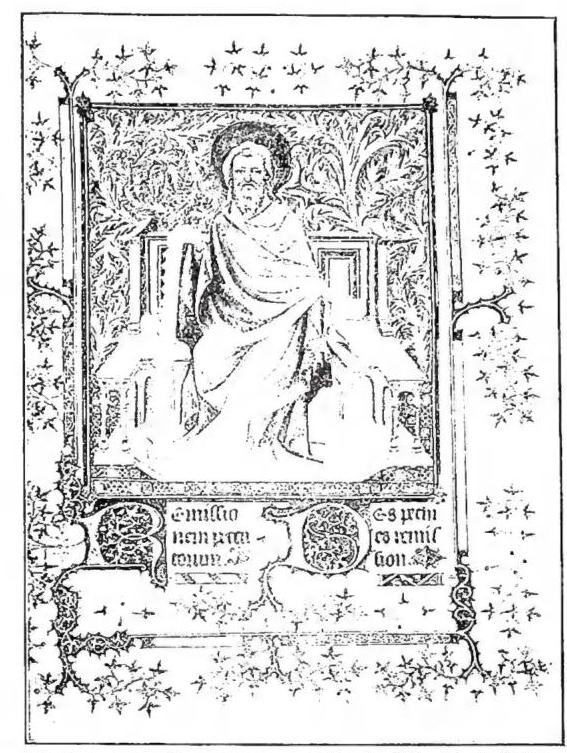
Article illustration
(from V. JALABERT, LOUIS, *Les peintures des manuscrits de la Bible de France*, Mâcon 1918–11, tav. 1931)

Simon, Apostle, Saint — S. S. with the instrument of his martyrdom. Miniature by André Beauneveu. *Très Riches Heures du Duc de Berry* (late 14th c.) — Paris, Bibliothèque nationale, ms. fr. 13091, fol. 26.