
SINAGOGA, GRANDE — In the Mišná' ('Ábhóth, I, 1) it is asserted that representatives of the genuine Jewish tradition were Moses, the elders chosen by him, the prophets, the «men of the g. s.» ('anšé kênêseth hag-gêdhôlâh), and then Simeon the Just and his successors. From the text it would appear that the g. s. was the link between ancient prophetism and the first pairs of the famous sages (Joshua ben Jô'ezer, Joshua ben Jôhânân, etc.).
The same text reports three maxims of the men of the g. s.: 1) be cautious in judging; 2) acquire many disciples; 3) place a hedge around the Law. This is the program of the most genuine Pharisaism. Later, legislative activity was also attributed to them, until in Bâbâd' Bâthrâ' 15a they were indicated as the authors of the following books: Ezekiel, the 12 minor prophets, Daniel, Esther. In order to make the connection appear still more evident, the prophets Haggai, Zechariah, and Malachi also came to be considered members of the g. s.
Although even in a relatively recent period (S. Krauss, H. Englander) the g. s. was still presented as the supreme national-religious body in the period of Persian rule, it is now commonly held that this is a pure legend, perhaps arising under the influence of Neh. 8-10. According to Bickerman, the expression 'anšé kênêseth hag-gêdhôlâh would be equivalent to bêné hag-gôlâh («children of the deportation», «exiles»). These returned from Mesopotamia and accomplished «the great gathering». This generation constituted the link between the last prophets and Simeon the Just and Antigonus of Socho, since according to rabbinic chronology only 52 years would have elapsed between Cyrus and Alexander the Great.
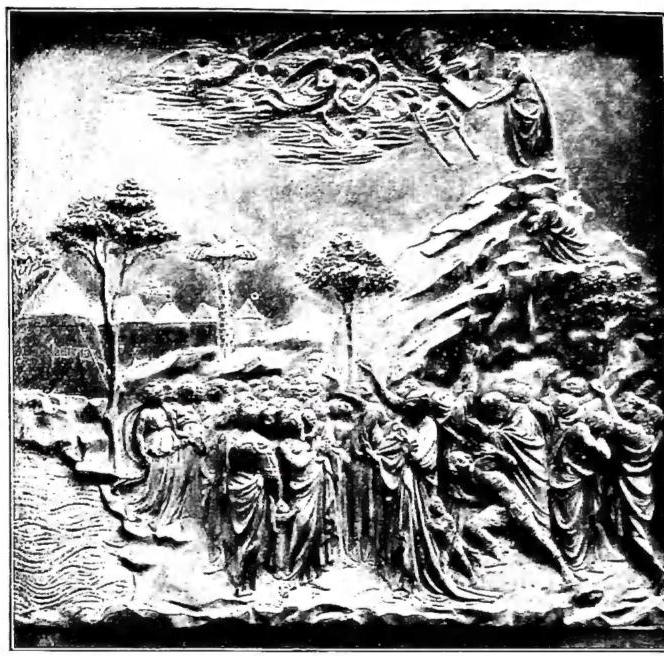
(photo Alinari)