TABEEL. - By the name “son of T.” is indicated, with a deliberately somewhat mysterious allusion, in Is. 7:6, a personage whom the king of Damascus, Rasin, and that of Samaria, Phacee (Pegah), wished to substitute for the king of Jerusalem, Achaz, in punishment for his refusal to join the anti-Assyrian league that they had planned.
The two allies attempted to carry out their plan and proceeded to besiege Jerusalem, but were diverted from it by the arrival of Theglathphalasar III, who in that campaign definitively overthrew the Kingdom of Damascus (732).
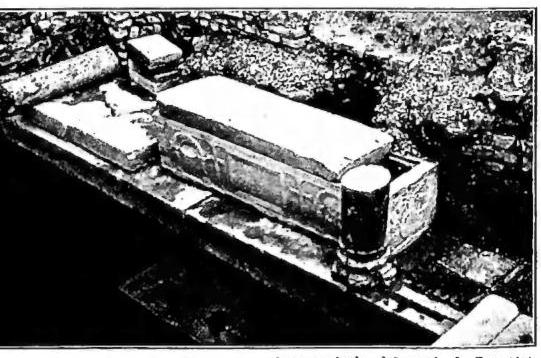
(by courtesy of Prof. D. Zavallo)
TABERNACLE - Shrine, “Christi tabernaculum,” with the tomb of Faustiniano and the base of the altar (5th cent.) - Concordia Sagittaria.
“good” in Hebrew should rather be ṭābh (with Aramaizing ā; was the individual designated an Aramean, from Damascus?). The second element will be -'al in the Jewish-Masoretic tradition, by allusion to the particle -'al, “no, nothing” (= “good for nothing”); in reality it would be -'el, as in the versions. In Hebrew the name should be Ṭōbh'ēl, or Ṭōbhī'ēl; cf. Assyrian Ṭāb-ilu.