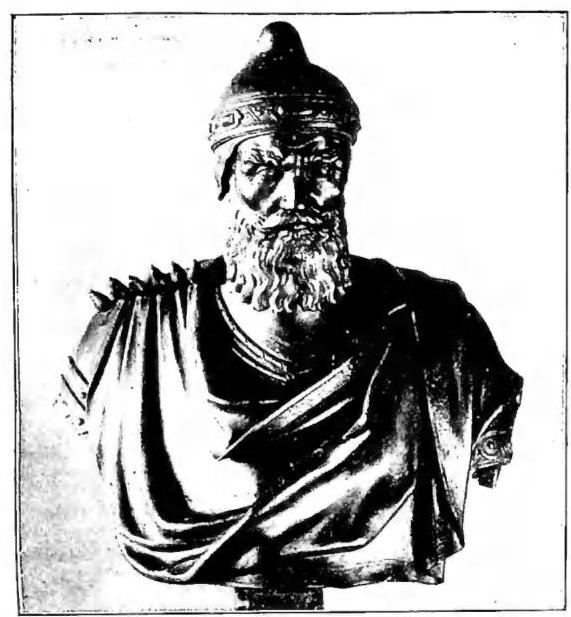
VENIER, SEBASTIANO

VENIER, SEBASTIANO. - Doge of Venice, b. ca. 1496, d. 3 March 1578.

After holding high offices in the Republic, including those of Savio Grande, Provveditore Generale alle Fortezze, and Procurator of St Mark, in 1570 he was appointed Provveditore at Corfu. In the same year, named Captain General of the Sea, he reorganized the fleet and laid siege to Durazzo. In 1571, after the Holy League was concluded, he organized the war against the Turks with the allies, during which he often clashed with Don

The introduction of Christianity must have been favored both by the city’s military and civil preeminence and, after the fall of Jerusalem, by the formation of a flourishing Jewish colony, which had a stable residence here attested by the existence of its own burial ground. The presence of this Jewish group suggests that a Christian community formed early, but nothing is known of its size or, even less, of the period when it was erected as a diocese. As to the historicity of the first bishop commonly known, named Felix, a Passio manipulated in five different versions (BHL, 2894, 2895 and 2895 b; Anal. Boll., 1921, pp. 246, 252-59 and 270-79) offers scant credible elements. The martyr Felix actually belongs to the city of Thibiucca (Proconsular Africa), while the namesake from Venosa may be either a saint from another Italian city or the same African bishop or—less acceptable a hypothesis—a local martyr unknown, whose burial place is likewise unknown. The second name in the catalogue, Philip, consecrated, according to Ughelli (VII, p. 168), by Pope Fabian in 238, is legendary, no less than the subsequent one, John, whom Ughelli places under Leo I (440-61) and credits, in imitation of that pope’s deeds, with having stopped Attila threatening V. Lanzoni (I, p. 299) places him instead in the 16th century, considering him a corruption of Bongiovanni. Asterius (or Austerius), included by a Vita et translatio s. Sabini of Canosa (cap. II, BHL, 7443) among the prelates who attended the blessing of the church of St Andrew in Barletta by Gelasius I, is likewise unfounded, because at the time of Gelasius the bishop of V. was Stephen (492-502; Jaffé-Wattenbach, 653-660, 689), who is the first historically known in the Venosan catalogue; he attended the Roman Councils (501-504) of Pope Symmachus.

After Felix, the city’s history and its inevitable decline due to barbarian invasions left no memory of prelates until 1014, when Peter is recorded as present at the consecration of the so-called Madonna della Foresta at Lavello. Occupied by the Ostrogoths (493-553), placed under the gastaldate of Acerenza by the Lombards, V. during those centuries passed repeatedly from Byzantine to Saracen hands, who razed it to the ground. Revival began only with the Normans: Drogo, brother of the Guiscard, while Giacinto (or Hyacinth; 1053) was bishop, donated to Abbot Gualfrido the famous abbey of the Most Holy Trinity, which was to house the remains of most of the Hauteville family. Despite the succession struggles sometimes violently affecting the city, V. continued to flourish, so much so that under Frederick II it was a temporary seat of the empire. The advent of the Angevins marked the beginning of its definitive decline and of the succession of lordships—from the Sanseverino to the Aragonese and the Bourbons—that weighed upon the city. The series of bishops after Giacinto is almost complete. Among them are: Constantine (or Costanzo), who in 1071 took part in the consecration of the church of Montecassino performed by Alexander II and received various donations for the Most Holy Trinity from Duke Robert; Peter, present at the Third Lateran Council of 1179 and cited for numerous grants to the Benedictine abbey of St Mary of Monte Albo near V.; and Bongiovanni (1501), personal physician to Alexander VI and generous helper during a terrible plague, for whose cessation the church of SS. Rocco and Sebastiano was built and given to the Capuchins.

The diocese, which included Forenza, Spinazzola and smaller centers, since 1818 has extended its jurisdiction also over that of Lavello, suppressed by Pius VII with the bull De ultiliori Dominicae.

MONUMENTS. – Just outside the town, in 1853, a Jewish hypogeum of the 3rd-4th century AD was discovered, carved out of volcanic tufa: it consists of a main gallery from which side corridors and smaller passages branch off. There were found 47 inscriptions painted in red on a lime wash or scratched on the closing of the loculi and numerous forms. Written in Greek, Hebrew or Latin, not without vernacular terms, they offer invocations for peace and Jewish symbols such as the

Article illustration
(photo Fiorentini)
Venier, Sebastiano – Bust, work by T. Aspetti – Venice, Ducal Palace.

seven- and nine-branched candelabrum. Recently, near the catacomb, a smaller hypogeum rich in marbles has been discovered, with a Roman column at the entrance serving as an architrave; an inscription has revealed a “Markellus,” head of the city.

Outside the city walls too is the monumental complex of the Most Holy Trinity, comprising two churches and the remains of the Benedictine monastery. The smaller church, older, a veritable royal chapel of the Norman county, is said to have risen on a temple sacred to the god Hymen in the 4th century, but from the little that remains of antiquity it is impossible to establish its exact origin. The building, of modest proportions, is connected to the once-powerful monastery by a square room, the so-called foresteria, which from its form would seem to have been turned into a fortress when the abbey passed into the hands of the Knights of St John of Jerusalem (1292; cf. Ughelli, VII, p. 176). The entrance, at the end of the foresteria, with its fine pointed portal, leads into a three-aisled space divided by pillars and closed by a semicircular apse. The original construction by Drogo, consecrated by Nicholas II in 1059, was much altered during the restoration works of the Hospitallers; what remains are a Norman capital used as a holy-water stoup, the so-called column of friendship and the tomb of Alberada, first wife of Robert the Guiscard, the sole survivor of the Norman tombs that housed the remains of the Hauteville family. It consists of a cipollino sarcophagus with two long-columned capitals on either side supporting a classical entablature; similar examples inspired by V. Canosa, the funerary monuments in the cathedral of Palermo and the tomb of Alfano in St Mary in Cosmedin in Rome. Finally, note the few remains of 14th-century wall frescoes, including a Pietà attributed to R. Oderisi. The second church, larger but unfinished, was begun in the early decades of the 12th century, just beyond the apse of the smaller one. It was to be a great Latin-plan basilica of m. 69 x 22.50, with three aisles divided by columns, a wide transept, deep presbytery, ambulatory and externally reabsidated curve. Built with material taken from the Roman buildings of V., it is inspired by certain Italian and Burgundian monumental examples, but perhaps with greater harmony. Notable are

Article illustration
VENTIMIGLIA, DIOCESE OF – Panorama of Ventimiglia.

(photo Alinari)

Of the other churches in Venosa (S. Maria della Scala, S. Biagio, S. Martino, S. Domenico and the Purgatorio, which contain modest works by various authors), only the cathedral retains any notable interest. After the demolition of the old building, also dedicated to S. Andrea, the new church was erected through the efforts of Pirro del Balzo and was consecrated in 1531. It features a fine portal by Cola di Conza (1512), a bell tower with Roman marbles and inscriptions, a rich Chapel of the Sacrament with a substantial marble arch (1520) and minor works. Finally, mention should be made of the medieval convent of S. Francesco, whose church has almost nothing remaining of the original structure.

BIBL.: Ughelli, VII, pp. 166-82; P. A. Corsignani, Synodus diocesana ecc. Venusiane. Historica monum. una cum episcop. catalogo, Rome 1738; Moroni, XCIII, pp. 166-74; Cappelletti, XX, pp. 493-509; O. Hirschfeld, Le catacombe degli Ebrei a V., in Bull. dell'ist. di corrisp. archeol., 1867, pp. 148-52; A. Lavista, Notiz. stor. degli antichi e presenti tempi della città di V., Potenza 1868; P. B. Gams, Series episcop., Ratisbon 1872, p. 940; N. Albano, Cenno topogr.-stor. su V., Naples 1879; G. Lenormant, Melfi e V., ibid. 1883, p. 38 seq.; id., La catacombe juive de V., in Revue des études juives, 6 (1883), pp. 200-207; R. Garrucci, Cimitero ebraico di V. Puglia, in Civ. Catt., 12th series, 1883, 1, pp. 707-720; G. Crudo, La Sma Trinità di V. Mem. stor. e diplomatiche, Trani 1899; A. Avena, Monum. dell'Ital. merid., Rome 1902, pp. 323-35; G. Di Lorenzo, V. e la regione del Vulture (Italia artist., I, XXIV), Bergamo 1906; N. Jacobone, Venusia, Storia e topografia, Trani 1909; W. Arslan, Relaz. di una Missione artist. in Basilicata, in Campagne della Società Magna Grecia, Rome 1928, pp. 81-83; N. Jacobone, La patria di Orazio, in Fagiglia, 1935, pp. 307-32; Lanzoni, I, pp. 158, 285-88, 291-90, 396; R. Bordenache, Due monum. della Ital. merid., in Boll. d'Arte, 27 (1933), pp. 178-84; id., La Sma Trinità di V., Rome 1937 (offprint from Ephemeris dacoromana); E. Lauridia, Guida di V., Melfi 1935; J. B. Frey, Corpus inscript. judaic., I, Vatican City 1936, pp. 420-43; C. Valente, Riflessi della civiltà della Magna Grecia e di Roma, Rome 1938; Cottineau, II, 3328; S. Bottari, La Bourgogne et la première architecture normande en Italie méridionale et en Sicile, in Revue des arts, 3 (1953), pp. 2-12.