STROZZI, FAMIGLIA. – Its known progenitor was a certain STROZZA of Ubaldino, who lived in the second half of the 13th century. From his sons, PINO, LAPO, PAGNO, and GERI, four lines descended.
BARDO di Lorenzo, a descendant of PALLA di Lapo, moved to Ferrara, where his branch died out in 1737. A descendant of Luso di Lapo, LORENZO di Giovan Battista il Vecchio, was the progenitor of the branch that continued in Florence throughout the 19th century, while his brother, FILIPPO, began another branch by moving to Rome. Finally, from Geri descended NANNE, progenitor of the S. of Ferrara, and BENEDETTO, progenitor of those of Mantua. The S. took an active part in the political struggles in Florence during the republic and in the early years of the principate, and many of them distinguished themselves in the military, ecclesiastical careers, literature, and the arts.
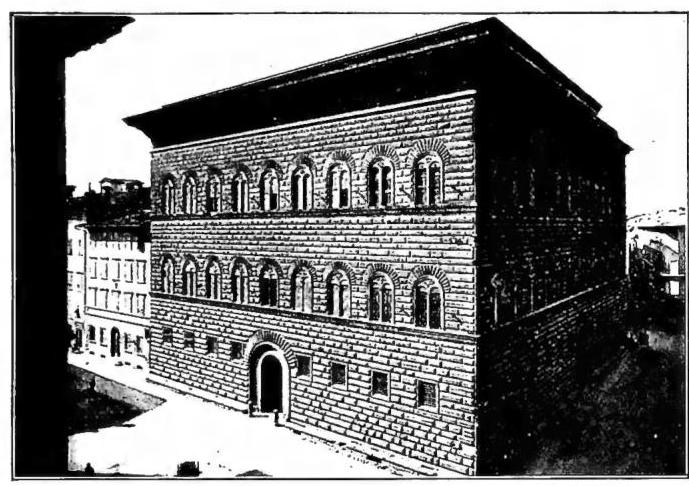
TOMMASO was one of the Eight Saints in the war against Gregory IX. FILIPPO il Vecchio, hostile to the Medici, was banished from Florence and then, readmitted, began the construction of the family palace. GIOVANNI BATTISTA, called Filippo, initially a supporter of the Medici, then, urged on by his son Piero, after the death of Duke Alessandro joined forces with the exiles; captured at Montemurlo and taken to Florence, he either killed himself or was killed in prison. PIERO, at first a favorite of Duke Alessandro, later became his bitterest enemy, and after his death led the opponents of Cosimo I. Following the defeat at Montemurlo and his father’s death, he entered the service of the King of France and commanded his troops in the war of Siena, subsequently continuing the resistance at Montalcino. Appointed marshal of France, he fought under the command of the Duke of Guise and fell on the field at Thionville on 21 June 1558. Piero’s brother, LEONE (b. 1515, d. 26 June 1554), despite the favors he had received from Clement VII, out of hatred for the Medici entered the service of the Order of Malta and fought the Turks under Andrea Doria; he served France against the Medici and the Empire. He was mortally wounded while attempting a landing on the Tuscan coast. Among the ecclesiastics, the following should be remembered: ROBERTO di Carlo, a canonist who taught at the University of Pisa at the end of the 15th century and was vicar general of that diocese for Archbishop Cardinal Riario, and especially LORENZO who, appointed by the King of France bishop of Bé-