
ANIMATION. —
I. WHAT BIOLOGY SAYS
The philosophical and theological problem of a., namely, the identification of the moment at which the rational soul is infused into the body, and the still heated debate between the concept of immediate a., that is, at the very moment of conception, and the concept of mediated or delayed a., at much more advanced stages of development, must find their premises in the facts of biology. It is the biologist’s task to provide these facts; their interpretation belongs to the philosopher and the theologian. It is quite clear that the biologist who scientifically and experimentally studies only the material manifestation of life and biological phenomena, since this alone is perceptible to our senses and alone is measurable (spatial, weight, and temporal measurements), cannot experimentally address the problem of the soul, even though, for the vitalist biologist, the soul is always taken into consideration in the phenomena of reactivity, adaptation, and regulation.For the biologist, the problem of the soul is identified, in certain respects, with the problem of individuality.
The supporters of immediate a. of the more recent school, opposed to the conception of delayed a., after more or less advanced development or after birth,
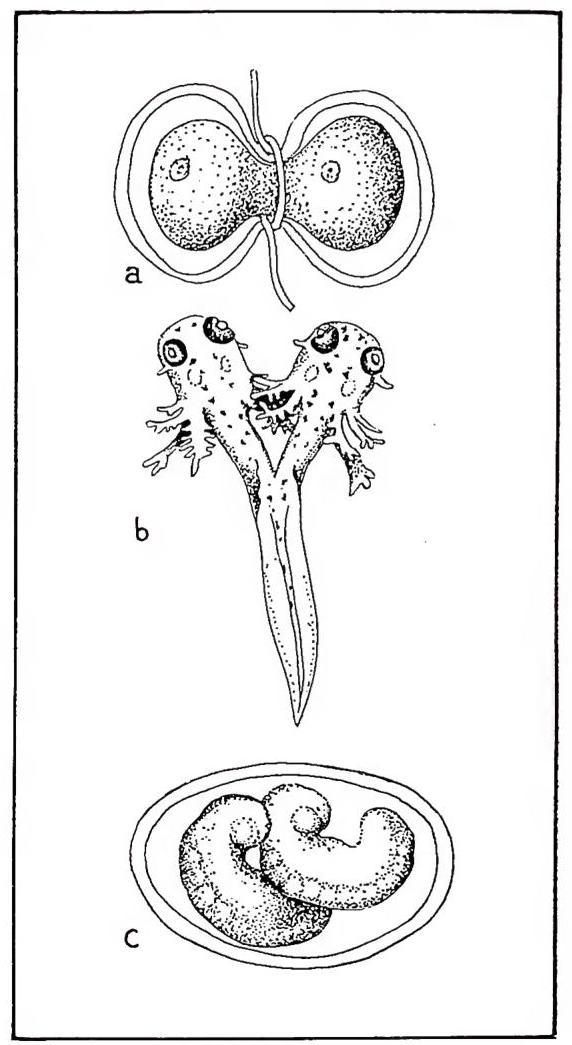
admit that individuality, and therefore the soul, is established in the fertilized egg. Now embryology demonstrates to us that the individuality of the fertilized egg is by no means something already irrevocably established. It is possible to divide the segmented egg at the stage of its first two cells, or even at more advanced stages, by tightening a loop made of an extremely thin thread (experiments on amphibians), into two parts: each part gives rise to a complete embryo, and the egg that was supposed to produce a single individual produces two individuals (Spemann, Herlitzka, etc.).
In other animals, such as echinoderms and jellyfish, it is possible to free the various cells of a germ at the morula stage: each cell which, without intervention, would have been one-fourth, one-eighth, one-sixteenth, or one-thirty-second of an individual becomes a complete individual, albeit smaller in size because of the deficiency of material (Driesch, Zoja, etc.). This phenomenon can also occur naturally and, in many cases, is the normal condition. It is the phenomenon of polyembryony, that is, the development of many embryos from a single egg. In certain hymenopterans, thousands of individuals are born from a single egg (Silvestri). Nor is it a rare phenomenon in the human species: these are the cases of monochorionic twinning, that is, of fetuses contained in a single chorion and nourished by a single placenta; they derive from a single egg which, for unspecified reasons, divided at a certain stage. Twins are common, but triplets, quadruplets, and quintuplets are also known. They are all siblings of the same sex and resemble one another to a remarkable degree, often even in the smallest details (fingerprints, etc.).
But perhaps even more striking is the case of the fusion of eggs. It has been possible (Mongold and Seidel) to fuse a germ of Triton alpestris with a germ of Triton taeniatus, and a single individual developed, a chimera of two species, which, having originated from two fertilized eggs, had two fathers and two mothers.
In embryology, the problem of individuality is connected with the concept of potency, a finalist concept indicating the future possibility of development. The egg, it is said, is totipotent; that is, it possesses in its entirety the potentiality to produce a whole individual. When the egg divides into the first two cells, they are theoretically still totipotent, and indeed, if separated, they express this totipotency by giving rise to two individuals; in reality, however, if no intervention takes place, their actual potency is less than the total potency, since they produce only half an individual. Why this limitation, just as the total potencies of two fused eggs are limited? For the preservation of individuality: the two blastomeres of an egg, or the two experimentally fused eggs, inhibit one another, and from this reciprocal inhibition arises the harmony of an individuality. Once the blastomeres of an egg are freed, the reciprocal inhibitions are eliminated, and the totipotencies of the individual cells are put into operation. If the cells are isolated at more advanced stages, they can no longer regulate themselves and produce new complete individualities. As development proceeds, the cells lose the material possibility of expressing their totipotency, which, theoretically, is still contained within them, probably, according to the concepts of cytogenetics, in their nucleus.
Do the egg and the spermatozoon, before their union, also possess their totipotency? The phenomena of the part-
Ido Spemann, Zool. Jahrb., Suppl. VII, 1901; Spemann e Falkenberg, Arch. Entw. mech., XLV, 1919
ANIMAZIONE - a) Constriction of a newt egg (urodele amphibian) with a silk thread; b) Bicephalous monster resulting from incomplete constriction; c) Monozygotic twins obtained by complete constriction.
parthenogenesis, that is, the development of an unfertilized egg, answer us in the affirmative. In many animals, the development of eggs without the intervention of the male is a natural occurrence; indeed, in certain species the males are not even known (certain races of Artemia salina). The egg is activated by other factors of a chemical or physical nature. Experimental parthenogenesis has been widely practiced, and it has now even become possible to produce parthenogenetic animals among mammals (rabbits). Theoretically, it is a general phenomenon. Thus fertilization is not necessary for the emergence of an individual.
The problem of reproduction and individuality presents other aspects of the greatest interest, which demonstrate that it is not limited to egg cells but that, theoretically, it must refer to all the cells of an organism. There are animals, such as freshwater hydras (coelenterates), which reproduce not only through fertilized eggs but also agamically, that is, independently of eggs and spermatozoa or gametes: any group of cells in the body enters into reproductive activity, a bud forms, and a new hydra is born from II. Thus, totipotency, the idea of biological unity and of a higher individuality, exists in all the cells of the body. In the lower forms, where limited differentiation is not an obstacle, this totipotency can be put into action. In the higher, more differentiated forms, such totipotency can manifest itself only up to a certain stage: thereafter, organic and histological differentiation comes to constitute an insuperable obstacle to the activation of the totipotency inherent in the protoplasm of each individual cell of the organism. But where the concept of individuality becomes notably—
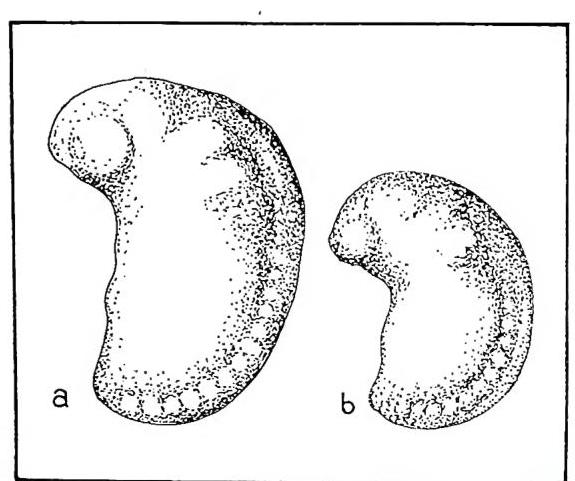
Finally, there are monstrosities in which the two heads fuse more or less completely into a single body in which, however, their duplicity can be detected.
These conditions of psychological duplicity in a single body, provided that the heads are separate, or of the psychic activity of an isolated head, lead us to find in the head the organ that the rational soul uses for its most specific manifestations. The amputation of the most diverse parts of the body does not in fact compromise the rational personality of man, nor do amputations and lesions of various parts of the head or even of the brain itself. A comparative study of the brain in man and in the other vertebrates demonstrates that the human brain contains parts lacking in the other forms: the specific convolutions of the neocortex. This would be the instrument necessary for the soul to elaborate reasoning during life, and this nervous apparatus would be what enables man to express the highest manifestations of his consciousness. Lesions of these cerebral areas eliminate every apparent consciousness in man. The body houses this material receptacle of the spirit; its well-being determines the well-being of the latter, and psychic manifestation is consequently influenced by it, just as it is influenced by the external conditions of the environment that act upon the body.
Science has neither the means nor the possibility of experimenting on and analyzing the rational soul, which is immaterial; it can only identify the moment at which it manifests itself through the child’s first psychic phenomena, but it is incapable of saying whether it already resides in the body before its manifestation. It can, however, ascertain that the first psychic manifestations appear with the completed myelination of the nervous pathways, that is, when the specific nervous differentiation (v.) is fully realized, allowing, through the myelin coating of the fibers, that nervous conduction which makes possible the perception of the sensible world, the accumulation of experiences and, on their basis, the expression of conscious psychic behavior. This differentiative process, however, occurs after the child’s birth and is completed several months later. Science brings certain facts to our attention that must be considered in evaluating the problem, but it is certainly not capable of resolving it: they demonstrate only that, in the study of life, not everything can be investigated and resolved by a method applicable solely to matter.
Alberto Stefanelli
2. WHAT PHILOSOPHY AND THEOLOGY SAY
All philosophers agree in admitting that, from the moment of fertilization, the new being resulting from it possesses a soul. When, in the human species, one speaks of immediate or mediated animation, one simply wishes to indicate the question—which remains unresolved—of whether that soul is already the rational, definitive soul, or a transient soul, whose task would consist in preparing the organization of matter, that is, the histological-anatomical differentiation of the body, until rendering it capable of being informed by the rational soul.Here indeed lies the point under discussion.
1. For proponents of mediated animation, the fertilized human egg does not yet possess—as neither do many subsequent stages—that bodily organization (matter) which characterizes the human being; it is therefore not proportioned to being immediately vivified by a soul (form) as elevated as the rational soul. The decline, in science, of the preformationist theory, and the subsequent establishment of the epigenetic theory, provide exhaustive proof of how elementary the organization of the egg still is. Moreover, it would be erroneous to assert that the rational soul can construct the body which it must inform, that is, be its efficient cause of organization; for the formal principle presupposes the subject to be actualized, and communicates its reality to it only when it is sufficiently prepared to receive II. Clearly, this preparation must be conferred upon it by an efficient cause different from the formal cause. Consequently, adherents of the hypothesis of mediated animation maintain a succession of forms (non-rational souls), increasingly elevated during the ontogenetic processes, which would prepare matter to receive the supreme form, the rational soul. No one can determine precisely and with certainty how many these provisional forms are, or when they are replaced by the definitive one.
The other hypothesis—that of immediate animation—is perhaps today the one most universally upheld by philosophers and by those biologists who take an interest in such problems. All admit the structural simplicity of the fertilized egg; nevertheless, they hold that it already represents a man, indeed that particular individual, and that therefore the matter is already sufficiently prepared to receive the infusion of the rational soul, which confers upon it all at once the being of body, vegetative, sentient, and intellectual being. They too find, in genetics, scientific data of great value in support of their assertion. It is enough to mention the doctrine of the genotype, according to which the chromosomes of the fertilized egg contain the entire hereditary endowment—generic, specific, and individual—of the organism that will result from it after a more or less lengthy series of transformations. The external environment may also profoundly influence the expression of individual characteristics; indeed, these will always be the result of the interaction between the genotype and its environment. But ultimately nothing will be produced that is not in some way contained in the hereditary endowment already observable in the fertilized egg. In the interaction of the genotype with the environment, the initiative will always belong to the former, which, if it does not find favorable conditions, will adapt itself in its development and may even sacrifice some less essential characteristic; but it will irresistibly tend to become that individual determined by the genetic complex.
Moreover, all the marvelous transformations that lead from the fertilized egg to the perfect organism demonstrate a reciprocal connection and an orientation so precise that they seem difficult to explain without admitting a single substantial form from the first to the final stage of development.
It is true that at many embryonic stages the rational soul does not yet find suitable matter for the exercise of some of its functions; but it is not required that it should be able to exercise all of them from the beginning. It seems sufficient that it be able to manifest some of the most fundamental, such as, for example, the vegetative function (which, even in the embryo, is characteristically human). But if, for the infusion of the rational soul, one were to demand a bodily organization so highly developed as to enable the soul to exercise its most specific function—the intellectual cognition—then it would have to be said that the rational soul is infused into the body only a long time after birth; a view that is foreign to the thinking even of the proponents of mediate animation. Moreover, Innocent XI condemned the opinion that considers it probable that the rational soul is infused only at birth (Denz-U., n. 1185).
2. In cases that are more or less seriously teratological—some of which were mentioned just now in the first part of the article—philosophy has little to add to what has already been said. It is the scientist’s task to decide when there are two individuals or only one, and at precisely what moment one individual becomes two or more. The proponents of immediate animation will then explain that at that instant as many new rational souls are infused as there are new individuals formed; those of mediate animation will admit the same infusion at later stages. When, on the other hand, two individuals become one, the proponents of immediate animation will be forced to explain that one dies and its matter is given life by the substantial form of the other (which one it is, science must determine); whereas those who advocate mediate animation will resort to this solution only when the unification of the two individuals occurs after the stage at which they admit the infusion of the rational soul.
3. Catholics are perfectly free to accept whichever hypothesis they prefer. For its part, the Church considers all who procure the expulsion of the human embryo, at whatever stage of development it may be, guilty of the crime of abortion; but by this it does not intend theoretically to define the age-old problem. Since the «dubium facti» persists as to whether or not the human embryo is given life by the rational soul from the beginning, whoever procures its expulsion hypothetically accepts responsibility for actual homicide; and as such is subject to ecclesiastical law. The same consideration applies to the provision by which the Church prescribes that every aborted fetus or monstrous product be baptized: what is at stake is the eternal salvation of a possible human being for whom baptism is necessary «necessitate medii»; and in this case one must in practice follow the safer course.
BIBLI: A. Lanza, La questione del momento in cui l'anima razionale è infusa nel corpo, in Boll. filosofico, 4 (1938), pp. 211-266; 335-67; 5 (1939), pp. 36-67; 206-73; T. Dobohansky, Genetics and the Origin of Species, Nuova York 1941; M. D'Halluin, Animation et desanimation, Parigi 1944; L. Loeb, The Biological Basis of Individuality, Springfield (Ill.) 1945.