Machine translation of the 1948–1954 Italian original. The original text is authoritative.
CATERINA D'ARAGONA. - Queen of England, daughter of Ferdinando V and Isabella la Cattolica, born at Alcalá de Henares on 15 Dec. 1485, died at Kimbolton Castle on 7 Jan. 1536. After an Anglo-Spanish treaty had been concluded in 1489, with an anti-
French function, C. was designated as the bride of Arturo, prince of Wales. The marriage was celebrated in Nov. 1501, when the spouses had reached the appropriate age. Widowed six months later, C. became engaged, having obtained papal dispensation, to the new heir apparent, the future Enrico VIII, who was the brother of her deceased husband. The wedding took place on 3 June 1509, when the new king ascended the throne. Only one daughter, Maria, born in 1516, survived; four other children, two girls and two boys, were stillborn or lived only a few weeks. The lack of an heir estranged Enrico from C. Seized
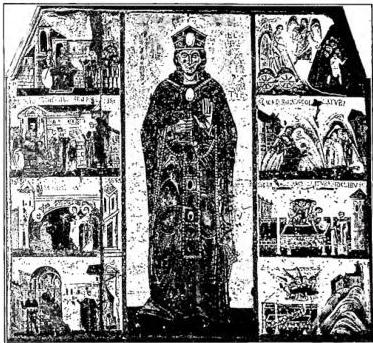
(phot. Alinari) CATERINA D'ALESSANDRIA, saint - S. Ecaterina and scenes from her legend (13th cent.) - Pisa, Civic Museum.by a strong passion for Anna Bolena, the king conceived the idea of divorce. Alleging the supposed invalidity of the papal dispensation, in June 1527 the king informed his wife of the necessity of separating. C. opposed her husband's intention with all her strength. When the king's attempt to obtain annulment of the marriage from pope Clemente VII failed, such annulment was pronounced by C. Cranmer, archbishop of Canterbury, and sanctioned by Parliament. Thereafter C. spent the last years of her life devoted to religious practices.
BIBL.: J. Gairdner, s. V. in Dict. of National Biography, III, cols. 1199-1212; Pastor, IV, II, pp. 454-83; C. Fatta, Il regno di Enrico VIII, Firenze 1938. Silvio Furlani
Cite this article
“CATERINA D'ARAGONA.” Enciclopedia Cattolica, vol. III (1949), p. 663. Azione Romana digital edition, https://azioneromana.com/article/caterina-d-aragona.