
COLUCCI, GIUSEPPE. – Archaeologist and historian of the Marches, born at Penna S. Giovanni (Archdiocese of Fermo) on 19 March 1752, died at Fermo on 16 March 1809.
After completing his first studies in his native town, he continued them at Fermo from 1767 under the guidance of the Jesuits. Ordained a priest in 1775, he earned a degree in law at the local university, where shortly thereafter he was appointed “lecturer” in the Faculty of Law. Apostolic protonotary in September 1784, he was admitted as a member by many academies.
His principal efforts were devoted to the study of regional antiquities, to which he had been attracted from his youth by the imposing ruins of ancient Faleria (today Piane di Falerone). He began with: Delle antiche città picene Faleria e Tignio (Fermo 1777; with appendix, Macerata 1778) and continued at Macerata with Cupra Marittima antica città picene (1779), Treja antica città picene, oggi Montecchio (1780), Del Castello navale degli antichi Fermani (1783), Memorie istoriche della antica Terra di Monte Rubbiano, Osservazioni critiche e Lettere apologetiche.
From the particular history of individual places he turned to that of the entire region: Dei primi abitatori del Piceno (Fermo 1781 and 1785), Dei vari confini del Piceno (ibid. 1785), Dei vari popoli che hanno abitato il Piceno (ibid. 1785), and Delle varie Metropoli del Piceno (ibid. 1785); and, relying on the collaboration of others, he conceived the vast plan of collecting the ancient records of all the localities of Picenum, and for this purpose he also established a printing press.
Thus were produced the folio volumes of the Antichità picene, which still constitute the principal source of their research for scholars today.
Volume I (Fermo 1786) was dedicated to Pius VI, who, having greatly appreciated it, ordered, by a chirograph dated 27 June 1786, that “each city, town, or castle of Picenum should be provided with a copy of the historian of the Marches.” In 1796, volume XXX appeared, “from the author’s presses,” entirely devoted to his native town (Memorie istoriche della Terra di Pennasangiovanni).
The work was interrupted at volume XXXI (to which are added four fascicles of plates, regarded as volume XXXII) by the political events of the Jacobin and Napoleonic period, which compelled C., who had intended to publish works also on Picene diplomatics and on the illustrious men of the region, to cease all his work.
With the year 1800, C. would have resumed the suspended works, had his close friend C. Brancadoro, who had been made a cardinal and Bishop of Orvieto, not forced him to follow him as vicar general of that diocese. When Cardinal Brancadoro was transferred to the archiepiscopal see of Fermo, his native city (1803), he confirmed C. as vicar general.
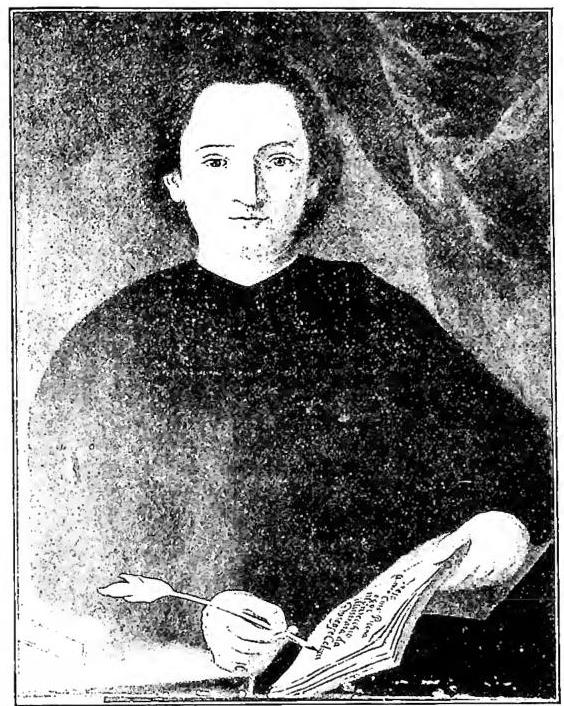
(photograph: National Photographic Cabinet)
COLUCCI, GIUSEPPE - Ritratto del 1780 ca., con l'inizio del saggio su Treja, antica città picena - Penna S. Giovanni, palazzo Comunale.
Antichità picene (cf. G. Spadoni, in La Biblioteca comunale Mozzi-Borgetti di Macerata, relazione storico-bibl. nel CL anniversario della inaugurazione, Macerata 1937, pp. 21-25).
Il C. è considerato il «Muratori delle Marche».