
GÉRŠOM BEN JĒHŪDHĀH. - Rabbinic authority, called the “light of the diaspora,” of the late tenth and early eleventh centuries, d. at Magonza. Many young men from the most varied countries flocked to the Talmudic school he directed. He was lenient in judging certain Jews of Magonza, including his son, who converted to Christianity in order to escape banishment from the city by the emperor Enrico II. With his own hand, in order to avoid unreliable variants, he transcribed the text of the Gēmāra' (v.) and of the Bible; he Talmud (v.) in the style of the gē'ōnīm (v.). He was also a great decisor (v. DECISORI).
Among the “institutions of G.” (some are later, but were transmitted in his name) should be counted: the prohibition of polygamy (this prohibition was temporary in G.’s mind, but Western Judaism declared it permanent); the prohibition of divorce against the woman’s will; the obligation of the community to support women abandoned by their husbands; the prohibition of seizing deposits (not constituting an actual pledge) as a consequence of unpaid debts; the prohibition of resorting (except in cases of great importance) to non-Jewish courts; and the obligation to observe the secrecy of correspondence. G. was the author of many liturgical compositions.
(by courtesy of rev. prof. G. Cases)
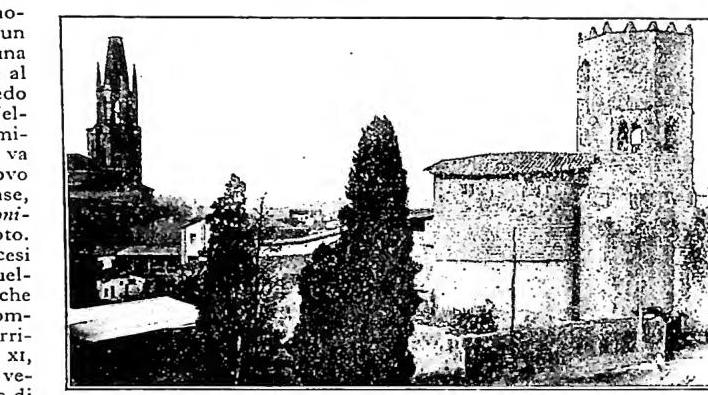
GERONA, DIOCESE of - Churches of S. Felice and S. Pietro di Galligans
(tenth and eleventh centuries) - Gerona.