
GHETTO. — A quarter in which Jews were obliged to live, as distinct from the quarters in which Jews in certain cities gathered of their own free will in order to live peacefully according to ancestral customs. The ghettoes were enclosed by a wall and provided with a gate that remained closed at night.
Voluntary separation was encouraged by various councils, beginning with that of Narbonne in 1050. The Jewish settlement was to be situated, if possible, far from the churches. In 1555 Paul IV assigned separate quarters to the Jews of Rome and of the other cities of the Papal States. The designation “ghetto” for Rome occurs for the first time in a papal bull of 1562. The ghetto of Venice arose in 1516, but a separate Jewish quarter, even without the designation “ghetto,” already existed in Turin in the first half of the fifteenth century. Jews were not always and everywhere dissatisfied with the ghetto. Emancipation brought about the abolition of the ghetto. In Rome the ghetto remained until 1870.
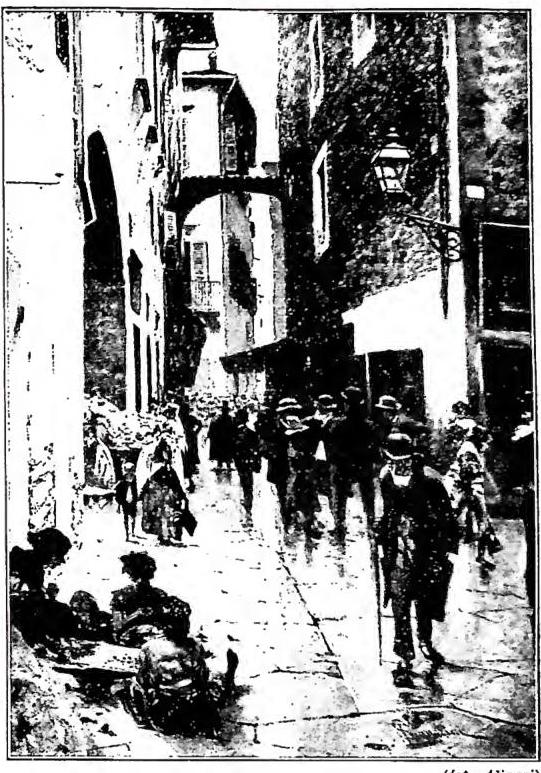
(Alinari photograph)
GHETTO. - The g. of Florence. Painting by Telemaco Signorini (c. 1880) - Rome, Galleria Nazionale d'Arte Moderna.
zudio, etc. English gate, meaning gate, should also be taken into consideration, since the gate closed at night and the guard constituted the true characteristic of the g.