
GUIDI, IGNAZIO AND MICHELANGELO. - The first, an Italian Semitist, b. in Rome on 31 July 1844 (his father Michele was the last finance superintendent of the Papal State), d. there on 18 Apr. 1935, one of the greatest Orientalists of the past generation. Professor of Hebrew and comparative Semitic languages at the University of Rome from 1876 to 1919, and there lecturer in the history and languages of Abyssinia from 1885 to 1919; senator of the Kingdom from 1914; member of very many Italian and foreign academies.
A typical representative of the renewal of Oriental studies in the 19th century on the basis of a rigorous philological method and a meticulous documentary research, besides a few but fundamental writings of a general character (Della sede primitiva dei popoli semitici, 1878: L'historiographie chez les Sémites, 1906) and of linguistics (among them grammars of Amharic, Coptic, and South Arabian) and brief but acute essays of biblical exegesis (Note ebraiche, 1927, a reworking of earlier writings), he gave contributions of great importance to Arabic-Muslim studies, publishing and studying literary texts (Ibn Hisâmi commentarius..., 1871-74; Studi su... Calila e Dimna, 1873; Tables alphabétiques du Kitâb al-Agâni, 1900), grammatical and lexicographical texts (Il Kitâb al-Istidrâk, 1890; Il libro dei verbi di Ibn al-Qûtiyya, 1894), historical texts (Annales... at-Tabari, 1882-86), juridical-religious texts (annotated translation of the summary of Mâlikite law by Halîl, 1921), carrying out historical research (Roma nei geografi arabi, 1877; L'Arabie antéislamique, 1921). But he must above all be remembered for the imposing complex of monographic works on the principal Christian literatures of the East: Syriac, Coptic, Arabic, Ethiopic, of the last of which he was, in his writings and in his teaching, the greatest master of the modern age. Thoroughly imbued, through faith and practice, with the Christian tradition, a profound connoisseur of Greek ecclesiastical literature, unequalled in minute philological work and in the investigation of the genetic relationships among the various literatures, he gave programmatic samples of his method with the Testi orientali inediti sui Sette Dormienti di Efeso (1884-85), with Le traduzioni dei Vangeli in arabo e in etiopico (1888), with Gli Atti apocrifi degli Apostoli nei testi copti arabi ed etiopici (1888), with the Textes orientaux inédits du martyre de Judas Cyriaque (1904-1906). He published and studied an extraordinary number of texts: in Syriac, La lettera di Simeone di Beth Arsham, the statutes of the school of Nisibis, Chronica Minora, some homilies of Severus of Antioch, the index of the Acta martyrum et sanctorum of P. Bedjan, etc.; in Coptic, the life of Daniel of Scetis, the apocryphal Testaments of the Patriarchs, etc.; in Ethiopic, besides a mass of minor texts, historical, hagiographic, liturgical, the great legislative collection Fetha Nagast, part of the Synaxarium, some royal annals, and on the civil and ecclesiastical history of Ethiopia he wrote very numerous articles, also popularizing ones, culminating in the brief but fundamental Storia della letteratura etiopica (1932). As the founder of the scientific study of the major modern language of Ethiopia, Amharic, G. promoted it, besides with the already mentioned grammar and with the edition of texts, with the great Vocabolario amarico-italiano (1901, photomechanical reproduction 1935, posthumous supplement 1940).
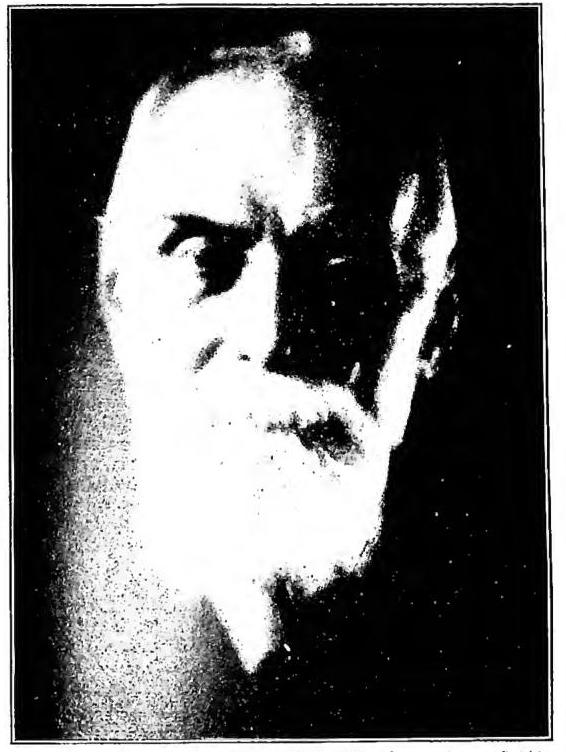
G. was co-editor of and contributor to the two great collections of texts of the Christian East, Corpus scriptorum christianorum orientalium and Patrologia Orientalis; with unequalled generosity, for over sixty years he gave counsel and help to countless enterprises and studies of others.
His son MICHELANGELO, b. in Rome on 19 March 1886, d. there on 15 June 1946, professor of Muslim History and Institutions at the University of Rome, besides felicitous essays in various Oriental literatures, gave the best of his genius to Arabic and Islamic studies, with novelty and depth of views, inspired by a broad critical and Christian conception of history. His best work is La religione dell'Islam (in Storia delle Religioni, edited by Fr. P. Tacchi Venturi, II, 3rd ed. Turin 1949).
Bibliography8 works
Giorgio Levi Della Vida