
LİLİTH. - A female demon, mentioned only once in the Bible (Isaiah 34:14), alongside the monsters and animals that will inhabit the earth on the "day of Yahweh".
Some connect the name with the Hebrew lajil (night); in Sumerian, however, lil has the meaning of wind and storm, and can also designate spirits
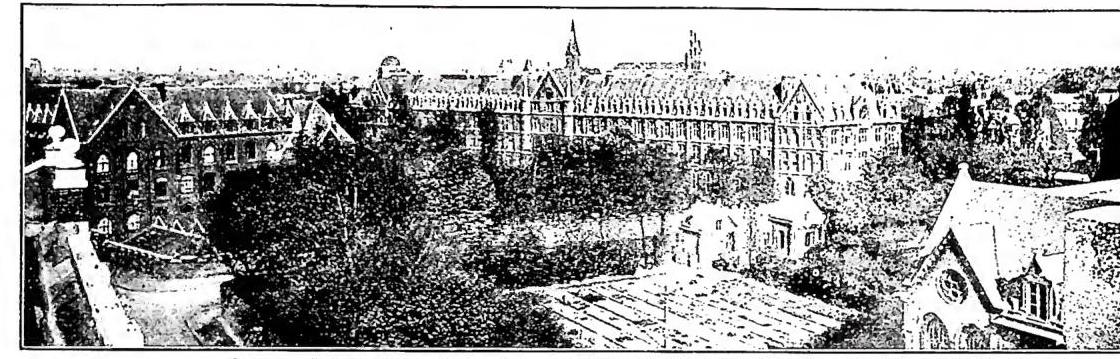
LILLE, DIOCESE OF - General bird's-eye view of the Catholic University of L. - Faculty of Sciences and Faculty of Medicine.
and demons in general; in Sumerian one also finds lulu in the sense of "debauchery"; thus, it would be a demon that incites lust. In Babylonian and Assyrian demonology, lili, lilitli, and ardat lili are demons of lust. Lilitli appears to be of Semitic origin and surpasses ardat lili in importance. In the Talmud, L. is represented as winged and with a human appearance. A malignant demon, she operates at night and preys upon men who sleep alone. Her figure develops extensively in the folklore of late Judaism and in Jewish mysticism. L. is Adam's first wife, also fashioned from dust. Later replaced by Eve, she takes her revenge by causing the deaths of newborns. One defends against her evil influences using amulets. Two different figures are also distinguished: an older L., wife of Samael, and a younger L., who is on bad terms with the former.