
MANNHARDT, WILHELM. — Mythographer of the ethnological school, born in Friedrichstadt on 26 March 1831, died in Danzig on 26 December 1880.
Once a follower of Max Müller’s naturalistic school and of his astral and meteorological mythology (high mythology): Germanische Mythen (Berlin 1858); Die Gotteswelt der deutschen und nordischen Völker (ibid. 1860), he subsequently turned his attention to agrarian myths populated by spirits, genies, goblins, and fairies (low mythology), as they appear in the agrarian folklore of the Germanic peoples, which he examined in particular in the following works: Die Korndämmen (Berlin 1868); Wald- und Feldhülte (2 vols., ibid. 1875–77); Mythologische Forschungen (Strasbourg–London 1884, posthumous).
(Alinari photograph)
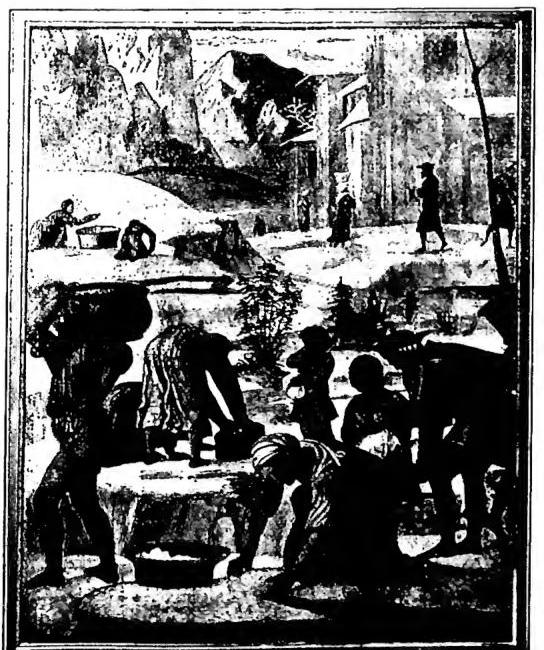
MANNA — The gathering of the manna. Painting by Bernardino Luini — Milan, Pinacoteca di Brera.
From the description of the extensive material concerning the harvest, collected by M., it emerges that the constant pattern consists in preserving the last sheaf, called the “mother sheaf” or “mother of the grain,” which represents the old harvest; or in preserving some animal that has been captured and placed in contact with it (dog, fox, rooster, hare, cat); and in transporting it to the granary, where the grains are mixed with those intended for the new sowing. The ancient sacrifice that once brought the harvest to a close and redeemed the remainder of the crop for profane use is here reduced to that of the captured animal; and if it is a man (e.g., the last reaper, the farm manager, or a stranger crossing the field), he is forced to pay the price of his ransom, certainly a remnant of a very ancient human sacrifice. Concerning the death and resurrection of the god in agrarian rites V. MISTERI.