Machine translation of the 1948–1954 Italian original. The original text is authoritative.
MASSA CANDIDA, MARTYRS OF. — This is the designation given to a large group of martyrs who perished at Utica during the persecution of Valerian (258–59). No written account of their martyrdom exists, except for a few references in the sermons of s. Agostino delivered in their honor, and some verses by Prudentius
that recount their martyrdom. The number of martyrs is also uncertain: s. Agostino speaks of more than 153, while Prudentius gives the number as 300. Their official commemoration was held on 18 August, as attested by the Carthaginian Calendar and the Hieronymian Martyrology.
Various hypotheses have been formulated concerning the meaning of M. C. Some, following the tradition recorded by Prudentius, have wished to see in it an allusion to the manner of their martyrdom; that is, the martyrs placed in the alternative of
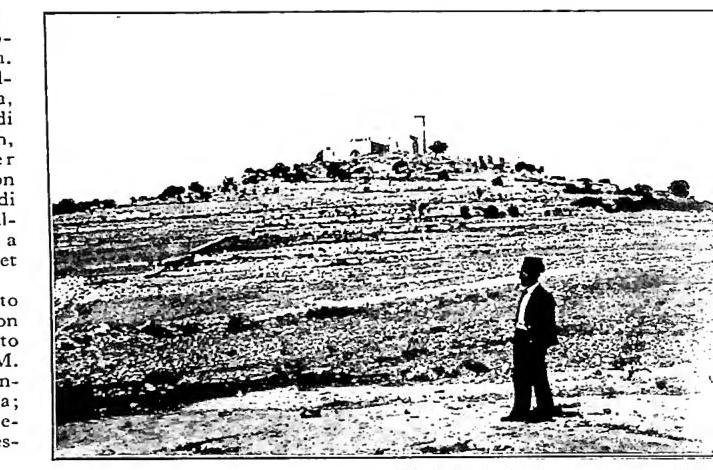
(photo: Terra Santa Zincographic Laboratory) MASPHA - View.They chose between sacrifice to idols and death and therefore preferred to throw themselves en masse into a pit filled with quicklime prepared for this purpose, or else they were thrown into it by the executioners. Others, however, more plausibly, and on the basis of the information reported by St. Augustine, think that the expression M. C. refers to the place of martyrdom. The event would therefore have occurred as follows: near Utica, the entire population of a village called M. C. precisely, whose bishop was a certain Quadratus, also killed for the faith, were martyred en masse, perhaps because they had been caught celebrating the liturgical offices contrary to Valerian’s prohibition. Others instead think that this concerns the collective commemoration of all the martyrs of the village who perished at different times.
BIBL.: Prudenzio, Peristephanon, XIII, 76-87; P. Franchi de' Cavalieri, I martiri della M. C., in Nuove note agiografiche (Studi e testi, 9), Roma 1902, pp. 39-51; H. Quentin, Les martyrologes historiques de moyen âge, Parigi 1908, pp. 268-70; G. Morin, La M. C. et le martyr Quadratus, in Rendic. Pont. Accad. rom. arch., Roma 1925, pp. 289-312; H. Delehaye, Les origines du culte des martyrs, Bruxelles 1933, p. 384 sg.; Martyr. Hieronymianum, p. 449 sg.; Martyr. Romanum, p. 357. Agostino Amore
Cite this article
“MASSA CANDIDA, MARTIRI DI.” Enciclopedia Cattolica, vol. VIII (1952), p. 196. Azione Romana digital edition, https://azioneromana.com/article/massa-candida-martiri-di.