
MISTRAL, FRÉDÉRIC. – Provençal poet, born at Maillane on 8 September 1830, died there on 25 March 1914. A disciple and friend of Joseph Roumanille, the foremost of the nineteenth-century Provençal poets, he founded the Felibrige together with him in 1854; its official organ was the Armana provençau. This literary school, which later became famous, sought the resurrection, on artistic foundations, of the Provençal language and of the various dialects of Languedoc. The endeavor subsequently expanded to include Catalan poets, who were invited to fraternize with the felibres in celebration of their shared Romance traditions. M.’s enthusiasm for this union is found in the hymn Chant de la coupe, of purely convivial and troubadour inspiration.
M.’s poetic career began with Li Provençalo, the first anthology of the new Provençal lyric poets: Roumanille’s influence is predominant. But it was with the poem Mirèio («Mirella»), published at Avignon in 1859 and enthusiastically greeted by Lamartine, that M. fully demonstrated the measure of his art, bound to the rustic themes and legends of Provence: this land comes to life in a delicate love story, rich in picturesque and country episodes, which are interwoven in the manner of an epic. The work, which quickly became popular, was later set to music by Gounod (1864). M.’s subsequent poems (Calendau, 1867; Nerto, 1884; Lou pouèmo dôu rose, 1897) and his only theatrical attempt (La rèine Jana, 1890) attain the simple emotion and poetic heights of Mirèio only at rare moments. When M. moves away from the sentimental innocence and religious abandon pervading the masterpiece of his youth, he declines into literary artifice, made still more evident by a “rediscovered” language.
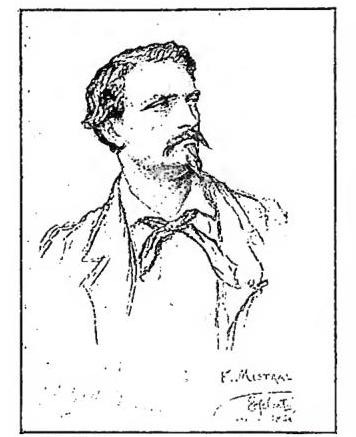
(ex F. M., Paris r. n., verso of the frontispiece)
MISTRAL, FRÉDÉRIC – Portrait. Lithograph by Gaillard from a life drawing of 1864.
in Provenza e Italia. Firenze 1930; A. Farinelli, M., Roma 1930; A. Dagan, F. M., sa vie, son oeuvre. Avignone 1930; P. Devoluy, M. poète catholique. Les cantiques mistraliens. M. et les protestants, in Foi et vie, 1 (1930), pp. 911–21; A. Lamorte, Le christianisme de M., Montauban 1931; F. Neri, Saggi di lett. italiana, francese e inglese. Napoli 1936, p. 145 and following; D. Valeri, Saggi e note di lett. francese moderna. Firenze 1941, p. 59 and following; E. G. Leonard, M. ami de la science et des savantes. Parigi 1947. Giacinto Spagnoletti