Machine translation of the 1948–1954 Italian original. The original text is authoritative.
NILO L'ASCETA (of ANCIRA), Saint. — Writer on ascetical subjects from the beginning of the 5th century. Leone Allacci lists 21 writers of this name; it is therefore natural that copyists should have confused them and that it is now difficult to distinguish them. Moreover, numerous works bear this name, the true authors of which could not be identified, such as Evagrius of Pontus or the Stoic Epictetus. Thus arose the “question of N.”.
The best-known of all these N.’s seems to be an ancient official of the court of Theodosius, who became a hermit on Mount Sinai together with his son Theodulus, according to the Narrationes (PG 79, 589-603). But contrary to the opinion of the ancient patrologists, it is impossible to attribute to him most of the writings published under the name of N. Their author is not a hermit, but a cenobite, superior of a monastery in the vicinity of Ancyra in Galatia, who lived at the end of the 4th and beginning of the 5th century, and a disciple of St. J. Chrysostom.
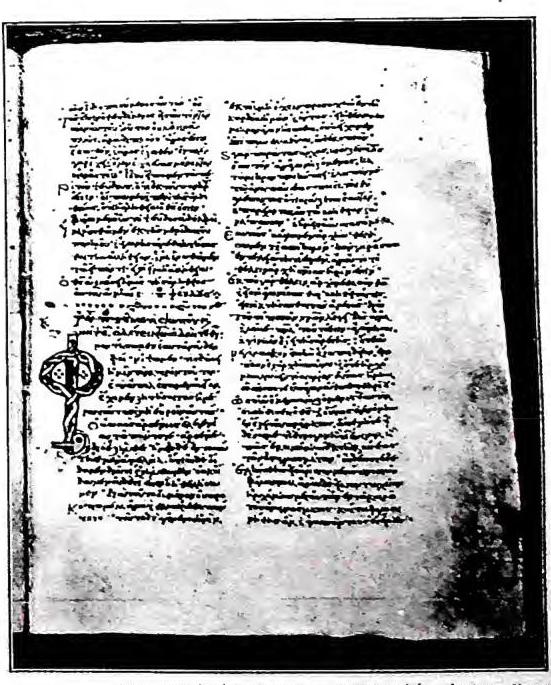
NILO THE YOUNG, Saint — Autograph of St. N. — Grottaferrata, Abbey, ms. B. f. 36ʹ (10th century).
Cite this article
“NILO L'ASCETA (D'ANCIRA), SANTO.” Enciclopedia Cattolica, vol. VIII (1952), p. 1101. Azione Romana digital edition, https://azioneromana.com/article/nilo-l-asceta-d-ancira-santo.