
NORMA. — In Latin, as in the Greek γνώμοι ο κανών, it properly signifies the “square,” which, by making it possible to draw a perpendicular (normal) line to another, is the model and measure of the right angle (Pliny, Hist. nat., VII, 56, 57). Hence the figurative meaning of n., referring to everything that, abstractly or concretely, is a measure or model of action. Cicero speaks of reason and law as directive norms of life (De amicitia, 5, 18), and of nature as the norm of law (De legibus, II, 24, 61).
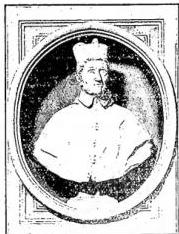
Only recently (Wundt, Liebmann) have the term n. and its derivative “normative” entered philosophical language, designating all that problematic which in earlier philosophy was implicit in the conception of “practical reason.” St. Thomas, instead of n., uses the expression “regula et mensura rationis” (Sum. Theol., 1a-2ae, q. 90, a. 1), and in place of “normative,” “architectonic.” CATHREIN, VIKTOR (v.) the moral n. is “a mark or characteristic that serves to distinguish good from evil.” It is not sufficient to establish “a material n. in order to know what is morally good”; rather, “a formal n. is required, which also shows the intrinsic reason why one action is good and another is not. The formal ethical n. is also often called the moral principle” (La filosofia morale, I, Italian translation, 2nd ed., Florence 1913). Similarly, Sertillanges (v.) considers the human ultimate end, or supreme good, to be the n. (La philosophie de st Thomas d'Aquin, II, Paris 1940, pp. 232 ff.; La philosophie morale de st Thomas d'Aquin, ibid. 1946, pp. 11 ff.). Nevertheless, the most common terminology uses n. to designate the practical judgments of reason, whether they are directed toward action or production, and whether imperative or merely evaluative.
No activity whatsoever can be accounted for without an ultimate final cause: it is the will of the end that establishes the ordering toward the end. « Rationalis est ordinare ad finem, qui est primum principium in agendis » (Sum. Theol., 1ª-2ª, q. 90, a. 1): reason, that is, is normative only insofar as it orders toward the end. God, the first cause, orders every being toward its end: his reason is at once supreme normativity and absolute norm. Irrational creatures participate in divine reason through the physical determinism of their activity. The human person, spiritual in nature, directs himself toward his end and therefore, through his reason, participates in divine reason, becoming himself normative and a norm, whose absoluteness and value depend essentially upon this participation. It is normative (reason in the subjective sense) insofar as, through the intellect, it possesses the habit of the first moral principles (v. SINDERSI); through ethical science, it establishes the value and content of the natural order; through political science, it constructs the positive order (« politica est scientia maxime architectonica »: s. Tommaso, In I Eth., lect. 2, nn. 24–38); and through prudence, it applies universal principles, both natural and positive, to the concrete act. It is a norm (reason in the objective sense) insofar as, from general principles of the widest extension, through a compositional process (Johannes a s. Thoma, Log., II, q. 1, a. 4), in which the speculative-practical intellect, experimental induction and philosophical deduction, the will of the end and of the means to the end, and all the intellectual and moral virtues participate (s. Tommaso, In I Eth., lect. 3, nn. 32–42), it descends to the fullest comprehension of the judgment of the moral conscience.
BIBLI.: N. Kaufmann, La finalité dans l'ordre morale, in Rev. néos. de phil., 6 (1899), pp. 380–99, 352–70; V. CATHREIN, VIKTOR, Filosofia morale, Italian trans., 2nd ed., Florence 1913; H. D. Noble, La vie morale d'après st Thomas d'Aquin. La coscienne morale, Paris 1923; G. Renard, Le droit, l'ordre et la raison, there 1924; S. Deploige, Le conflit de la morale et de la sociologie, there 1925; M. S. Gillet, La morale et les morales, there 1925; E. Elter, Norma moralitatis ad mentem D. Thomas, in Gregorianum, 8 (1927), pp. 337–57; L. Lehu, La raison règle de la moralité d'après st Thomas d'Aquin, Paris 1930; R. Le Senne, Le devoir, 2nd ed., there 1931; Y. Simon, Critique de la connaissance morale, there 1934; J. Maritain, Science et sagesse, there 1935; J. Peghaire, Intellectus et ratio selon st Thomas d'Aquin, there 1936; J. Leclercq, Les grandes lignes de la philosophie morale, Louvain 1946; R. Le Senne, Traité de morale générale, 2nd ed., Paris 1947; various authors, Fondazione della morale (Atti V Convegno di studi fra filosofi cristiani, Gallarate 1949), Padua 1950; A. Lalande, La raison et les normes, Paris 1948. Tullio Piacentini