Machine translation of the 1948–1954 Italian original. The original text is authoritative.
QUAGLIA, GIOVANNI. - Franciscan theologian and writer, born in Parma at the beginning of the 14th century, died c. 1398. Biographical information is scarce; he is recorded as a doctor and master of theology at the University of Bologna in 1373 and teaching in Pisa c. 1380.
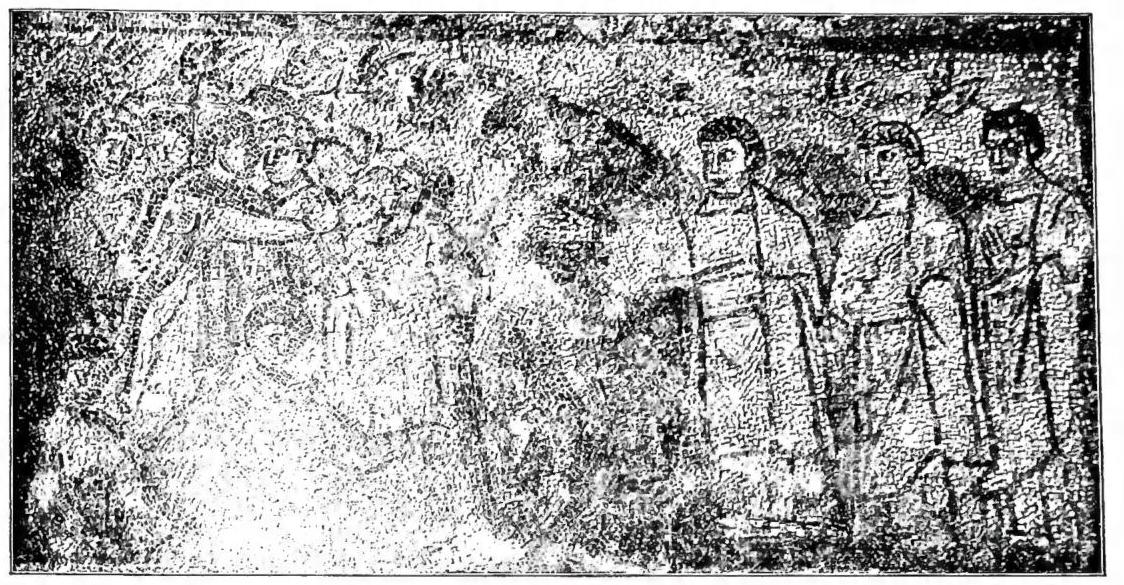
(phot. Anderson) QUAGLIE - Caduta delle q. Mosaic of the 5th century - Rome, Basilica of S. Maria Maggiore.Of his authentic writings, the following are known today: Rosarium (unpublished; chapter titles in Etudes franciscaines, 11 [1904], p. 566 ff.), a broad collection of philosophical and poetic sentences, divided into four parts, dealing respectively with the general conditions of man, vices, virtues, and beatitude; De civitate Christi (Reggio Emilia 1501), dedicated to Benedetto Gambacorta of Pisa; Expositio in Pater noster (unpublished); Hexaemeron (unpublished), discovered by Fedele da Fanna in two codices from Gratz and Würzburg; Proverbia (ed. E. Natucci, in Miscellanea franc., 3 [1888], pp. 131-39): a characteristic collection of one hundred proverbs in Latin and Italian verse, dedicated to Andrea Gambacorta, whose acrostic reveals the author and the recipient.
BIBL.: Sbaraka, II, p. 79 ff.; B. Pergamo, I Francescani alla Facoltà teologica di Bologna (1364-1500), in Arch. Franc. hist., 27 (1934), pp. 15-20 (bibl. and list of codices); A. Teraert, s. V. in DThC, XIII, coll. 1431-36. Gaudenzio Melani
Cite this article
“QUAGLIA, GIOVANNI.” Enciclopedia Cattolica, vol. X (1953), p. 222. Azione Romana digital edition, https://azioneromana.com/article/quaglia-giovanni.