
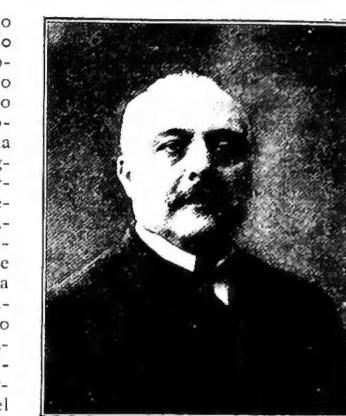
SALANDRA, ANTONIO - Statesman, b. at Troia (Foggia) on 13 July 1853, d. at Rome on 9 Dec. 1931. A lawyer and a scholar of philosophy of law and of economics, in 1880 he obtained the chair of administrative science at the University of Rome, later moving to that of administrative law, which he held until his death.
He wrote La giustizia amministrativa nei governi liberi, which appeared in 1904 and must be regarded as a classic on the subject. S. also devoted himself to active politics and from 1886 was constantly deputy for Foggia in the Italian Parliament, sitting on the center-right. Several times undersecretary and then minister, at various times of Finance, of the Treasury and of Agriculture, he fell into disagreement with Giolitti and was accused by the left of being a "reactionary." He became president of the Council in March 1914, and found himself, owing to the precipitous turn of international events, at the head of the government of Italian neutrality, of the denunciation of the Triple Alliance, of the Pact of London and of armed intervention, and he energetically supported his foreign ministers - first S. Giuliano and then Sonnino - in the difficult negotiations with the Central Empires and with the Entente powers, while at the same time carrying out the country's war preparations.
Having resigned in 1916, after the Austrian offensive on the high plateaus, he was later Italian delegate to the Peace Conference and to the League of Nations. At first he adhered to fascism, but when he realized that it was increasingly shying away from fitting into the constitutional order, he decisively took part in what was called "the opposition in the chamber" (as opposed to the Aventine secession), and finally withdrew to private life, without even taking part in the proceedings of the Senate, where he had been appointed in 1928. He devoted his last years to the drafting of his memoirs, of which the two volumes concerning La neutralità italiana and L'intervento have appeared, both exceedingly rich in information and quite objective.
Bibliography4 works
Renzo U. Montini