
ROSSI, PELLEGRINO. — Statesman, born at Carrara on 13 July 1787, assassinated in Rome on 15 November 1848.
A pupil of the Piarists at Correggio, he graduated in jurisprudence in Bologna in 1806. He briefly served in the magistracy of the Italic Kingdom as secretary of the public prosecutor’s office of the Royal Court of Bologna, until, little more than twenty years old, he was appointed to the chair of criminal law at Bologna itself.
In 1815 he applauded the Murattian attempt. Apparently the author of the so-called Proclamation of Rimini, he assumed, in the name of King Gioacchino, the Civil Commissariat of the four Emilian departments. After Murat’s defeat, he withdrew to Switzerland and, following free courses that he gave at the University of Geneva, in 1819 he obtained the official chair of criminal law, despite the fact that the university statute
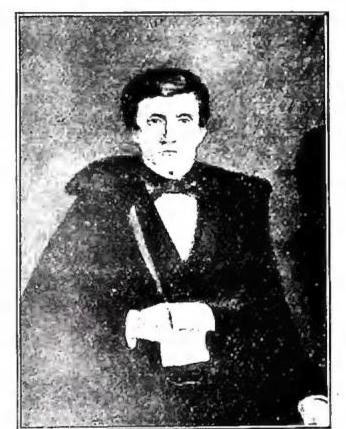
ROSSI, PELLEGRINO – Portrait ad odio di N. Boni (19th century) – Cariera, Chamber of Commerce.
Having been invited to teach political economy in Paris in 1833, the following year he became professor of constitutional law at the Collège de France. A free-trader in economics and liberal in politics, his lectures aroused an extraordinarily wide response, and King Luigi Filippo, who went to hear him numerous times, proposed that the young and famous professor become a French citizen so that he could assume official positions. R. agreed: in 1839 he was elevated to the dignity of Peer of the Realm, and in 1845 he was sent to Rome as ambassador to Gregorio XVI. After the fall of the July monarchy, he remained in Rome as a private citizen, while taking an active part in political life, and by his approval and advice he encouraged the beginnings of Pio IX’s constitutional experiment, convinced of the desirability of giving new life, through wise reforms, to the Papal States.
Pio IX would have liked him to enter the government immediately after the fall of the Mamiani cabinet (July 1848), but R. found insufficient support in Roman political circles, and the assignment was then conferred upon Fabbri; but, after Fabbri’s resignation and in response to the Pope’s insistence, R. finally accepted the mandate (10 September). While Cardinal Soglia-Ceroni remained President of the Council and Minister of Foreign Affairs, R. assumed the Interior portfolio with the Interim of Finance, and entrusted the other departments to Cardinal Vizzardelli (Education), Cicognani (Justice), Abbot Montanari (Commerce), the Duke of Rignano (Arms and Public Works), and Galletti (Police), with Guerrini as minister without portfolio and Righetti as deputy at Finance. It was a liberal ministry, but tending, as one would say today, to the right, in accordance with the federalist aspirations of neo-Guelphism. R. was above all determined to restrain the demagogy of the left, whose representative was Sterbini: hence the campaign of hatred that led to the tragedy of 15 November.
The ministry was formed while Parliament was in recess, and R. therefore governed without the support of the Chambers, amid the ostentatious outrage of the press and democratic circles. This did not prevent him from adopting measures of considerable importance, such as the abolition of the Ministry of Police, the commencement of telegraph installations, the imposition of a tax on ecclesiastical property, the issuance of Treasury bonds secured by mortgages on that same ecclesiastical property, and the establishment of a Court of Cassation. He planned the construction of railways, the reform of the judicial and penitentiary systems, the establishment of a statistical office, the creation of schools of economics and commercial law, and other far-reaching reforms. To safeguard public order, he took severe measures against agitators, replaced numerous officials of various ranks, entrusted executive positions to persons in whom he had confidence, and resolved to send to Romagna the « Roman Legion », that is, the volunteers returning from the spring campaign in the Veneto, who, through their factional and undisciplined attitude, constituted a constant danger to public tranquillity. Hence, after the hesitant and submissive policies of Mamiani and Fabbri, the charge of dictatorship levelled against R.’s firm and honest government.
In foreign policy, as a convinced federalist, R. feared, especially after Pio IX’s fruitless attempts to establish a league among the princes, the expansion of the Kingdom of Sardinia at the expense of the other Italian states. He therefore energetically opposed the plan, of which Rosmini became the spokesman in Rome, for a military league between Piedmont, Tuscany, and the Papal States, which seemed to him a device for securing Carlo Alberto the support of the Tuscan and Roman armies. Instead, he proposed a confederation of the princes of the peninsula, including the Emperor of Austria as King of Lombardy-Venetia, under the presidency of the Pope. This confederation was to have as its coordinating and driving organ a congress meeting in Rome, with the task of guaranteeing the independence of the contracting states, settling any disputes among them, safeguarding the maintenance of liberal institutions, and « working for the regular and gradual advancement of prosperity and civilization, of which the Catholic religion is a principal part ». This programme made enemies for R. among the supporters of Piedmont and all those who wished Pio IX to abandon the policy of neutrality of 29 April and declare war on Austria, as well as among all the demagogues of the extreme Mazzinian left. Disdainful of the hostile campaign waged by the democratic press, on 15 November 1848 R. went to the reopening of the Chamber in the Palazzo della Cancelleria, where, surrounded by a group of conspirators and without the public forces intervening to protect him, he was brutally assassinated.
The actual perpetrators of the heinous crime remained unknown, and well-founded suspicions fell upon Luigi Brunetti, son of Cicerucchio; the instigators and inspirers were Cicerucchio himself, Sterbini, the colonel of the Roman Legion Luigi Grandoni, and Luciano Bonaparte, Prince of Canino. The assassination provoked the insurrection which, through the assault on the Quirinal on 16 November, imposed the formation of the Muzzarelli-Galletti-Sterbini ministry, shortly thereafter inducing the Pontiff to leave Rome for Gaeta.
R. was buried at the wish of Pio IX, who greatly loved him, in S. Lorenzo in Damaso, in the tomb erected for him by Tenerani, bearing the fine inscription: « Caussam optimam mihi tuendam assumpsi. Miserebitur Deus ».
Having become a Swiss citizen, in 1820 he was elected to the Federal Council and then to the Federal Diet of Lucerne, where he was entrusted with drafting that constitutional charter of the Confederation which, with only a few subsequent modifications, still governs Switzerland. Meanwhile, he published his classic treatise Du droit pénal and, together with Sismondi, founded the Annales de législation et d'économie politique, which soon secured him international renown—