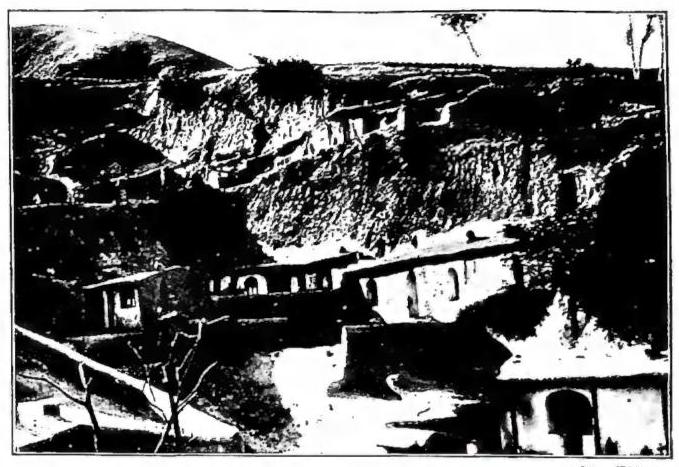
SIWANTZE, DIOCESE of. - A suffragan of Suiyüan, it is situated in the northern part of the civil province of Chagar (Mongolia); it has an area of 250,000 sq km and a population of 1,000,000 inhabitants, of whom 39,356 are Catholics.
On 28 June 1840, the vicariate apostolic of Mongolia was separated from that of Manchuria; on 11 December 1883 it was divided into the three vicariates of South-Western, Eastern, and Central Mongolia. The latter, on 14 March 1922, was divided into two jurisdictions: the mission sui iuris of Outer Mongolia (Urga) and the vicariate apostolic of Tchagar, which on 3 December 1924 assumed its present designation of S. In 1929 the territory was dismembered for the erection of the vicariate apostolic (today the diocese) of Tsining. The vicariate apostolic of S. was elevated to a diocese on 11 April 1946. On 18 January 1948, through the separation of territory from the diocese of Suanhwa, the part of the city of Kalgan situated west of the Ts'ing Choeho River was annexed to the diocese of S.
The church of S. is a large Romanesque building, dominated by two towers, and can accommodate approximately two thousand people. Beside the church are grouped the works of the mission: schools, a seminary, an orphanage, dispensaries, and religious communities. Contrary to the great majority of the agricultural Christian communities in this region, S. was not founded by the Church as a village. According to tradition, in the first year of Choent-che, that is, in 1644, a family named Tchang, originally from Moukden, came to settle in this place. Fifty years later, this hamlet already had a respectable group of