
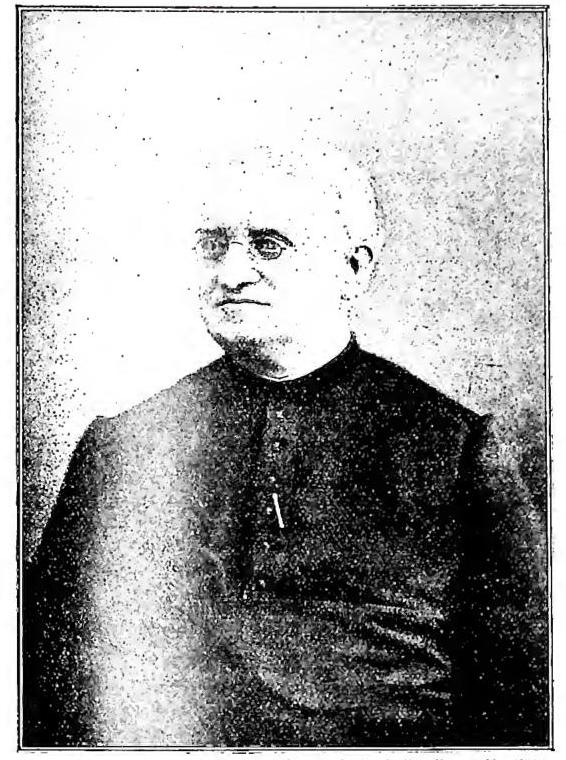
DE SMEDT, CHARLES. - Belgian Jesuit and historian, b. at Ghent on 6 April 1833, entered the novitiate in 1851, priest in 1863. Professor of ecclesiastical history at the college of the Society at Louvain, a collaborator for some years with Les Etudes, he entered the ranks of the Bollandists in 1877; he took over its direction in 1882 and retained it, despite a three-year rectorship of the college of Brussels (1900-1902), until his death, which occurred at Brussels on 4 March 1911.
As a professor, D. S. had written an Introductio ad historiam ecclesiasticam critice tractandam (Ghent 1876, together with a volume of Dissertationes selectae). Subsequently he gathered into one volume, Principes de la critique historique (Liège-Paris 1883), certain articles that had appeared shortly before in Etudes, which worked a salutary revolution in the world of ecclesiastical history through their firm, judicious and serene condemnation of the erroneous methods, often more apologetic than historical, that dominated there. On the Bollandist work itself, the influence of D. S. was decisive. Restored, somewhat hastily, in 1837, the learned society was passing through a manifest crisis, not only because of the death of several of its best members, but also because, despite the work of some exceptional figures such as Victor De Buck, it had not yet properly settled its attitude in the face of the progress of the historical and philological sciences. D. S. renewed its methods, in the choice and philological presentation of the texts published, and in the use of all the aids of the auxiliary disciplines. The new method established itself in the first three volumes of the November Acta SS. that appeared during his presidency and continued in the following ones. In the same year in which he assumed the direction, D. S. added to the mighty volumes of the Acta a more manageable periodical organ, the Analecta Bollandiana (1882 ff.), and shortly afterwards undertook the systematic compilation of a series, continued after him, of catalogues and repertories of hagiographic manuscripts in the principal libraries. At the same time, the president gathered into the society collaborators of great worth and gave a strong development to the library or "Museum Bollandianum", which he transferred in 1906 to a spacious and purpose-built seat in the "new college" of the Jesuits of Brussels.
Besides his hagiographic output, D. S. left several contributions to ecclesiastical history, such as the work Gesta episcoporum Cameracensium 1092-1138 (Paris 1880), the Vie de mgr J.-B. Quinet (Namur 1889) and various articles. At the end of his life, he wrote under the title Notre vie surnaturelle (2 vols., Brussels 1910-11) a methodical exposition of spiritual theology of great clarity and doctrinal sureness.
Bibliography6 works
Edmondo Lamalle