
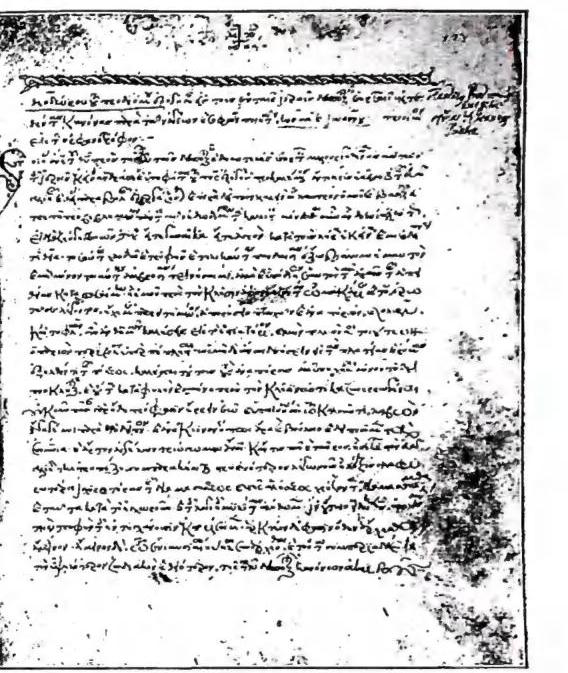
THEODORE PRODROMUS. – Byzantine writer of the first half of the 12th century. Under his name circulated works by iconoclast authors, and for this he suffered imprisonment and exile on several occasions.
His principal works, besides his copious epistolary correspondence and various polemical treatises against the iconoclasts, belong to ascetical literature, namely the two Catecheses, major and minor, the Sacred Discourses and other minor writings on liturgy and canonical customs of the Studite monastery.
A characteristic note of the spirituality of T. is the absence of charismatic gifts in prayer, for which one vainly seeks in him special rules; he is intent above all on the exercise of solid virtues, among which stands out *hypotagē* (submission of the will); external penance is applied by him mainly to self-mastery through abstinence from food. Characteristic is his love for Christ, which must inform all the actions of life, whence his desire for Communion, even daily, and his universal and apostolic prayer that he makes to be offered for the whole world, as Christ did, thereby changing the ancient ordinances of the Basilian Rule. The feast of St T. is celebrated on 12 November.