
GOLDEN CALF. — A religious symbol which Aaron (v.), at the request of the Israelites, had constructed near Sinai (Ex. 31:14) during the 40 days Moses remained on the summit (ibid. 24:18) in communion with God. Around it the people began a cult of a naturistic-orgiastic character (songs, dances), which was practiced by many ancient Eastern peoples, particularly the Canaanites.
Moses, having descended from the mountain and ascertained what was happening, in reaction flung the tablets of the Law to the ground,
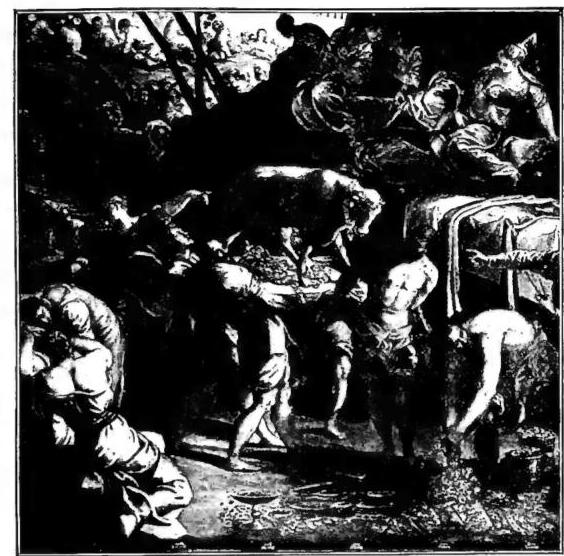
This V. Yahweh, and the worship offered to it was understood as being directed to Yahweh (cf. Ex. 32:4, 5); likewise later, in the time of Jeroboam I (I Reg. 12:20 ff.), and generally in the “sanctuaries” of Bethel, Gilgal, Dan, and Beersheba. It therefore seems to have been a form of symbolism with pagan tendencies, rather than idolatry; but the impurity of the idea in itself and the religious-moral deviations to which it immediately gave rise in worship justify Moses’ reaction against the V. and, later, the prophets’ attacks on the revival of the symbol and its associated cultic practices (Am. 8:14; Hos. 8:4-6; 10:5-8; 12:15-13:4; etc.). Among many Eastern peoples the bull was taken as a symbol of divinity because of its strength; this is the true meaning of the choice of the image, which was probably not influenced by the memory of the Egyptian Apis (v.).