
ZOOLOGY. - The science whose object is the study of animals. This very broad definition, which makes the expression “z.” synonymous with “animal biology,” leads one to include within it a large number of biological sciences that have now become autonomous, such as anatomy, physiology, and pathology, understood both as the study of man alone and as that of individual animals, or even as the comparison of human phenomena with those occurring in animals. It has therefore come about that z. has acquired, over time, the more precise meaning of the science that studies the differences among animals, that is, the problems of species. If one considers the fact that animal (and plant) species differ from one another in external form, in internal anatomical constitution, in the structure of their tissues and of the cells composing them, and in chemical composition—which also varies considerably from species to species, from one group to another group of species—one must conclude that z. comprises, among all the biological sciences directed to the study of animals, whatever represents the differential element between individual species and groups of species. Since form is the expression of the function that each organ
performs in order to keep the organism alive, not only anatomy but also comparative physiology are highly important parts of z.; indeed, they have long attained pedagogical autonomy, especially as regards the study of vertebrates. Moreover, animals live on the earth and within the earth, in the sea and in inland waters; thus more or less intimate correlations are established between the animal organism and its surrounding environment, relations that form the subject of a branch of z., animal ecology, which studies not only the general conditions of existence in each individual environment, such as respiration, locomotion, and reproduction in water or in the atmosphere, but also the correlations existing between organisms and particular biotopes, such as the surface of the sea as compared with its bottom, littoral or abyssal, the virgin forest, the savannah, or the desert, etc.
In order suitably to exercise those functions which, taken together, are identified with life, the animal must also perform a series of acts characterizing its behaviour. If an animal whose organs and functions are adapted respectively to herbivorous or carnivorous feeding did not possess the capacity and means to find, reach, and seize its food, whether plant or animal prey, it could not survive. Animal behaviour, determined by tactile stimuli, tropisms, instincts, and intellectual processes that safeguard it from dangers or guide it in the performance of those acts aimed at the preservation of the individual and of the species, constitutes another highly important branch of z., ethology or the science of habits, which likewise vary from species to species, from group to group of species.
Closely species (v.) is that of the heredity of the characters falling under our senses and constituting the phenotype, that is, that complex of morphological and functional manifestations which enables the zoologist to formulate diagnoses of an individual or of a group of individuals. Now it is known that the phenotype is the expression of the complex of genes, elementary particles transmissible by heredity, which influence one another and react in various ways to internal stimuli released by the organism itself and to external, climatic, pedological, etc., stimuli. Such study, genetics (v.), is likewise a highly important part of z.
At this point it is necessary to sketch the history of z. Aristotle is regarded as its founder, with his treatise De animalibus. This statement may be accepted with the qualification that Aristotle also gathered the knowledge on the subject possessed by some of his predecessors, especially Democritus. Aristotle may be described as a general zoologist, who sets forth facts relating to animal life that offer particular interest under one or another biological aspect, now morphological, now functional. Although Aristotle affirms the existence of larger genera (γένος) (γένη μέγετα) and species (εἶδος), he does not concern himself with the problems of species, which for him is an entity that exists and is not debated. Aristotle is not the author of that classification which usually appears in treatises on z. under the name of Aristotelian classification. It could more precisely be defined as the classification of the larger or smaller groups of animals known to Aristotle, which are mentioned in his works. This conception persists in the zoological works of antiquity and of the Middle Ages. It is evident in the Treatise on Animals of Alberto Magno, which may be regarded as an Aristotelian paraphrase and in which, nevertheless, the foundations of modern animal ecology are laid. Alberto Magno misses no opportunity in his work to emphasize the correlations between animal organisms and environment. Apart from the historical development of anatomy and physiology, from the second century of the common era with Galeno to the sixteenth with Vesalio and Cesalpino, a notable contribution to general z. was made in the seventeenth century by Marcello Malpighi with the Dissertatio de Bombyce, by Schwammerdam with
the Anatomy of the Bee and Other Insects, by Leeuwenhoek with the discovery of infusoria, and by Francesco Redi with the application of the experimental method to z. Valuable monographic works were also written on individual animal species or groups of species, such as that of Hans Worn on the lemming, that of Gille on the elephant, and those of Salviani, Bellon, Rondelet, and others on aquatic animals and especially fishes.
While on the one hand materials were thus being accumulated which served as the basis for the biologists of the late eighteenth and early nineteenth centuries in constructing the edifice of comparative anatomy—one of the most notable aspects of z., especially as regards vertebrates, a science in which the names of Oken, Goethe, and especially Cuvier, and later Gegenbaur, excelled—on the other hand experimental z. and physiology had in Lazzaro Spallanzani a giant, who made a broad contribution to the knowledge of the problems of generation, also from the comparative standpoint.
From Aristotle to our own day, general z., which thus consists in the study of the various problems of life—morphological and physiological, ecological and ethological—for the solution of which one or another animal species provides, according to circumstances, the most suitable material, has witnessed a continuous succession of investigations. These have made a vast contribution to knowledge of the fundamental phenomena of life. Z. subsequently attained its greatest development with genetics (plant and animal), a science born, as has been said, at the beginning of this century and which has made gigantic progress, apparently achieving complete autonomy from botany and z. In substance, however, it is identified with one or the other, insofar as it studies the causes of differences in organisms and has transformed descriptive z. (and botany) into causal z. (and botany).
Systematic zoology, which, through knowledge of animal species, outlines their classification, originated during the Renaissance, when geographical explorations and voyages of circumnavigation brought large numbers of natural curiosities to Europe, especially preserved animals and their parts, which formed collections to be displayed to the public for its instruction. It was the need for order that induced zoologists to formulate classifications based on the differential characteristics of animals. The first zoological work written with this purpose was the De differentiis animalium by the Englishman Edward Wotton, published in 1552, in which there is a classification little different from that which modern authors have derived from the Aristotelian work. There followed a period that may be called pre-Linnaean, during which, among others, the works of Lonicer (1528–86), Gessner (1516–65), Ulisse Aldrovandi of Bologna (1528–1605), and Johnston (1603–75) excelled; these works had the character of natural-history encyclopedias. In the final years of his life, Aldrovandi became aware of the difficulty of teaching zoology usefully through extremely long descriptions, in which the essential differential characteristics were lost, and he composed a Syntaxis animalium and a Syntaxis plantarum, which remained unpublished. In these works, by means of dichotomous keys and brief diagnoses of the most important characteristics, it became possible to arrive at the identification of the species of an animal or plant. J. Ray (1628–1705), author, partly in collaboration with Willoughby, of various works, was the first to intuit the concept of species as it was later defined by Linnaeus, to propose fertility as a criterion for defining species, and to recognize the need to establish a rational nomenclature. Among the other zoologists of the immediate pre-Linnaean period, Lister, Bonanni, Brein, Bianchi (Janus Planus) should be mentioned, and, in the special field of entomology, Vallisneri (1661–1730), Maria Sibilla di Mériam (1647–1717), and especially J. L. Réaumur (1683–1755), who studied not only the morphology but also the life of insects. Luigi Ferdinando Marsili (1658–1730) may be regarded as the founder of the study of zoology and marine biology. Carlo Linneo, a Swede, is incontestably the founder of systematic zoology and the reformer of the methods used by his predecessors. The Linnaean reform is founded on three prin-
ciples: 1) binomial nomenclature in Latin, which, using two names—one for the genus and the other for the species—permits the formal determination of the latter; 2) the formation of tables (classes and orders) in which genera and species are grouped; 3) the adoption of differential diagnoses and dichotomous keys, which permit the distinction of individual groups down to the species. This method is an improvement on that used by Aldrovandi in his Syntaxis. Linnaeus divided the animal kingdom into six classes: mammals, birds, reptiles, fishes, insects, and worms. But classification, in his mind, had the precise meaning of a plan of creation, in which the most closely related forms were united into subordinate groups. Linnaeus’s work is condensed in his Systema Naturae, which, in the edition published in 1750, constitutes the fundamental code of zoological nomenclature. Linnaeus had numerous followers who, applying the Linnaean rules, described thousands of new species and, by highlighting further categories of differences, increased the number of tables by establishing families, subfamilies, tribes, and so forth.
Already at the end of the eighteenth century and the beginning of the nineteenth, Lamarck and Cuvier, starting from groups of very different species and studying their anatomy and physiology, arrived at conclusions of a highly biological character. The former tended to demonstrate that the form of animals is correlated with the environment in which they live and with the use they make of their organs in response to physiological needs; the latter highlighted the existence in animals of a typical organization, varying from group to group, so that the individual animal groupings corresponded to the criterion of bringing together forms that have the same topographical relationships among their parts. The expression «type» is later than Cuvier and belongs to Blainville. Lamarck’s classification (1835–45), founded above all on the distinction between vertebrates and invertebrates, and the latter—which he studied more extensively—into apatici and annibili, met with little success; Cuvier’s, on the other hand, founded on the typical architecture of the animal body and, above all, on the general aspect of the nervous system and, subordinately to this, of other organ systems, may be regarded as the point of departure for all modern classifications. Cuvier divided the animal kingdom into four embranchements or types: vertebrates, mollusks, articulated animals, and radiates; his successors increased their number by subdividing and modifying the extent of the types he had outlined. Thus Von Siebold established the type of protozoa, or unicellular animals, and that of arthropods, separating the former from the radiates and the latter from the articulated animals. Leuckart further divided the radiates into coelenterates and echinoderms. The development of embryology demonstrated the affinities existing between tunicates and vertebrates, suggesting the establishment of a more comprehensive type, the chordates; meanwhile, closer morphological and embryological examination had recommended separating sponges and, respectively, ctenophores from the coelenterates. In all these classifications the type of worms is always found; it does not correspond to the morphological concept of a type, but is an unclassified residue of the numerous plans of organization that zoologists have been unable or unwilling to include among the major types. Nevertheless, flatworms and nematodes are today considered autonomous types in almost all modern classifications.
Classification, in the minds of Linnaeus and Cuvier, corresponded to the plan of the creation of species, the work of God; hence the zoologist’s effort, in the minds of those two great scholars, tended toward the reconstruction of a system stable, at least in its general outlines, because its elementary units, the species, were considered fixed. The work of Carlo Darwin, L'origine delle specie, published in 1859, brought about a genuine revolution in zoology, placing the problem of species in the foreground and attributing to affinities the value of real relationships and to differences the value of constitutional changes, due, according to some authors, solely to intrinsic causes, and, according to others, to extrinsic causes. In little more than half a century, systematics changed its character, becoming a dynamic rather than a static science, because the causes of modification in species, although attenuated in the course of the geological eras, have by no means ceased, and the new species may be either a form previously unknown before its identification or a species of recent formation. With evolutionism, the system was overturned, and classification no longer began with mammals, descending to the simpler classes and types; instead, it began with unicellular animals and gradually ascended to groups of increasingly complex organization. Ernesto Haeckel’s so-called fundamental biogenetic law—«ontogeny is a recapitulation of phylogeny»—although recognized as erroneous shortly after its formulation, had a great influence on classification, which ultimately assumed the prospective value of a genealogical tree of animal forms, fossil and living.
Systematics is thus the synthesis of the zoological sciences, and general classification is its conclusion: the position assigned to a given animal form or group of animals within the system itself is the result of morphological investigations (anatomical, embryological, histological, cytological, etc.), which determine the relationships of kinship with related forms. But systematics in the sense of classification is a part of zoology and cannot be identified with it: the system of animals is a subjective conception of our mind; it belongs to books and museums, not to nature. System is synonymous with order, which is expressed in the grouping of the most closely related organizational types, while also taking into account the possible and probable descent of each of them; according to the evolutionary concept, however, to which quite a few of the more recent zoologists, especially American ones, fully adhere, the lineage which they substitute for the type should express the descent of the groups. The type, moreover, represents a reality, albeit a static one, which falls under the direct observation of the researcher, whereas the lineage represents a dynamic hypothesis, albeit partly causal, for which experimental proof is nevertheless lacking.
The system, that is, classification, leads to a diminution in the value of specific differences and to an overvaluation of theoretical models which, for each group, whether larger or smaller, do not correspond to the reality of any species. It is true that the system, proceeding from the type or lineage to the class, order, family, genus—groupings that are largely subjective—also reaches the real species, even though this is often not determinable or determined. The latter has been given greater value by modern genetics, since, by studying specific and subspecific groups, first in isolation and then turning to populations, it has been able, by the statistical method, to bring out the value and causes of differences, and has transformed systematics, which then merges with zoology as a whole, from a descriptive science into a causal science.
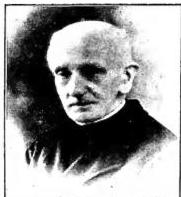
(by courtesy of the Pont. Biblical Institute)
ZORELL, FRANZ - Portrait.
…cated, is made manifest by the number and designation of the sections into which the international congresses of zoology are divided.
Zoology is therefore, among the biological sciences, the broadest and most multifaceted; it may be considered according to the different faces of a prism; each aspect of animal life is elevated to the status of an autonomous science, whether in a specific, descriptive, and causal form, or in a comparative form; each animal group possesses scientific autonomy because it presents biological problems that are not encountered, or cannot be investigated with equal depth, in others; finally, each animal group possesses greater or lesser practical importance, in relation to the value of its medical and economic applications to human life.