
ABBREVIATIONS. - In ancient manuscripts and on tombstones it was often customary to abbreviate words in order to write more quickly and to save space, also economizing on writing material. The use and frequency of abbreviations varies according to the times, the regions, and the nature of the text.
I. LAPIDARY ABBREVIATIONS
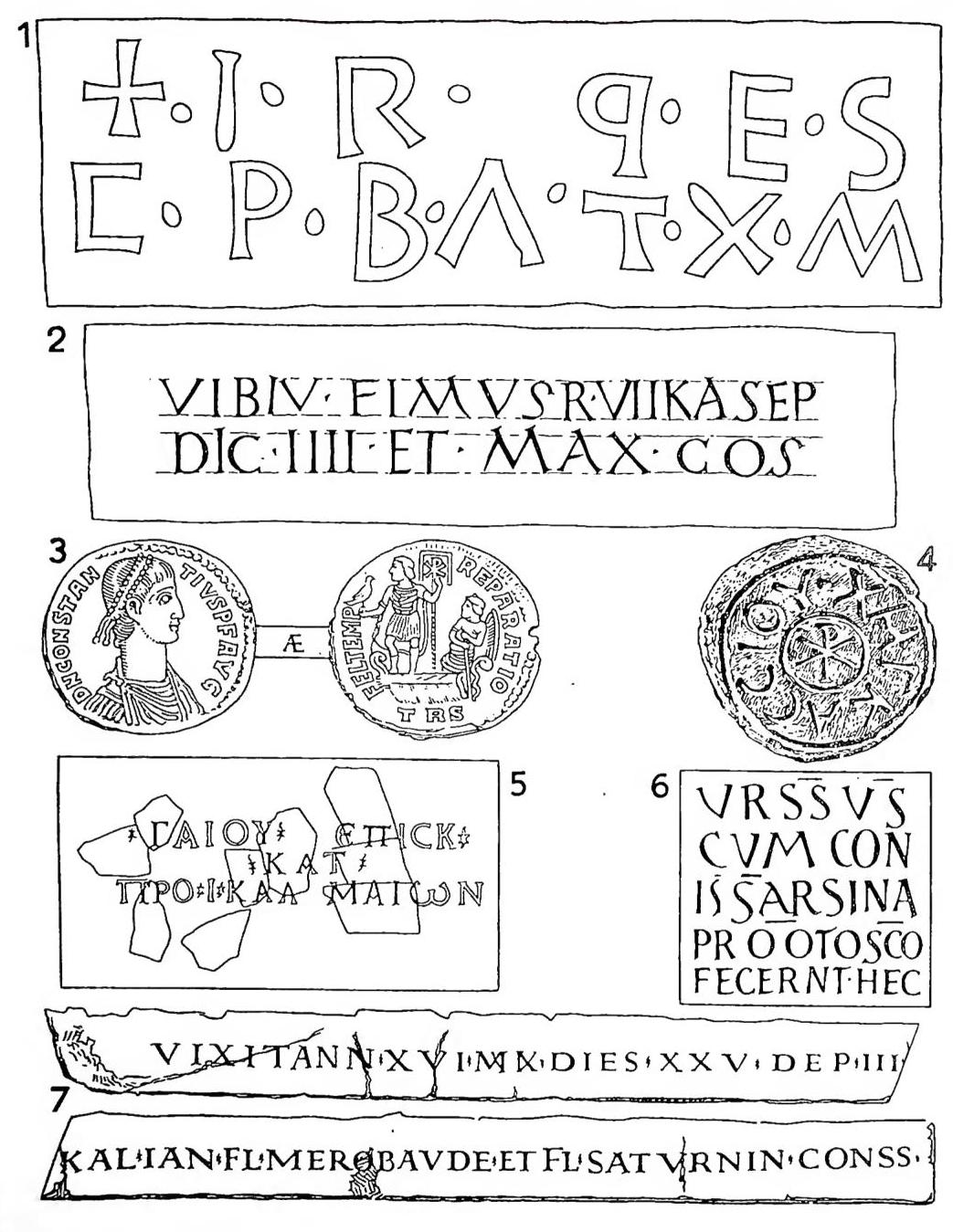
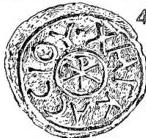
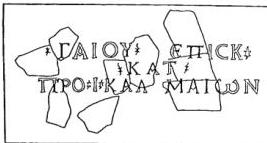
In monumental epigraphic writing one finds abbreviations of two kinds, consisting in the omission of part of the final letters of a word or of its central letters (the Latins called the former suspensiones and the latter contracciones). An abbreviation reduced to one or two letters (initial; initial and final) is often called a siglum (sigla equals a small sign). True sigla are, for example, the Roman numerals. The use of abbreviations is naturally always limited for reasons of clarity.The Greeks used them much less than the Latins, who regularly abbreviated the names designating offices co(n)s(ul), ep(isopus), official titles c(larissimus) v(ir), d(omi)n(us), cult d(ent), s(an)c(tus), kinship f(ilius), m(ater), formulas of affection or courtesy b(ene)m(erenti), a(nimos) s(ancis), formulas of burial h(ic) s(itus) e(st), d(e)p(osito), p(osuerunt), f(ecit), the elements of the date III h(a)(endas) ap(riles), and of the age lived exix(it) an(nos) V m(enses) X, the praenomina and sometimes the most used nomina f(lavius) Aur(elius); names of cities and various set phrases are also often given in sigla. Especially numerous are the abbreviations where the space is very restricted, as on coins and in seals.
A system of abbreviations of the full Middle Ages gives only the initials of each syllable. Particular abbreviations are the nexus, which fuse together elements of two successive letters, and the monograms (v.), a kind of multiple nexus; akin to these is the use of smaller letters, taller or shorter, often inscribed within others to save space. Famous examples of abbreviations are the cryptogram ΙΧΘΥΣ (v.), which in Greek means fish and is to be read Ἰησοῦς Χριστὸς Θεοῦ Υἱὸς Σωτήρ, and the Sibylline [ and XMI (palma feliciter and Χριστὸς Μιχαὴλ Γαβριήλ). The signs of abbreviations are usually punctuation at the end, a superimposed bar, or a transverse stroke.
BIBL.: sources
Antonio Ferrus
II. PALEOGRAPHIC ABBREVIATIONS
Generally two kinds of abbreviations are distinguished: by suspension or truncation, if letters are omitted at the end of a word; by contraction, if the internal part of a word is omitted, leaving its beginning and its end.In the script of pre-Christian literary papyri in majuscule (uncial), abbreviations hardly ever appear: the only one that appears with a certain frequency is the substitution of the v at the end of a line with a horizontal line placed above: ΠΟΛΤ, ΤΟΤΤΟ. This form of abbreviation will continue in the following centuries.
Far more widely used are abbreviations in documents (receipts, accounts, public and private acts), whose formulary, almost uniform, made it useless to write out in full many terms that recurred frequently and were easily understandable to contemporaries.
The oldest and simplest system of abbreviation is that of suspension: words were indicated by the initial letter alone with a sign of abbreviation according to the ancient Greek custom of indicating numerals: Π (έντε), Δ (έκα); thus: ν' = νύω, γ' = γάρ, μ' or μ' = μετά, etc.; or by the first letters, to which were added, in smaller writing above the line, those that immediately preceded the omitted part: τ=τέκνν, αδ=άδελφός, πολ=πόλεμος, etc. This system of abbreviation will later undergo many variants (v. table II).
Later, in the Christian era, it became customary to abbreviate by the system of contraction words of a sacred character - the nomina sacra - which likewise recurred quite often in the Holy Scriptures (v. NOMINA SACRA).
Then, with the introduction of minuscule as a literary script (9th century), the ancient system of suspension (which has no break in continuity in the history of Greek paleography) appears enriched, besides by the contractions of Christian use, by many signs - derived for the most part from tachygraphy - which replace in part or entirely a word; and the abbreviations, at first not too frequent, become ever more numerous down to the 13th-14th century and acquire so personal a character that it is difficult to fix a form for them. We limit ourselves, therefore, to indicating the most common or most characteristic signs of abbreviation (v. tables omitted), adding brief explanatory notes for some of them.
TABLE I
1) α was formerly represented by a simple horizontal line -, marked beside or over the last letter expressed; later it be-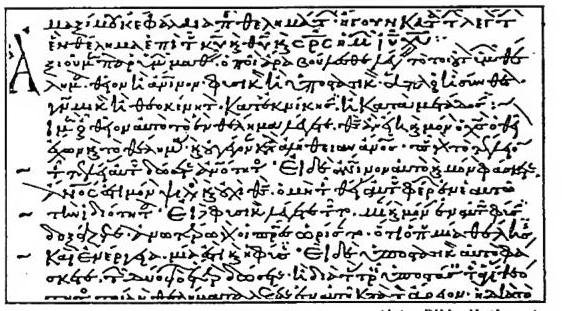
(fol. Vatican Library)
E·P·B·Λ·T·X·M
2
VIBIV·ELMV·S·RVIKA·SEP
DIC·III·ET·MAX·COS
3
6
VRSSVS CVM CON IS SARSINA PROOTOSCO FECERNTHEC
7
KALIANFLMEROBAVDEETFLSATVRNINCONSS
(drawing by Enc. Catt.)