
ELI, TOMMASO. – Dominican theologian and writer, born in Naples around 1486, died there around 1570. He was prior of the convent of S. Pietro Martire in Naples, then provincial of Naples (1532), regent of the Dominican Studium for several years, and twice vice-chancellor of the faculty of theology at the University of Naples.
He wrote: Piorum clypens adorerus veterum recentiorumque haereticorum praesitatem fabrefuerus (Venice 1563); Christianae religionis orcena (there 1569).
Alfonso D'Amato
ELIA. — Foremost among the prophets of action in Israel, whose name (‘Elifjah[d], “my God is Yahweh”) constitutes an entire programme of life and activity. Apparently a native of Tishbe (modern el-Istib) in Gilead, in Transjordan, and therefore called the Tishbite, the Vulgate Theobites, as the Septuagint interprets it (θεοβίτης ὁ ἐκ θεοβῶν τῆς Γαλακῆς, I Reg. 17, 1). Roughly dressed (II Reg. 1, 8), like John the Baptist later (Mt. 3, 4), accustomed to the harsh life of the desert (I Reg. 17, 5; 18, 46; 19, 3 ff.), he carried out his mission under the reign of Ahab (873–854 B.C.) and Ahaziah.
The secession from the kingdom of Judah, the religious schism created by Jeroboam with the establishment of the golden calves at Bethel and Dan (I Reg. 12, 25-32), followed by Omri’s alliance with Phoenicia and Ahab’s marriage to Jezebel, daughter of the king of Tyre, fostered syncretism and dealt a mortal blow to the religion of Yahweh. Jezebel officially introduced the worship of Baal-Melqart, seeking to impose it as the religion of the kingdom; she killed prophets (those belonging to the so-called “schools,” or congregations of the pious, directed by E. and by the true prophets) and persecuted the Yahwist faithful, destroyed their altars, while royally supporting hundreds of prophets of the Phoenician divinities (I Reg. 16, 23-34; 18, 13-19; 19, 14; etc.). Monotheism was thus stifled, and a large part of the people became idolatrous (cf. I Reg. 19, 18).
The Lord intervenes through E., who appears suddenly before Ahab and announces the divine punishment: a three-year drought (probably from 857 to 856, with some months before and several afterward, reckoned according to the Semitic manner), which struck Samaria and Phoenicia severely (cf. Fl. Josephus, Antiq. Jud., VIII, 13, 2). E. withdrew to the brook Cherith (Kārith) in Transjordan; when it dried up, he went to Zarephath near Sidon, where he was the guest of a widow whose meagre provisions he miraculously multiplied and whose son he raised from the dead. Toward the end of the punishment, he appeared before Ahab, reproached him for responsibility for what was happening in Israel, and obtained from him the convocation of the people on Carmel for a decisive confrontation between Yahwism and the worship of Baal.
Before the whole people, E. stood alone against the 400 prophets of Baal. If Baal was the true God, let him send fire from heaven to consume the victim placed upon the altar. Despite their rites and their long prayers, they obtained nothing. At the hour of the evening sacrifice, E. rebuilt an altar to Yahweh, laid wood and the flesh of a bullock upon it, and sprinkled it with water in order to make the miracle stand out more clearly; then he briefly invoked Yahweh to demonstrate that he was the only God. Fire descended and reduced everything to ashes. It was Yahweh’s victory, which the people acclaimed (“Yahweh is God!”); then, obeying E., they killed the false prophets at the brook Kishon (cf. Deut. 13, 2-5). Shortly afterward, the refreshing rain fell (I Reg. 17-18). But E. had to flee before the threats of the enraged Jezebel (I Reg. 19, 2). Passing beyond Judah, where Athaliah, Jezebel’s daughter, was queen, he crossed the desert as far as Mount Horeb, where, in a vision, Yahweh restored his strength for the struggle, making him understand that one must await God’s hour without impatience, for it would come without the acts of force that shatter everything.
God gave E. the task of anointing Hazael king of Damascus, Jehu king of Israel, and Elisha as prophet; they would be God’s instruments for the victory of Yahwism: the first would devastate the kingdom of Samaria (cf. II Reg. 8, 28 ff.; 10, 32 ff.; 12, 3), the second would drown the dynasty of Ahab and the worshippers of Baal in blood (cf. II Reg. 9-10), while the third would cooperate with his oracles. E. entrusted the other two anointings to Elisha (I Reg. 19). To Ahab, who went to take possession of Naboth’s vineyard after he had been murdered for the purpose of that usurpation, E. reproached the crime and foretold that he would suffer the same fate as his victim (I Reg. 21). He reappeared briefly to rebuke the sick Ahaziah for having wished to consult Beelzebub and to foretell his death (II Reg. 1).
The end of E. is narrated as it appeared to Elisha’s eyes (cf. I Mach. 2, 58): E. disappeared amid a whirlwind. The same verb lagh, “to take” (II Reg. 2, 3 ff.), elsewhere expresses God’s intervention in the peaceful death of the righteous: Gen. 5, 24; Ps. 47 (Heb. 49), 16; Is. 53, 8. The other elements are symbolic. In Mal. 3, 1, 23 ff. (Heb. 4, 5 ff.) it is said that E. will come to prepare the ways for the Messiah, preaching penance. This is precisely the mission carried out by John the Baptist (Lc. 1, 17), who is the foretold precursor (Mt. 11, 10; 17, 10-13) and embodied “the strong character” of E.; E. was only his type. Ecch. 48, 1-12, in its eulogy, summarizes the biblical data composed thus far. It is therefore clear that the expectation of E.’s return at the end of the world has no foundation in Sacred Scripture; the Christians, among whom it became widespread, took it from the Jews. The Church celebrates the solemnity of E. on 20 July. Legend, among Jews, Christians, and Arabs, delighted in elaborating upon the figure of E., still regarded as living and awaiting his return in order to fight against the Antichrist at the end of time.
For Judaism, E. is the tutelary genius of the race; and the Jews believe that he takes part each year in the celebration of the Passover supper, as well as in the rite of circumcision.
Francesco Spadafora
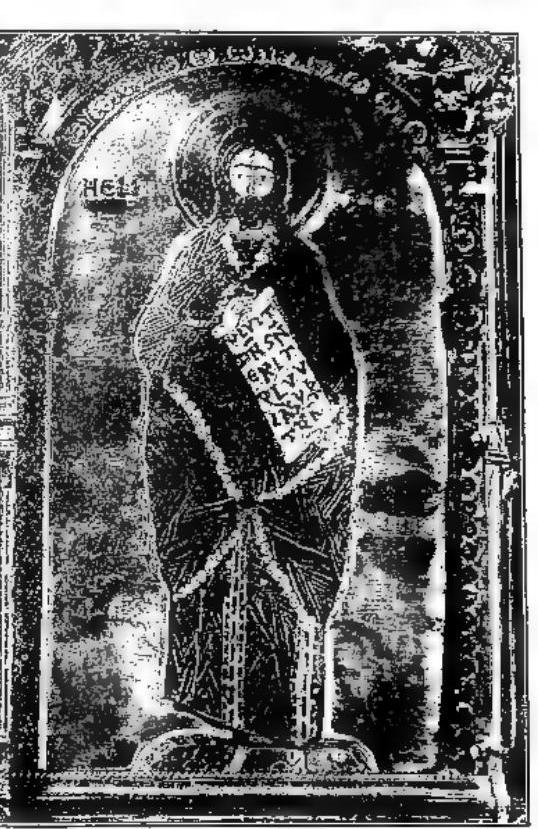
ICONOGRAPHY. — Christian antiquity represented the prophet E. taken up into heaven as classical art had represented the sun (Elice) on the racing quadriga. St. Giovanni Crisostomo explains to his audience how the prophet’s very name led poets and artists to bring the representation of Elijah closer to it (Homil., 3, E., 27); Sedulius calls E. “meritoque et nomine fulgens”: De Melia, I, 169. On funerary monuments, the scene of E.’s being taken up is found in a fresco in the cemetery of Domitilla, from the fourth century (Wilpert, Pitture, pl. 230, 2); contemporary with it are the scenes presented on sarcophagi in Rome and Milan (Wilpert, Sarcofagi, pl. 190, 3; pl. 189, 2). In the latter city, the scene of the rapture was represented in S. Ambrogio, accompanied by a distich (G. R. De Rossi, Inteript. Christ. Urbis Romos, II, Rome 1887, p. 161). E.’s rapture is also found on one of the panels of the wooden door of S. Sabina in Rome (fifth century).
As for the symbolic meaning of the scene, in funerary art it refers to the resurrection, as early as in Irenaeus (Adv. Haeror, 1, 5), and subsequently in the «ordo commendationis animas: libera Domine animam... sicut liberasti Eliam de morte communi». St. Gregorio Magno, on the other hand, sees in it a figure of the Lord’s Ascension (Homil. 20 in Evang.: PL 76, 1247). Wilpert held the same view. Eliseo also appears in the scenes of the rapture, who
Enrico Josi
The scene subsequently entered Byzantine miniature painting, the Catalan Bibles of the 11th century, the stained-glass windows of French cathedrals of the 13th century, as well as the Romanesque sculptures of the cathedrals of Modena, Cremona, and Borgo S. Donnino, inspiring, thanks to its inherent drama, the art of the sixteenth century and of the Baroque period as well (Antonio Campi, fresco in the cathedral of Cremona; R. Donner, relief in the cathedral of Gurk). The encounter with the widow of Sarepta likewise owes its iconographic importance originally to its corresponding symbolic meaning, according to which E. prefigures Jesus and the woman gathering wood, the Church of the Gentiles. See, for example, the stained-glass windows of Bourges and Le Mans, where moreover The resurrection of the widow’s son symbolizes the Resurrection of Christ. Just as the episode of E. in the desert in itself became dear to painters of various periods and countries (Dick Bouts, panel formerly in Berlin; Tiepolo, fresco in the archiepiscopal palace of Udine; F. Preller, cartoon in the Goethe Museum at Weimar), so finally the Pre-Raphaelite school also showed itself particularly attached to the miraculous events surrounding the prophet E.
BIBLI: H. Leclercq, Elie, Eliade, in DACL, IV, II, cols. 2670–74; K. Kende, Das Alte Testament in Bilde, Vienna 1926, chap. 33; K. Künste, Demographie der christlichen Kunst, I, Freiburg im Breisgau 1928, p. 300; L. Bröhler, L'art chrétien, Paris 1928, p. 373.
Kurt Rathe
APOCALISSE of E. — An apocryphal work mentioned in the Constituit. Apost. VI, 16, by certain Fathers, in the stichometric list of Nicephorus, and which the Ambrosiaster (Comm. in I epist. ad Cor.: PL 17, 205), Jerome (Epist. 57: ibid., 22, 576), and the anonymous Montfaucon-Cotelier list at no. 10 designate as an Apocalypse. It was almost certainly of Jewish origin (Schürer, p. 262 ff., 265).
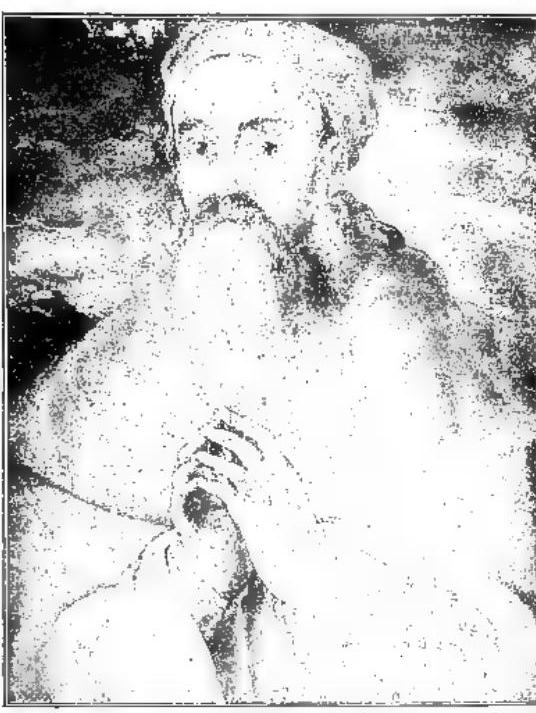
The Coptic fragments were grouped into an anonymous Apocalypse, an Apocalypse of Zephaniah, and an Apocalypse of E. The first probably forms part of the Apocalypse of Zephaniah. In the third, E. receives the command to preach penance; he foretells the appearance of the Antichrist, his battles against E. and Enoch, his defeat, the coming of the Messiah, and the thousand-year reign of the saints. In its present form it is certainly of Christian origin, but it seems to presuppose a Jewish writing which, being very ancient, appears to underlie all these texts. — Vedi tav. XVIII.