
ENVY. —
I. NOTION
Envy (from the Latin invidia) is one of the seven capital sins, which originate in the concupiscence aroused in human nature on account of original sin. Like all capital vices, it is more than a sin: it is the same disordered and therefore evil tendency; it is nevertheless called a sin because it leads to sin, and a capital sin because it is the source or root of many other vices.Envy is at the same time a passion and a vice. As a passion, it is a kind of profound sadness experienced at the sight of another’s good. This passion is nothing other than the deviation of a useful feeling, itself placed by God in human nature—namely, emulation, a praiseworthy feeling that leads one to imitate, equal, and even surpass, with the help of divine Grace, the virtues of one’s neighbor. As a capital vice, envy is a kind of spiritual grief, determined by the good of one’s neighbor, regarded as an attack upon our presumed superiority and therefore as an injustice done to us. It is often accompanied by the desire to see one’s neighbor deprived of the good that eclipses us. It is a vice born of pride, which can tolerate neither superiors nor rivals. The objects of envy are chiefly brilliant talents, wealth, successes, and honors; but in many people envy is directed also toward more solid qualities and even toward virtue itself, as well as toward the very person who possesses them. These are the worst forms of envy. Envy is therefore an odious egoism that seeks ways to harm one’s neighbor, contrary to love, which rejoices in the happiness of others.
Whenever there is grave matter, envy is by its nature a mortal sin, because it is directly opposed to the virtue of charity, which requires each person to rejoice in every grace and every advantage that God pours out upon his neighbor. To envy one’s neighbor’s spiritual goods is then a very grave sin (Sum. theol., 2ᵃ-2ᵃ, q. 36, a. 4, ad 2), one of the six sins against the Holy Spirit, considered irremissible, insofar as repentance for them is difficult.
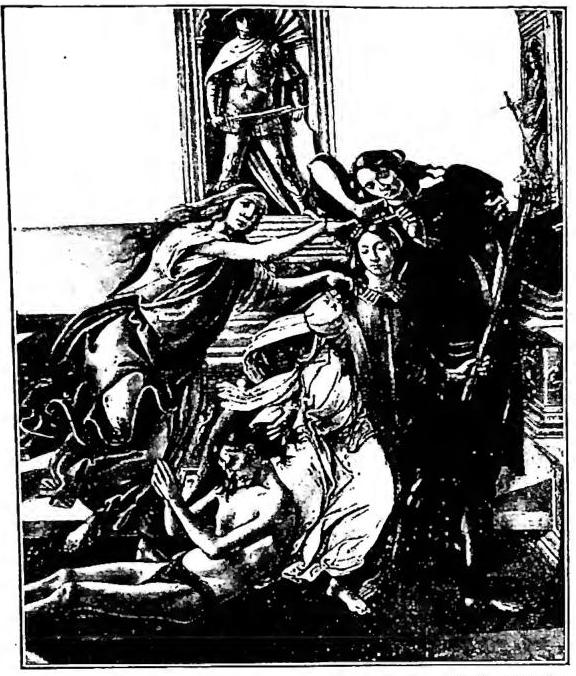
(phot. Alinari)
INVIDIA - Slander with Resentment, Envy, and Fraud drag the Innocent away. Work by Sandro Botticelli (1495) - Florence, Uffizi.
When it is merely a matter of involuntary feelings accompanied by little or no reflection, the fault will then be at most venial.