
LESSING, GOTTHOLD EPHRAIM. — German thinker, critic, poet, and dramatist, born in Kamenz on 22 January 1729, died in Wolfenbüttel on 15 February 1781. A pupil of Wolff in Leipzig and a student of Spinoza, a researcher tireless in the fields of philological and theological studies, he is one of Enlightenment (v.) in Germany. He belongs to the group of thinkers then designated as «Popularphilosophen», writers free from the technicalities and jargon of the schools; he was opposed to the sys-
tem, although sensitive to certain systematic requirements of Enlightenment philosophy, and was an astute reworker of the doctrines that characterize his age.
His thought, which moves constantly between Leibniz and Spinoza, seeks an accord between the two philosophers through the unity of the one within the whole, that is, through a conception of individuality that expands until it encloses the universal within itself. L. wishes to include the pre-established harmony within Spinozism, to save the particular from absorption into divinity, while continually falling back into Spinozian pantheism. In his pamphlet Über die Wirklichkeit der Dinger ausser Gott, he maintains in fact, despite his assertion that he wishes to adhere to Leibniz’s thought, that if the concept of a thing is in God, then the thing too must be in him, and that consequently the concepts of things in God are the things themselves. According to Jacobi, L. could not tolerate the idea of an absolutely infinite personal being, and therefore represented divinity as the soul of the whole.
L. devoted prolonged attention to religious problems in writings, partly propagandistic and partly polemical, inspired by the dominant motives of the Enlightenment, even though here and there a personal note betrays the impatience that, despite all his rationalism, he felt toward the closed attitude of the century. Particularly in the Anti-Goeze (Leipzig 1778) and in the Gespräche für Freimaurer (Göttingen 1778), he combats the traditional orthodoxy of positive religions and develops a philosophy of religion that should be founded above all on the inner connection of nature and history. «The best revealed religion is the one that contains the smallest number of additions to natural religion» (Über die Entstehung der geoffenbarten Religion, § 11).
Against the «fanaticism» of biblical scholarship and against the predominance of theology, he maintains that scriptural traditions must arise from intimate truth, and not vice versa; that religion is true not because the evangelists and apologists taught it, but that they taught it because it is true. In his polemic against Goeze he asserts that Christianity must essentially concern the heart, and that criticism of the historical and philosophical proofs must rest on principles quite other than those hitherto followed by the theologies of positive religions. The anti-dogmatic accents of the Anti-Goeze and of the Gespräche f. Freim., and his open struggle against orthodoxy, re-emerge in artistic form in Nathan der Weise (Berlin 1779), where the idea of natural religion is intended as a symbol of peace among the positive religions of humanity.
In the Erziehung des Menschengeschlechts (there 1780), which remains his philosophical masterpiece, religiosity rises to the principle of the whole of human development. Education and religion serve to develop the natural faculties and aptitudes of man. Through Revelation, the human race is raised from the lower stages to the higher; revealed truths must gradually be transformed into truths of reason if the human race is truly to make them its own. While God was educating his people by elementary means, the other peoples of the earth were advancing along the path of civilization by the sole light of reason. The two revelations are not substantially different; and when the age of Vollendung, of full maturity, arrives, there will in fact no longer be any doubt about the inner rationality of religious revelation. L. was above all concerned, in
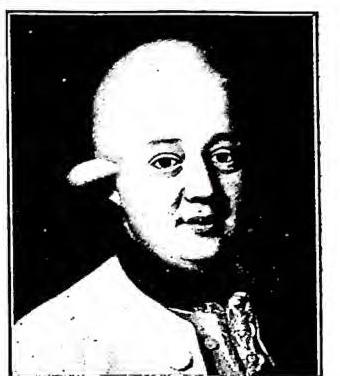
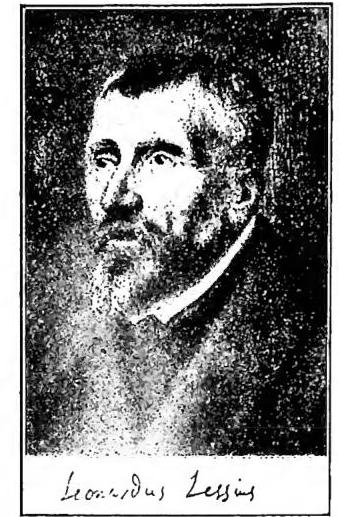
Lessing must be recognized as a rich and complex personality, not lacking in genius and insights which, while betraying on the one hand his adherence to Enlightenment rationalism, on the other reveal an obscure tendency to transcend II. He expressed unequivocally that bold, self-confident attitude characteristic of the century, yet at the same time attempted to save man and every human value from the constraints of the narrow philosophy of the Aufklärung. From the most uncompromising rationalism, which had inspired all his thought, Lessing ultimately sought liberation in the pantheistic and naturalistic paths that heralded the awakening of the new century, and came to sense, above abstract reason, the rights of humanity. An apostle of the Enlightenment, he had perceived the fissures that were widening within it and grasped the great questions that, only a few years later, would emerge before the rigid canons of that doctrine. His conception of the incessant striving toward truth, even on the condition of never attaining it, is already an anticipation of the theme that Rousseau would transmit to the leading figures of Sturm und Drang and later to the Romantics: that of an interiority which is passion and revolt, and thus helps to revalue, in relation to the Enlightenment conception, life, history, and tradition.
BIBLI: Works: Sämmliche Werke, edited by his brother Karl Gotthelf L., Berlin 1783 and following years, and the critical edition by K. Lachmann (1838–40), revised and supplemented in its 3rd ed. by F. Muncker, Sämmliche Schriften, 24 vols., Stuttgart 1886–1924; 4th ed. edited by J. Peterson, 25 vols., Berlin 1925–29. Studies: Th. W. Danzel and G. E. Guhrauer, G. E. L., sein Leben u. seine Werke, Stuttgart 1853; A. Stahr, G. E. L., Berlin 1859; E. Zeller, L. als Theolog (in Vorträge u. Abhandlungen, 2ª Samml.), Leipzig 1877; E. Schmidt, L. Gesch. seines Lebens u. s. Schriften, 2 vols., Berlin 1884; 4th ed. there 1925; E. Kretzschmar, L. u. die Aufklärung, Leipzig 1905; Ch. Schrempf, L., Stuttgart 1906, 2nd ed. 1921; F. Mehring, Die L.-Legende, 2nd ed., Berlin 1906; P. Lorentz, L.'s Philosophie, Leipzig 1909; Ch. Dempf, L. als Philosophie, there 1912; H. Leisegang, L.'s Weltanschauung, Leipzig 1931; M. Kommerell, L. und Aristoteles, Frankfurt a. M. 1940; H. Henry, Herder und L., Würzburg 1941. Further references in W. Ziegenfuss, Philosophen-Lexik., II, Berlin 1950, pp. 52–54. Bianca Magnino