Machine translation of the 1948–1954 Italian original. The original text is authoritative.
MARCO, GNOSTIC. – A disciple of Valentino, he taught, according to Irenaeus (Haer., I, 7, 4, ed. W. Harvey, p. 121, I, 13, 5 of the ed. A. Stieren, p. 154), in Asia, perhaps during the lifetime of St. Irenaeus. Characteristic of him was his speculation concerning the letters of the alphabet and numbers.
Irenaeus encountered adherents of M. in the Rhône valley, and this was the occasion for his becoming concerned with Gnosticism. The information about M. in Irenaeus is of particular interest because it reveals liturgical usages and formulas. The liturgical formulas are also transmitted in part in the Aramaic language, which suggests that this Gnosticism
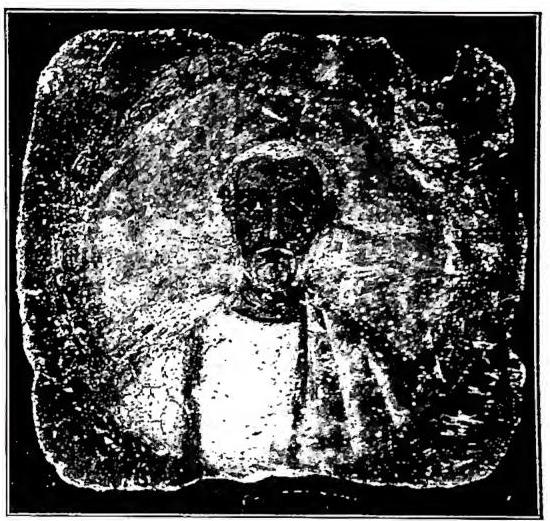
(phot. Pont. comm. arch. crist.) MARCO, pope, saint – Fresco in the series of the pontiffs in the ancient basilica of S. Paolo (9th century) – Rome.was widespread in Syria, or in a Judeo-Christian milieu. The Marcosians performed Baptism in water, but they also knew of a post-baptismal anointing. Their prayers for the dead are also interesting; these were intended to facilitate the passage of souls among the hostile powers in heaven. A remark by St. Irenaeus, though polemical, attests to the sect’s belief in eucharistic transmutation. M. considered himself a prophet and also communicated the gift of prophecy to others (Haer., I, 7, 2, ed. Harvey, p. 117, I, 13, 3, ed. Stieren, p. 147).
BIBL.: The best explanation of M.’s speculation is found in M. Sagnard, La gnose valentinienne et le témoignage de st Irénée, Paris 1947, p. 338 ff. On the liturgy V. BOUSSET, WILHELM, Hauptprobleme der Gnosis, Göttingen 1907 (v. s. V. Marcosier). See also, on M.’s speculation: F. Dornseiff, Das Alphabet in Mystik u. Magie, 2nd ed., Leipzig 1925, p. 126 ff.; C. I. Scholen, Les grands courants de la mystique juive, Paris 1950, p. 78. Erik Peterson
Cite this article
“MARCO, GNOSTICO.” Enciclopedia Cattolica, vol. VIII (1952), p. 55. Azione Romana digital edition, https://azioneromana.com/article/marco-gnostico.