MENNO, SIMONS. — Founder of the Mennonites, b. at Witmarsum (Holland) ca. 1496, d. at Aldesloe (Holstein) in 1559. Ordained a priest in 1515 (or 1516), he was vicar of Pingium and, ca. 1531, parish priest of his native town. In 1531, when the Dutch Anabaptist Seicke Snijder had been condemned to death because he denied the validity of the Baptism of infants, M. decided to examine the question for himself and became convinced that such Baptism was invalid; he also wrote to Luther, Bucer, and Bullinger, all defenders of the Baptism of children (paedobaptism), and, unconvinced by their arguments, adhered to Anabaptist doctrines and was rebaptized in 1536 by Obbe Philips, organizer of the first Anabaptist church in Holland, of which M. was one of the principal leaders.
Meanwhile German-Swiss Anabaptism had assumed a revolutionary character in Germany, culminating in the massacre at Leiden (1535). After that city was occupied, many Anabaptists took refuge in Friesland, and M. worked among the refugees to moderate their fanaticism, succeeding in this. But the reputation of their previous excesses had turned the civil authorities against them, and they were therefore persecuted in Holland as well. M., who from 1537 to 1541 had been head of the Anabaptist or “Obbenite” community of Groningen, went to Emden, where he debated with the Polish heretic Giovanni di Lasco; in 1545 he took refuge, with his wife
and children, in Cologne, and then in Holstein; subsequently traveling throughout northern Germany, he propagated his doctrine there, founding Mennonite centers. During this time he wrote various pamphlets and treatises. He died in the household of Count Fresemberg, who had given him shelter. M. succeeded in suppressing the excesses of the primitive Anabaptists and is regarded as the second founder of the sect, rebaptized under the name Mennonite.
Bax, Rise and fall of the Anabaptists, Londra 1903; J. M. Whiterow, Church rebels and pioneers, there 1937; G. Welter, Histoire des sectes chrétiennes, Parigi 1930, passim. Camillo Crivelli
THE MENNONITES. - From the writings of MENNO, two disciples, Hans Rys and Lubbert Giraldi, in 1580 drew the "Confession of Faith of Waterland," which contains 40 articles. In these, the transmission of original sin is denied, conditional election is affirmed, the death of the Lord for all is asserted, oaths, war, and any violence are condemned, as are lawsuits; obedience to civil authorities is recommended, provided they do not command things contrary to the word of God, and only the Baptism of adults is recognized.
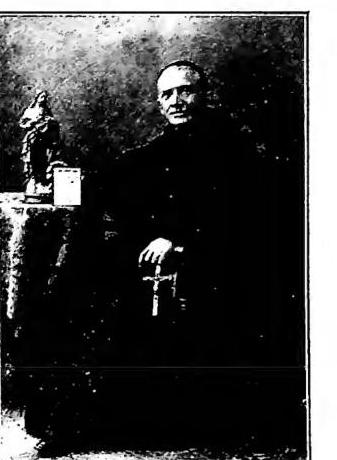
(by courtesy of the Hospitaler Sisters of the Sacred Heart of Jesus)
MENNI, BENEDETTO - Portrait.