NANCHANG, ARCIDIOCESI DI

NANCHANG, ARCIDIOCESI di. - Fabbrica di vasi di terracotta dipinta e verniciata.
Image from page 951
Image from page 951

NAMUR, ARCHDIOCESE OF

Nan-ch'ang, archdiocese of. — Factory of painted and varnished earthenware vessels.

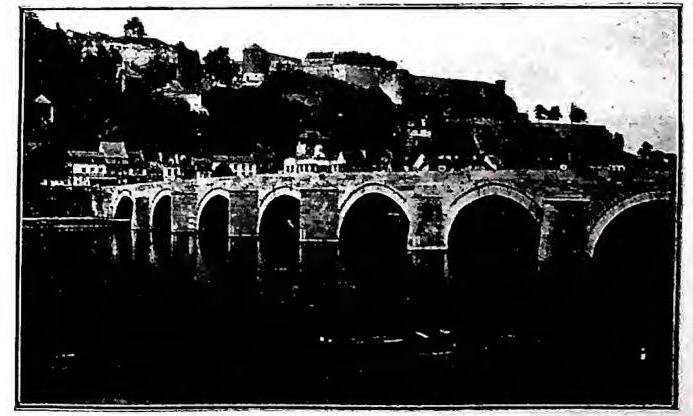
Namur, diocese of. — Citadel and Jambes Bridge over the Meuse.

The diocese of Namur was formed in 1559 from the dismemberment of the diocese of Metz and was joined to that of N., which also included the departments of Forêts and Ardennes. On 7 Oct. 1842 the diocese of N. was restricted to the two provinces of Belgium and Luxembourg, which from 1870 was detached and made immediately subject [to the Holy See]. Until the creation of the diocese, the parishes of the city of N. were under the jurisdiction partly of the deanery of Gembloux and partly of that of Fleurus.

In 1047, in place of an ancient chapel, Albert II, Count of N., had a church built dedicated to the martyr St Alban (St-Aubain); its first rector was Frederick of the dukes of Lorraine, brother-in-law of Albert II, who in 1057 X (v.). The church was greatly enriched by donations and rebuilt between 1751 and 1767 in imitation of St Peter’s Basilica.

Among the bishops of N. are remembered: the first, A. Havet, Dominican (1562-78); T. J. F. de Sciclant (1727-40), who enlarged the episcopal palace and the seminary; Godefroy, who built the present cathedral. In 1883 the Jesuit college of Notre-Dame de la Paix was founded in N., with the two faculties of philosophy and letters and of sciences. Pope Pius XII, with the apostolic letter Exculitoribus templis of 8 May 1950, raised to the rank of minor basilica the ancient collegiate church of St Materne of Walcourt of the 11th century, where the precious statue of the Blessed Virgin is venerated, enriched by many artistic offerings (AAS, 43 [1951], pp. 268-69).

N. has possessed since the mid-19th century a rich museum containing the archaeological material from the Gallo-Merovingian and Belgian periods discovered in fruitful excavations. A Merovingian cemetery was found at Flavion in the locality Terre-au-Pire; a second at Lavaux-St-Anne, in the place called “mountain of the old church,” where ruins of buildings were discovered, among which an apsidal oratory was identified; Frankish cemeteries were recognized at Franchimont, Wancennes, Froidlieu, etc. (A. Bequet, Les premiers monuments chrétiens du pays de N., in Annales de la Soc. archéol. de N., 18 [1890], pp. 309-24). In the territory of the diocese of N. various abbeys flourished: the Benedictine of Brogne, 19 km from N., founded in 919 by St Gerard and first dedicated to SS Peter and Eugene, then (1308) to the founder (Cottineau, II, cols. 510-11); the Benedictine of Gembloux on the river Orneau, founded in 922 by Gilbert of Darnau; its first abbot was Erluin; it flourished in the 12th century, but was sacked by Calvinists in 1578, burned in 1712 and suppressed in 1793 (Cottineau, I, cols. 1263-64); the Premonstratensian of Floreffe, 12 km from N., on the banks

NAMUR, DIOCESE OF

Namur, diocese of. — Citadel and Jambes Bridge over the Meuse.

The diocese of Namur has an area of 3,656 sq. km, with a population of 425,000, of whom 48,000 are non-Catholics; 25 catechists, 49 teachers, 10 baptizers, 9 doctors and 65 nurses. It has 1 minor and 1 major seminary; 4 districts with 25 parishes, 21 primary stations and 416 secondary ones; 10 churches and 92 chapels. Among its works: 3 hospitals, 3 medical dispensaries, 3 orphanages, 2 homes for the elderly; 11 elementary schools, 3 secondary, 2 vocational, 25 of prayer and first elements.

The Christian origins of N. date back to the end of the 16th century and are shared with those Kian (v.). It was also at N. that Fr Matteo Ricci passed through and preached. Evangelization was hindered by almost continuous persecutions, which made not a few victims.

Bibl.: AAS, 12 (1920), pp. 564-65; 17 (1925), p. 24; GM, p. 202; MC, 1950, pp. 372-73; Arch. di Prop. Fide, Relazione di N. 1948.