Machine translation of the 1948–1954 Italian original. The original text is authoritative.
SAN SALVATORE DI MESSINA. – It is the most important of the Greek monasteries of southern Italy. It was founded “in lingua Phari” by Ruggero II the Norman, who entrusted the task to s. SUMERI (v.). After laying its foundations around 1122, the latter sent there from the Patirion of Rossano his disciple Luca, with 12 monks, half the codices and relics, and a considerable sum of money. The construction of the cenobium was completed in 1132; but King Ruggero II had issued its Constitution as early as May 1131, enriching it with privileges and donations, raising it
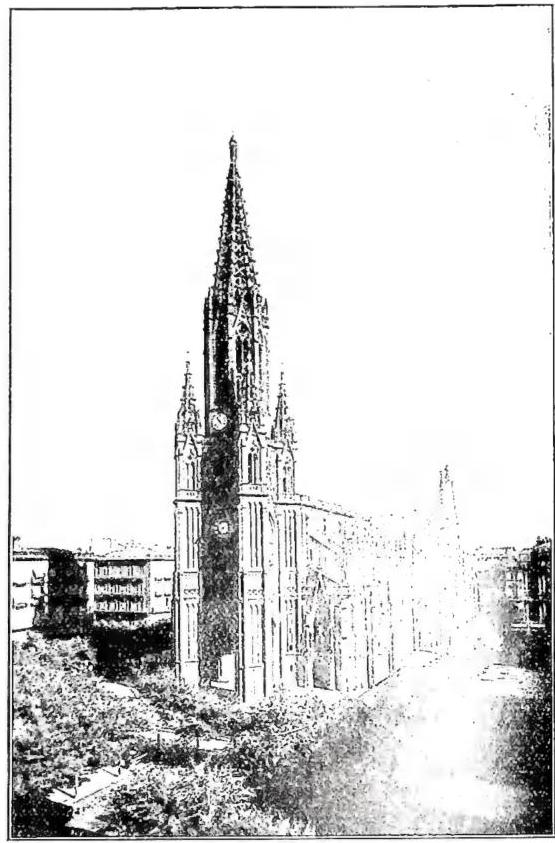
SAN SEBASTIANO, DIOCESI di – Church of the Good Shepherd (1882-1899) – S. Sebastiano. (Int. Galanza)to the dignity of an archimandriate and placing 40 Greek monasteries under its jurisdiction, 14 of them in Calabria. In 1134 the archimandrite Luca collected its statutory regulations in his Typikon. Its power increased enormously through subsequent donations, and the archimandrite several times stood up to the archbishop of Messina on jurisdictional grounds. Follow the history of Greek monasticism in Italy.
Bessarione attempted unsuccessfully to restore its fortunes. Carlo V transformed it into a castle, transferring it to the shore of the Peloro. The Library, rich in precious Greek codices, was stripped during the viceregal period; only 70 codices were saved, and these are currently held in the university Library.
BIBL.: besides the Bios of s. Bartolomeo di Simeri, in Acta SS. Septembris, VIII, Paris 1865, pp. 810-26, of outstanding importance is cod. Vat. lat. 8201, which in its 500 folios contains “bulls and diplomas for the archimandrite of Messina from the 11th century to 1536”; R. Pirri, Sicilia Sacra, Leiden 1723; F. Matranga, Il Mon. del S. S. dei Greci dell'Acroterio di Messina, in Atti di R. Accad. Peloritana, 3 (1887), pp. 63-102; M. Scaduto, Il monachismo basil. nella Sicilia medievale, Rome 1947. For the Greek codices, Spoglio dei codici greci dei Mon. d. S. S., in Atti dell'Acc. Peloritana, 14 (1899-1900), pp. 339-51; G. Fraccaroli, Dei codd. Greci, etc., in Studi ital. d. filol. neoclass., 5 (1897), pp. 487-514; S. Rossi, Catol. dei codd. greci etc., in Arch. stor. Mess., 2-5 (1901-1904); A. Mancini, Codices grassi monast. Mess. S. S., Messina 1907. For further bibliography cf. Boll. d. badia greca di Grottaferrata, new series, 5 (1951), pp. 73-76. Francesco Russo
Cite this article
“SAN SALVATORE DI MESSINA.” Enciclopedia Cattolica, vol. X (1953), p. 1070. Azione Romana digital edition, https://azioneromana.com/article/san-salvatore-di-messina.