
SATORNILO (Saturninus). — A Gnostic of Antioch, contemporary with Basilides. According to his doctrine, the world was created by seven angels (a transformation of a Jewish tradition that spoke of the collaboration of angels in God’s work).
The appearance of the light, which is probably identified with Christ, awakens in the angels the desire to form an image of the shining image; but the angels are unable to create an upright man: their work is a worm that crawls. Then the heavenly image sends a spark of its light into the bodies, which thus become living and upright beings. Here too a Jewish tradition is presupposed, one that clearly distinguished, in the creation of man, the formation of the human body from its vivification, and respectively from its erect posture. At death, the celestial part (scintillum) returns to heaven, while the body dissolves into its elements. But S.’s doctrine was more complicated and is not clearly presented in the accounts of the Fathers. The unknown Father is said to have created four orders of angels, but there is also mention of a fifth group, the principes, who are perhaps the angels of the peoples, among whom the angel of the Jews, their God, is also included. Jesus is said to have come to destroy this God of the Jews. His adherents are those who have received the spark of life. Procreation and marriage are said to be the work of Satan, who, moreover, together with the angels, the creators of the world, is said to have inspired the prophecies of the Old Testament. The anti-Jewish, anti-cosmic, anti-prophetic, and ascetic tendency of this Gnosis is evident. Perhaps S. was opposed by St. Ignatius.
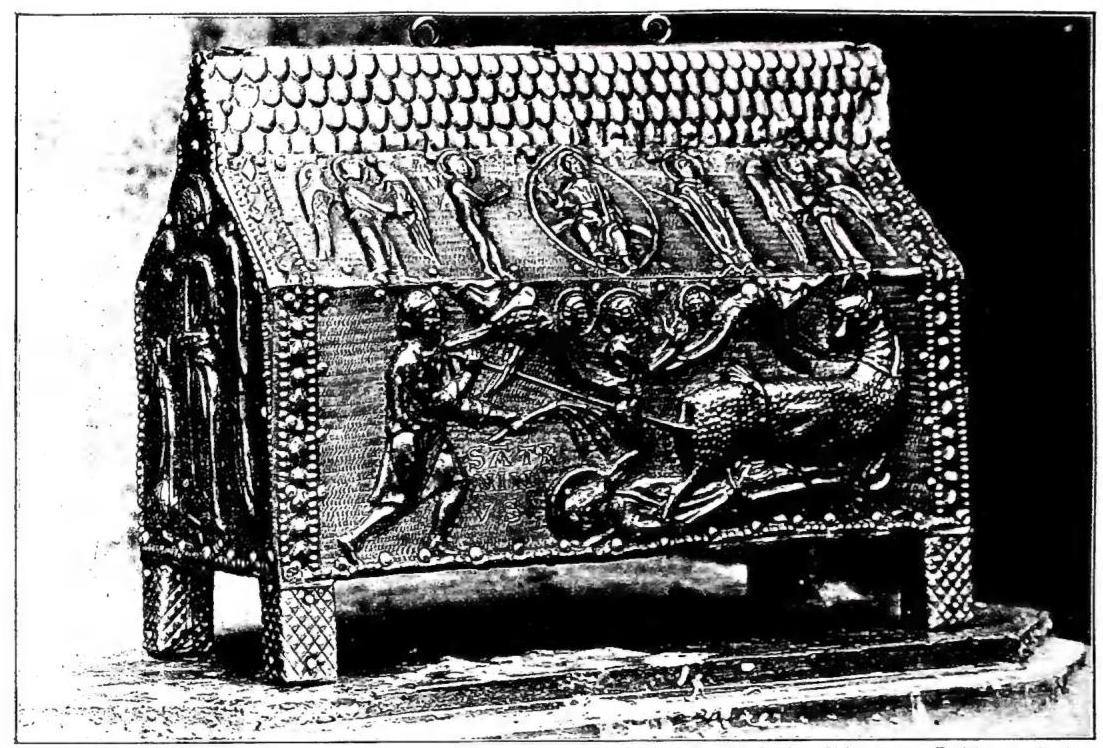
(from L. Lefrançois Pillion, L'Art roman, Paris n.d., fig. 7f)