SCHANZ, PAUL. – Theologian and apologist, b. at Horb (Württemberg) on 4 March 1841, d. at Tübingen on 1 June 1905.
He studied philosophy and theology at the University of Tübingen (1861–65) and, after being ordained priest at Rottenburg (10 Aug. 1866), served for a year as parochial assistant. In August 1867 he returned to Tübingen as a tutor in the theological college, occasionally substituting for Kuhn (q.v.) in teaching dogmatic theology.
Having advanced in mathematics, he became a professor at the gymnasium in Rottweil (1870–76); it was during this period that he conducted his studies on Cardinal Nicholas of Cusa as a mathematician and astronomer. From 1876 to 1883 he held the chair of biblical exegesis at Tübingen, publishing well-regarded commentaries on the Gospels (4 vols., Freiburg im Br. 1879–85). In 1883 he succeeded his teacher Kuhn in the chair of dogmatic theology and apologetics, establishing himself through important publications, among which stand out: *Die Lehre von den heiligen Sakramenten der katholischen Kirche* (Freiburg im Br. 1893) and the extensive *Apologia des Christentums* (3 vols., 1887–88; Italian trans., Florence 1907).
---
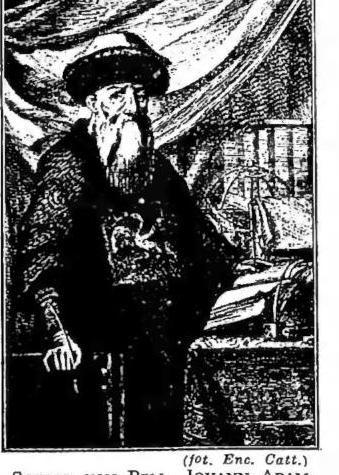
SCHALL VON BELL, JOHANN ADAM. – Jesuit, missionary in China and astronomer, b. at Cologne on 1 May 1592, d. at Peking on 15 Aug. 1666. He entered the Society of Jesus on 21 Oct. 1611, was ordained priest, and departed from Lisbon for China on 16 Apr. 1618. He arrived at Macao on 15 July 1619 and remained there until autumn 1622, when, once the persecution had ended, he was able to go to Peking, arriving on 25 Jan. 1623.
Once he had learned the language, in 1627 he was sent as a missionary to Sian, in Shensi, from where in the second half of 1630 he was recalled to Peking to assist in the correction of the calendar. A serious error in calculation—namely, the Chinese astronomers’ exclusion of 21 June 1629—had prompted the Emperor to entrust the calendar’s revision to the missionaries, aided by two eminent Chinese scholars, Dr. Paul Hsü Kuang-ch’i and Dr. Leo Li Chih-tsao. For this reason Schall was recalled from Shensi, and Fr. Giacomo Rho of Milan from the same region. Within five years, with the help of some dozen Christian literati, the two missionaries published a collection of about 150 small volumes on mathematics in Chinese. On 28 Feb. 1634 they presented to the Emperor the first calendar corrected according to Western methods. After the deaths of the two Chinese colleagues (1630 and 1633) and of Fr. Rho (1638), Schall continued and expanded the work, constructing instruments of astronomy, optics, hydraulics, music, and even artillery, casting cannons to repel Manchu incursions. With the Manchus’ triumph in 1644, Schall did not lose the favor he had enjoyed under the last emperor of the Ming dynasty. Before the end of that year, Schall was appointed president of the Bureau of Astronomy, despite his protests. On 3 Apr. 1664, Alexander VII declared verbally that, given the circumstances, it was permissible for Schall to accept such an honor, notwithstanding his profession of the four vows and the doubts of his confreres. As for the insertion into the calendar of auspicious or inauspicious days and certain superstitious particulars, Schall had to prove that he was responsible only for the purely scientific part of the calendar’s compilation. He found himself in a delicate position when, in 1658, he was granted the dignity of a first-class mandarin, which required ennobling three generations before and after him; to make this possible, at the Emperor’s wish he had to adopt as his son the son of one of his servants—an imprudence