Machine translation of the 1948–1954 Italian original. The original text is authoritative.
STUART, FAMIGLIA. – An ancient Scottish family, descended from a branch of the Anglo-Norman Fitz-Alan family.
In the time of King David I of Scotland (1124–53), it inherited the office of steward (master of the court), whence the name S. After the marriage of WALTER S. to a daughter of King Robert I Bruce (1306–29), since the son of the latter, David II (1329–71), had no male heirs, their son ascended the throne in 1371 under the name ROBERT II (1371–90), founder of the dynasty that reigned in Scotland for several centuries and also ascended the throne of England in 1603 with JAMES I (VI as king of Scotland), son of Mary (v.) Stuart. After the expulsion of James II in 1688, his son JAMES EDWARD (1688–1766) sought the help of Louis XIV to recover the kingdom. Proclaimed king at Saint-Germain in 1701 upon his father’s death, under the name of James III, he accompanied a French expedition to Scotland in 1706 but was unable to land there and was forced in 1713 to leave France pursuant to a clause of the Treaty of Utrecht. He returned to Scotland in 1715, but when this attempt too failed, he settled in Rome, where he remained until his death. His son CHARLES EDWARD (1720–88), born in Rome, landed in Scotland with French assistance in 1745, occupied Edinburgh, and advanced into England, but, defeated at the Battle of Culloden (1746), had to abandon any hopes of restoration.
BIBL.: G. Angelini, I Sobiesky e gli Stuarts in Roma, in La Rassegna ital., 3 (1883), pp. 307–22; H. M. Vaughan, The youngest pretender, Henry S. Cardinal Duke of York, in Fortnightly Review, 88 (1907), pp. 283–95; I. Coissac de Chavrebière, Histoire des Stuarts, Paris 1930; J. Mackinnon, A history of modern liberty, IV: The Struggle with the Stuarts (1647–89), London 1941. Silvio Furlani
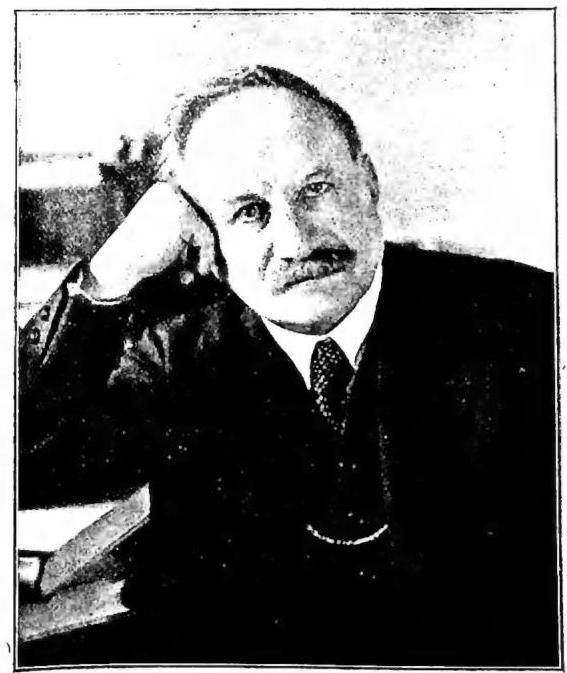
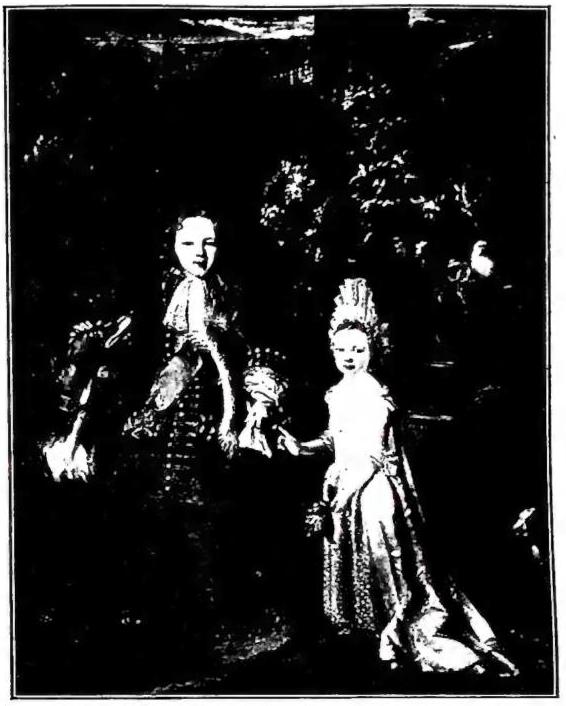
(from J. S. Festschrift, Yale 1928) STRZYGOWSKI, JOSEPH – Portrait. (photo by Alinari) STUART, FAMIGLIA — Portrait of James I S. and his sister Louise, painted by N. Largillière (17th century) — Florence, Uffizi.HENRY BENEDICT MARIA CLEMENT, Duke of York. - Cardinal, born in Rome on 6 March 1725, died in Frascati on 13 July 1807. Son of James III, pretender to the throne of England, and Maria Clementina Sobieski, he received Baptism from Benedict XIII. Benedict XIV, in 1747, conferred upon him the Orders up to and including the diaconate and, in the Consistory of 3 July 1747, created him cardinal. In 1748 he was ordained priest and, in 1751, became archpriest of the Vatican Basilica; subsequently vice-chancellor of the Holy Roman Church and commendatory abbot of San Lorenzo in Damaso. On 2 October 1758, Clement XIII appointed him titular archbishop of Corinth; from 1761 he was bishop of Frascati, where he held two esteemed synods published in print, restored the bishop's palace, embellished the Cathedral, and acquired notable merits toward the Seminary, which he provided with a most precious library. Having become, in 1774, sub-dean of the Sacred College, he did not wish to leave the suburban see of Frascati, where he was accustomed to reside for long periods, beloved and esteemed by that population, which he constantly benefited. Upon the death of Cardinal Giovanni Francesco Albani, he obtained the deanship of the Sacred College and, from 26 June 1803, was bishop of Ostia and Velletri. After the death of his brother Charles Edward, Duke of Albany and Prince of Wales, the cardinal, considering himself the legitimate sovereign of England, assumed the name of Henry IX, being addressed at home by his family with the title of Majesty. He was buried in Saint Peter's.
BIBL.: Moroni, CIII, p. 323; Pastor, XVI, I, II, passim; G. C. Schmidlin, Papstgeschichte der neuesten Zeit, I, Munich 1933, passim. Mario De Camilli
Cite this article
“STUART, FAMIGLIA.” Enciclopedia Cattolica, vol. XI (1953), p. 879. Azione Romana digital edition, https://azioneromana.com/article/stuart-famiglia.