THOMASSIN, D'EYNAC LOUIS de. - Theologian and jurist, b. at Aix-en-Provence on 28 Aug. 1619, from a family of ancient Burgundian nobility, d. in Paris on 25 Dec. 1695. At the age of 14 he was received by Fr. De Condren into the French Oratory, where he spent his life teaching and writing. Because of his orthodoxy he drew upon himself the wrath of the Gallicans and the Jansenists. Of a gentle and timid disposition, with a ready and versatile mind, an exemplary religious and supremely methodical, he is undoubtedly one of the finest figures of the Oratory of France.
Extremely well versed in the classical languages, in mathematics, in patrology, in ecclesiastical history, and above all in theology and canon law, he left a very copious output: Dissertationes in Concilia generalia et particularia (Paris 1667); Mémoires sur la Grâce (3 vols., Louvain 1668); Ancienne et nouvelle discipline de l'Eglise (3 vols., plus index, Paris 1678-79, 1681); Dogmata theologica: De Verbi Dei Incarnatione (ibid. 1680); La méthode d'étudier et d'enseigner chrétiennement et solidement les poètes, par rapport aux lettres divines (3 vols., ibid. 1681-82); Traités historiques et dogmatiques sur divers points de la discipline de l'Eglise et de la morale chrétienne (2 vols., ibid. 1680-83); Dogmata theologica: De Deo Deique proprietatibus (ibid. 1684); La méthode d'enseigner chrétiennement la philosophie (ibid. 1685); Traité de l'Office Divin (ibid. 1686); Vetus et nova Ecclesiae disciplina, editio latina post duas gallicanas auctior et emendatior (3 vols., ibid. 1688); Dogmata theologica: Prolegomena, de Trinitate (ibid. 1689); La méthode d'étudier et d'enseigner chrétiennement la grammaire et les langues par rapports à l'Ecriture
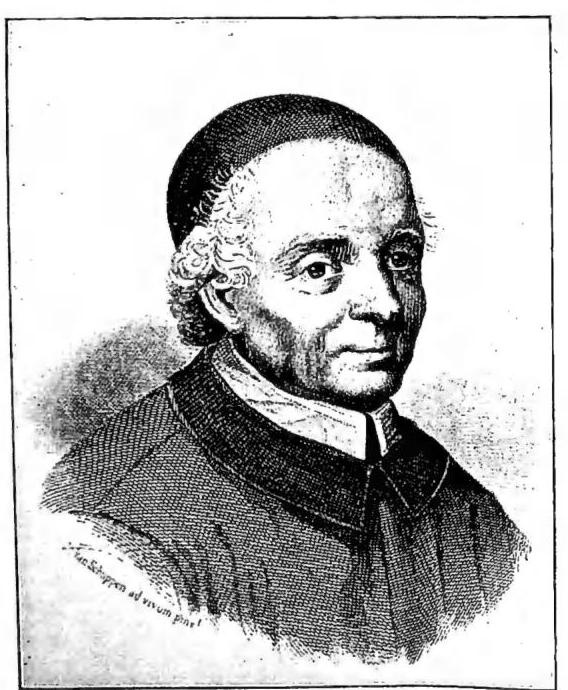
THOMASSIN, D'EYNAC LOUIS de - Portrait. (from L. Th., Ancienne et nouvelle discipline de l'Eglise, Paris 1685-87)Sainte et à la langue hébraïque, avec cinq glossaires (2 vols., ibid. 1690); Traité de la vérité et de la mensogne (ibid. 1693); La méthode d'enseigner chrétiennement les historiens profanes (ibid. 1694); Traité de l'aumône (ibid. 1695). He left various manuscript works, some of which were published shortly after his death. The name of T. is linked to the powerful Theologica dogmata (which nevertheless remained incomplete) and to the juridical work Vetus et nova Ecclesiae disciplina.
In philosophy T. is a fervent admirer of Plato and of St. Augustine; but although he did not approve of the orientation of the scholasticism of his time, he did not stint his praise of St. Thomas. In theology he follows the orientation of Petavius and of the Oratorian Giovanni Morin and therefore does not neglect speculative theology, but cultivates positive theology by preference, constantly relying on the data of Scripture, the Fathers and the councils. The theology of T. is not arid, but animated by the breath of his own profound meditation: it is a theology mentis et cordis which, enlightening the intellect, moves the will. His theological views, even if at times debatable, always bear the imprint of genius.
BIBL.:sources
Ch. Bordes, Vita L. Thomassini, prefixed to the Glossarium univ. hebr., Paris 1697; J. Bougere, preface to the Ancienne et nouv. discipline de l'Eglise, I, 2nd ed., ibid. 1725, pp. 1-31; id., in J. P. Niceron, Mém. pour servir à l'hist. des hommes illustres, III, ibid. 1729, pp. 163-79; L. Lescocur, Essai sur la théodicée du p. T., ibid. 1852; A. Perraud, Vie du p. T., prefaced to the ed. of Anc. et nouv. discipl. de l'Eglise, Bar le Duc 1864; J. Grandet, Les saints prêtres français du XVIIe siècle, II, Paris 1879, pp. 142-47; L. Batterel, Mém. domes. pour servir à l'hist. de l'Oratoire, III, ibid. 1904, passim; Hurter, IV, col. 416 ff.; J. Martin, T., ibid. 1911; H. Bremond, Hist. littér. du sentim. relig. en France, VII, ibid. 1928, ch. 6; H. Van Camp, La philos. chrét. de L. T. de l'Oratoire, in Rev. néo-scolast. de philos., 40 (1937), p. 243 ff.; M. Grabmann, Storia della teol. catt., 2nd ed., Milan 1939, p. 272; A. Molien, s. v. in DThC, XV, coll. 787-823 (Paris 1946). Olimpio Giampedraglia
Giampedraglia, Olimpio. “Thomassin, d'eynac louis de.” In Enciclopedia Cattolica, vol. XII, coll. 59–62. Città del Vaticano: Ente per l’Enciclopedia Cattolica e per il Libro Cattolico, 1954. https://azioneromana.com/article/thomassin-d-eynac-louis-de.
MLA
Giampedraglia, Olimpio. “Thomassin, d'eynac louis de.” Enciclopedia Cattolica, vol. XII, Ente per l’Enciclopedia Cattolica e per il Libro Cattolico, 1954, coll. 59–62. Azione Romana, https://azioneromana.com/article/thomassin-d-eynac-louis-de.
BibTeX
@incollection{ec12_thomassin_d_eynac_louis_de,
  author    = {Giampedraglia, Olimpio},
  title     = {Thomassin, d'eynac louis de},
  booktitle = {Enciclopedia Cattolica},
  volume    = {XII},
  pages     = {59--62},
  note      = {Cited by column},
  publisher = {Ente per l’Enciclopedia Cattolica e per il Libro Cattolico},
  address   = {Città del Vaticano},
  year      = {1954},
  url       = {https://azioneromana.com/article/thomassin-d-eynac-louis-de}
}
Click or scroll to zoom · drag to pan · Esc to close