
ALLAHABAD, DIOCESI of. — City of northern India, capital of the district and region of the same name. Its position at the confluence of two sacred rivers, the Ganges and the Jamna, confers a sacred character upon it as well, hence the various names by which it has been designated: the ancient one, Prayag, or “the confluence” par excellence; Triveni, or “the three ways,” formed by the three rivers—the Ganges, the Jamna, and the new Ganges resulting from them; and then A., or “the abode of Allāh,” given to it in the first half of the seventeenth century by Shah Giahān. The most celebrated among the cities of its region is Benares, on the Ganges, a stronghold of Hinduism, thickly filled with temples.
Ecclesiastically, A. is now a suffragan diocese of Agra. But it first formed part of the vast apostolic vicariate of Tibet-Hindustan, or Agra, erected in 1820; then of the apostolic vicariate of Patna, separated from the former in 1845 and subsequently erected as a diocese in 1886 under the name of A. Its territory, still very extensive, was reduced by the successive establishments of the apostolic prefecture of Bettiah (1892), the diocese of Patna (1919), the apostolic prefecture of Jubbulpote (1932), that of Jhansi (1940), the diocese of Lucknow (1940), and finally the apostolic prefecture
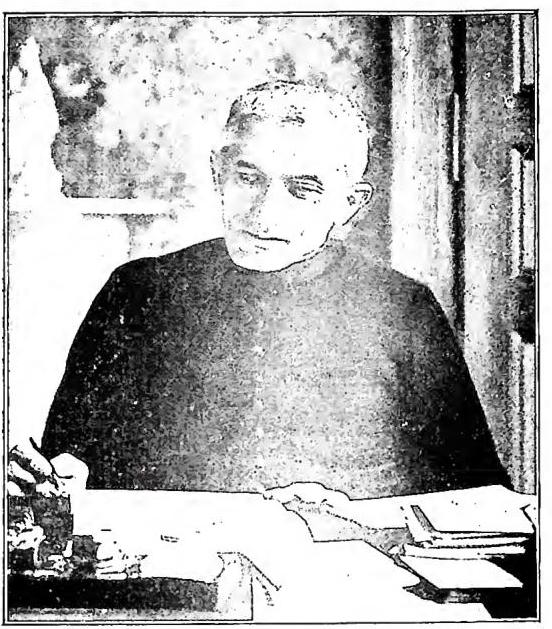
Evangelization proceeded ever slowly on account of the obstacles erected on every side by deep-rooted superstition, pagan fanaticism, and the various uprisings against the English occupier.
The diocese has an area of 120,000 sq. km and a population (1939) of 28 million inhabitants, of whom approximately 17,000 are Catholics, including catechumens; the others are Protestants, Jews, Muslims (8 million), and pagans (approximately 20 million). It has 22 churches, of which 5 are parishes and 25 quasi-parishes, as well as 16 chapels. There are 57 secular priests, 19 of them Indians; they are assisted by the Christian Brothers and by 145 nuns from various Congregations, 16 of whom are Indian and 17 Anglo-Indian. There are 21 elementary schools with 460 pupils; 7 middle schools with 1,072 pupils; 8 secondary schools with 1,632 pupils; and 2 vocational schools with 34 pupils. There are also 1 hospital and 26 dispensaries, orphanages, and homes for the elderly.