ANTEGNATI

ANTEGNATI. - A Brescian family of organ builders who, from the 15th to the 16th century, enriched Italy with numerous instruments, authentic masterpieces of organ craftsmanship. The illustrious workshop began with BARTOLOMEO, son of a Giovanni "iurisperitus" (a Brescian citizen but originally from Cremona), and after Bartolomeo, who was also an organist at the Brescia cathedral, continued with his sons GIOVAN FRANCESCO, GIAN GIACOMO, and GIOVAN BATTISTA, from whose son Graziodio descends COSTANZO (1549-1624), a pupil of the composer Girolamo Cavazzoni. As a builder, he introduced for the first time (in the organ of S. Marco in Milan) the divided stops and for dialogues, because these stops are divided halfway through the scaling; as a performer, he held (c. 1584 to 1619) the position of organist at the Brescia cathedral; as a composer, he left 2 books of masses for 6-8 voices (Venice 1578 and 1589).

ANTELAMI, BENEDETTO

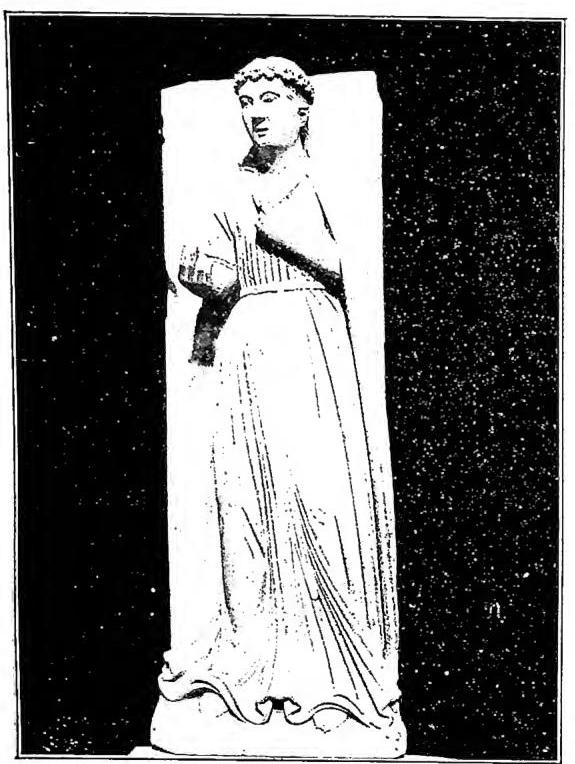
Sculptor and architect of the late 12th and early 13th centuries, active in Parma. His name appears in documents from 1178 to 1226. He is the author of the sculptural decoration of the Parma Baptistery, partially executed by assistants, as well as the design and construction of the building, completed in its essential parts, including the dome, in 1216. The cathedral of Borgo San Donnino and some of the many sculptures adorning it are also works of his (certainly the two prophets in niches on the unfinished façade), though here one senses the predominant intervention of mediocre followers. In 1219, he began the construction of the Abbey of S. Andrea in Vercelli (almost completed in 1225), decorating its central portal with the Martyrdom of S. Andrew.

A. must have spent his years of apprenticeship and artistic education in Provence, since the memories of the complex sculptural ensembles of the church facades of St-Gilles and especially of the portal and cloister of S. Trophime in Arles are abundantly and vigorously echoed in the master’s earliest works, forming the substratum of his art, even as they blend with a growing influence from the Gothic art of northern France, which is particularly evident in S. Andrea in Vercelli. But A., far from merely supplementing these French elements, thoroughly reworked and transformed them, imbuing his creations with a distinctly Lombard character in the compact and robust solidity of the volumes, shunning both the trite and restless pictorialism typical of the Provençal school and the soaring ascensional thrust and refined elegance that characterize the Gothic architecture and sculpture of the churches of the Île-de-France. Even in the vast iconographic themes developed by A., especially in the Parma Baptistery, which is his masterpiece, one can discern, despite their partial derivation from France, strongly original accents and an uncommon subtlety in selecting and mutually connecting the themes. A., whose importance within the context of Lombard medieval architecture and sculpture still awaits more precise definition by scholarship, may be considered, for the strength of his intellect and the breadth of his culture, one of the most powerful personalities.

ANTE

Article illustration
Antélami, Benedetto - Detail of the Baptistery (1196). Parma.