
BOITO, ARRIGO. – Musician and man of letters, born in Padua on 24 February 1842, died in Milan on 10 June 1918. Of a Venetian father and a Polish mother, he studied at the Milan Conservatory (1854–62), then travelling through the various countries of northern Europe. He subsequently lived almost always in Milan, where he was the living flame of that fertile circle of artists known as the “Milanese Scapigliatura” (1862–74), a movement of fervent brilliance that was also called the “second Romanticism,” or “Lombard Romanticism.”
He wrote opera librettos for G. Verdi (Falstaff, Otello, Simon Boccanegra), A. Ponchielli (La Gioconda), F. Faccio (L'Amleto), G. Bottesini and L. Mancinelli (Ero e Leandro); he himself composed the music for Mefistofele and Nerone. He also left a mediocre Libro di versi, several short stories, and various cantatas.
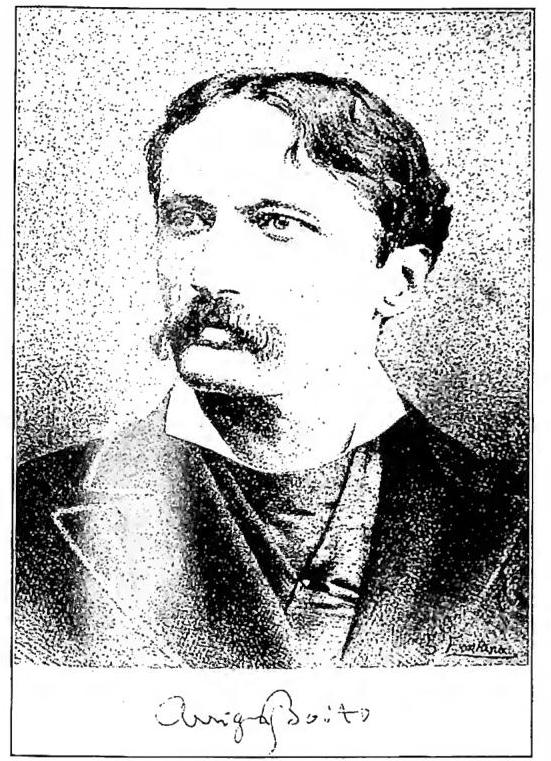
A fertile intellect, he displays in his pages—sometimes latent, sometimes manifest—a fervent religious inspiration that often blossoms here and there into accents of intense lyricism. Let us recall, for example, the choruses of the angels and the penitents, Margherita’s prayer in Mefistofele, and the Ave Maria in the libretto of Otello, set to music by Verdi; the Pater, the Beatitudini, and other Gospel passages in Nerone, the work in which the yearning of faith for the fervor of nascent Christianity is most vibrant. Yet his religiosity does not seem to go beyond a romantic sentimentalism.